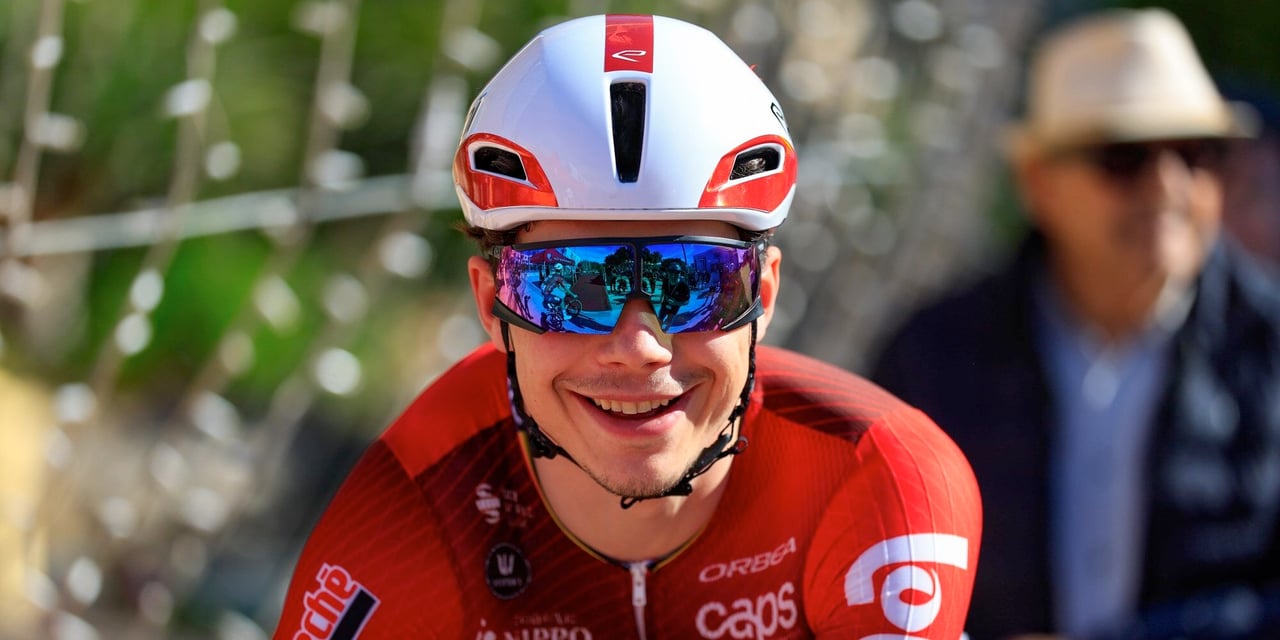
"Not the end of the world if you eat a little too much": Arnaud De Lie wants less pressure
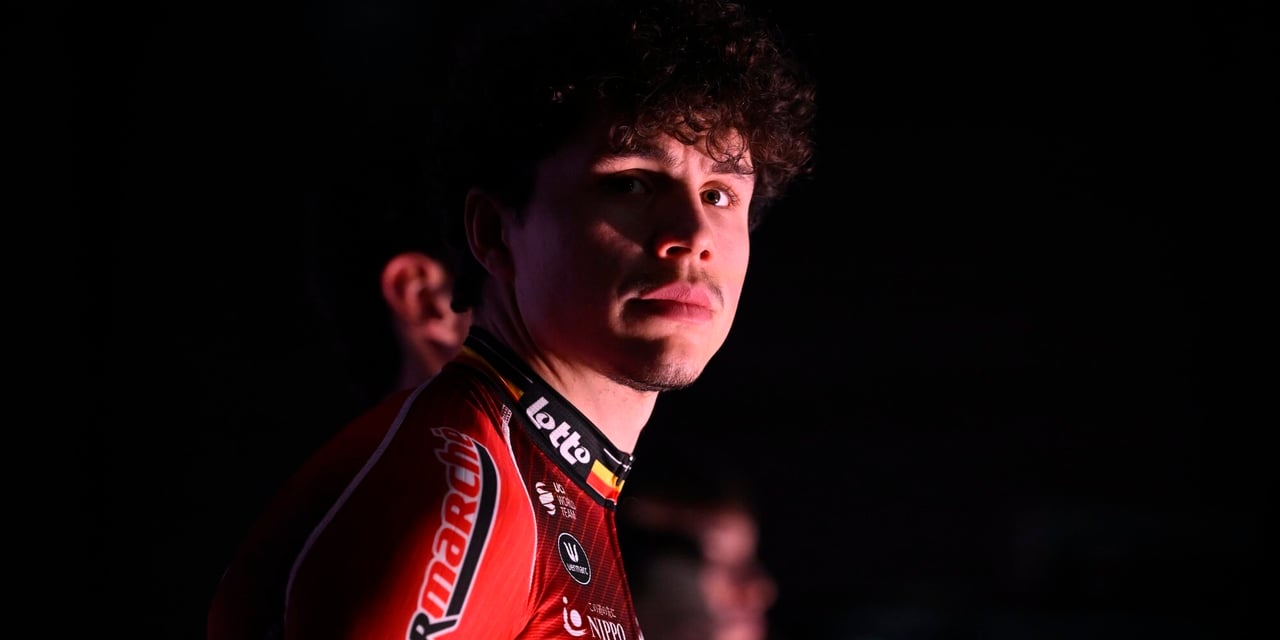
Just before the new year began, Arnaud De Lie suffered a painful ankle injury, but if we are to believe the Walloon rider, it won’t jeopardize his chances in the spring classics. And thankfully so, because after two unsuccessful spring campaigns in a row, the 23-year-old De Lie believes he has found the key to scoring in those races as well.
At a press event for the merged Lotto-Intermarché team in Temse, De Lie gave an update on his ankle to, among others, WielerFlits. "I called myself an idiot a few times for falling down the stairs, but we have a good plan. Last week I started again and spent seventeen hours on the bike. That’s not as much as most other riders who now train about thirty hours per week, but at least I’m not inactive. Unfortunately, sprint training is not possible yet at the moment. New tests will follow soon, and we’ll continue to see what’s possible.”
De Lie’s spring won’t be at risk. That’s generally a very vulnerable period for the former Belgian champion. In 2024, Lyme disease hampered De Lie at the critical time, while last year even his own team struggled to explain his disappointing results. After a withdrawal at Gent-Wevelgem, De Lie was, like the previous spring, sidelined for the Tour of Flanders and Paris-Roubaix. There were murmurs from the team that De Lie needed to live more for his profession, but after a strong Tour de France and successful fall season, that was quickly forgotten.
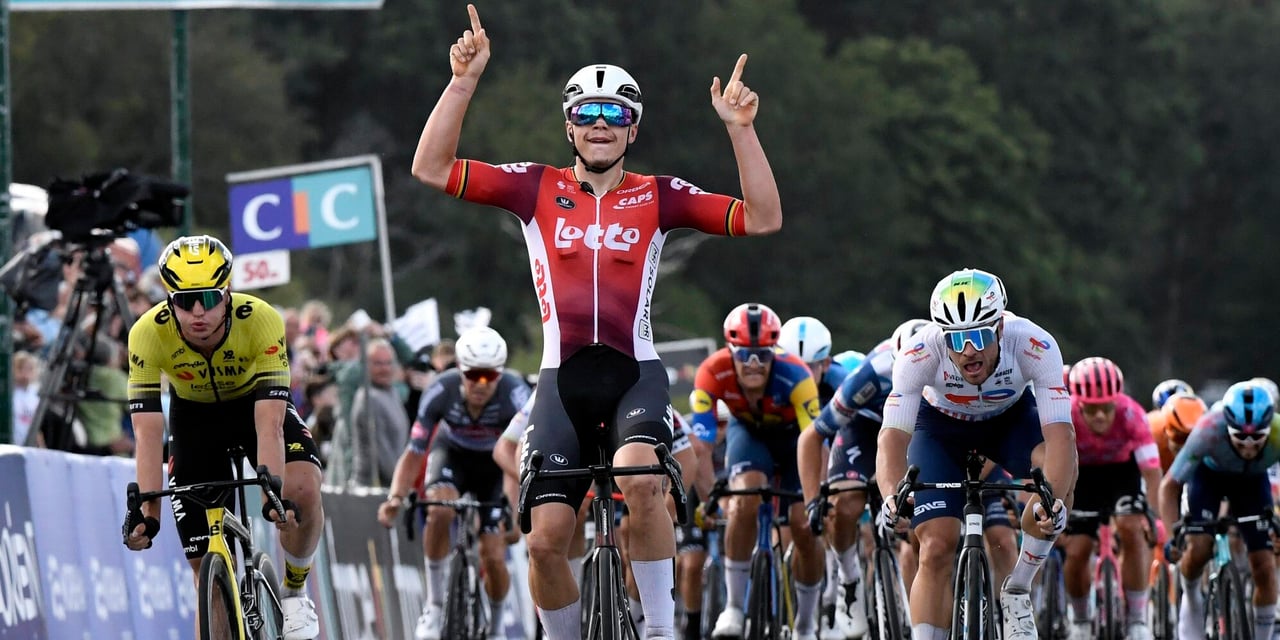
"We learned a lot from those tough periods," De Lie said at the team presentation. "Ideally, I’ll have the same legs in spring as I did last fall." Back then, he impressed against the world’s elite in the Renewi Tour and Bretagne Classic, winning seven races in total. "Unfortunately, they are two different seasons. I know I’m always very strong at the end of the year. It’s about maintaining that same joy and calm, and bringing that into March and April."
Does that mean you lost that joy in recent years?
"I think, in any case, I put too much pressure on myself. I wanted to perform too badly. You want to improve on every front, but I think I lost the essence of who I am, namely someone who enjoys riding the bike. I’m not saying it’s bad to weigh your food, but it’s not the end of the world if you once eat a bit too much. You have to do things right without being a perfectionist. In a relaxed and less stressed way, even though that’s a challenge for me."
In other words: is the pressure a bit too high in spring?
"For the media pressure and everything outside, I’m pretty indifferent, I think. Even though it’s sometimes high in Belgium. I’m more the one who wants it so badly myself. I’m trying to be less attached to that goal. My main goal is to enjoy riding the bike, and I feel like I already know better how to relax. I’m now trying to emphasize small victories in my progress, like the fact that I’ll soon be able to do sprint training again."
How will you determine for yourself if your spring has been successful?
"If I make it through Paris-Roubaix without problems. If I crash or get sick, then we know why I didn’t perform. But if I reach those races in the right mindset and can use my full capacities each time—in other words: if I cross the finish line feeling I gave it my all—then I’m happy."
Could it be an advantage, regarding that pressure, that the team has become stronger in depth after the merger?
"I’m definitely not the only leader in the classics squad. We also have Jenno Berckmoes, who showed great things last year. And I also have expectations for our new signing Huub Artz. I think we have good assets, but that’s necessary in modern cycling. Of course, I can’t avoid being protected, but with someone like Jenno, I always ride well together. We have a good bond, and together we are capable of great things."
Would you have liked to have Biniam Girmay on the team?
"He’s definitely a promising rider, but this is how it is now. With him, we certainly would have had a strong extra weapon for the classics. But if he also wanted to ride the Tour de France, it would have been a more complicated situation for me. Now, everything is much clearer. Look, there are pros and cons, but they balance each other out well. In the end, I’m satisfied with how things have turned out."
How did you follow the merger between Lotto and Intermarché?
"Actually, as riders, we weren’t really informed about the negotiations. I mainly wanted to know if I would still have a team in 2026. There were many rumors, but few people knew the whole truth. During the training camp in December, we heard the real story, and you immediately saw that it was one team, not two separate squads. On the first day, there was some hesitation, but afterwards we quickly forged those bonds."
Finally: you haven’t been able to do sprint training yet, but does that aspect remain important?
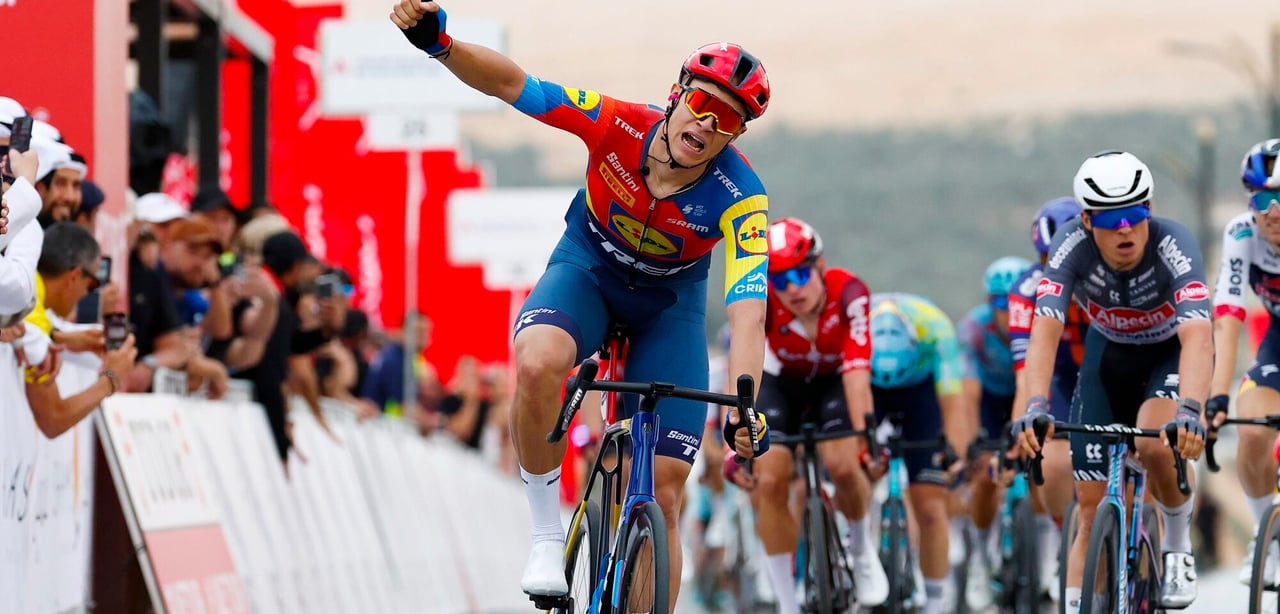
"Of course. Especially in the Tour de France, a period when I’m always good. It remains a goal to win a stage there someday, which is why we analyzed all the sprints from my last two Tours again. We now better understand who I am as a sprinter. We need to arrive a bit later and not organize ourselves as much but stick together more toward the finish. Often, we came too early and were overtaken at crucial moments. That has to change, and at least we know how now."