Seven bridges and five pontoons: what to expect on the World Championship course in Hulst
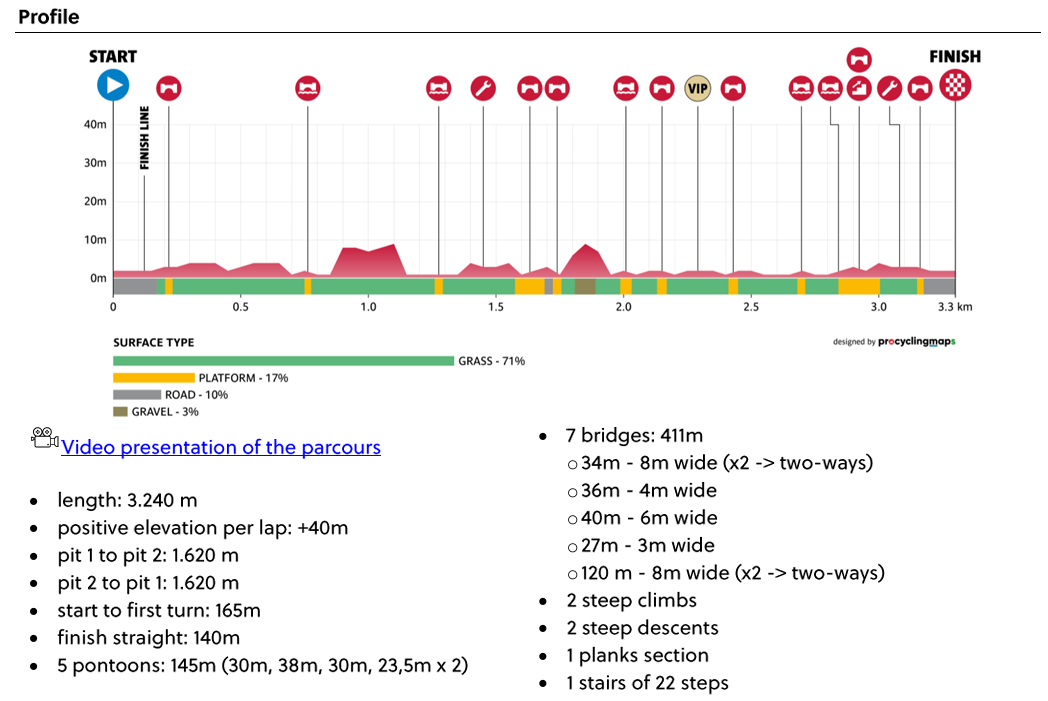
"It’s a course we haven’t often seen before and one that won’t be returning frequently at a World Championship in the years to come." That’s how organizer Bram De Brauwer describes the circuit in Hulst, Zeeland, where the cyclocross World Championships are scheduled for this coming weekend. With seven pontoons over the water and five bridges, it’s a very different course from what we’re used to in Hulst, but one with significantly increased entertainment value.
Hulst is, of course, a familiar name in the cyclocross world. During the World Championships, it will be the tenth time racing takes place around the iconic fortifications—dating from the 16th century—although over the years this has happened at various locations.
The World Championship course has become a mix of those layouts. "We started ten years ago in the center of Hulst," said De Brauwer. "From 2021 onwards, we were able to join the World Cup, but that’s exactly when COVID-19 struck. Because we had to organize without spectators, we could no longer use the city center. So we quickly settled in the Perkpolder area, by the Western Scheldt."
"We were already considering organizing a championship in Hulst; we were thinking about a European Championship ourselves. But when the UCI came to visit in 2021, they themselves said we had the space and the course to host a World Championship. They asked us to submit a bid. By the end of 2021, everything was finalized. We were still thinking about organizing in the Perkpolder. However, that’s an area under development, with quite a bit of construction going on. The municipality of Hulst was also in favor of bringing the World Championships back to the city center. Three years ago, we decided to organize at the citadel."
Different direction, climb and extra meadow
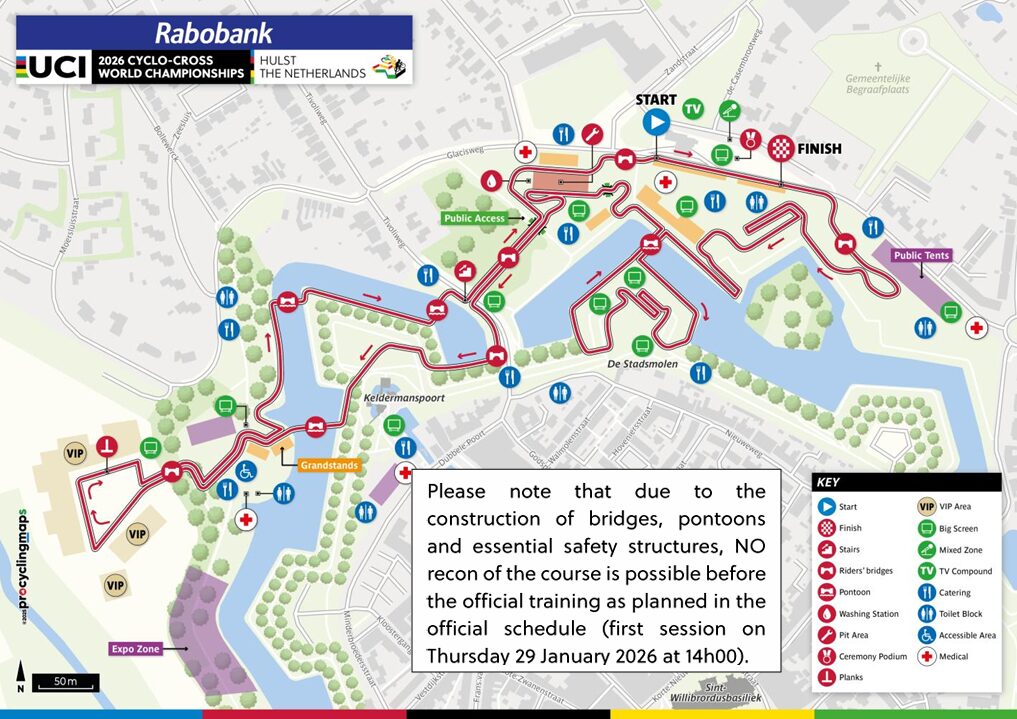
Since then, course builder Kurt Vernimmen has worked to combine the best elements. "Since last year, we reversed the direction of the course and did everything to improve the flow of spectators. We are now doing even better with an extended course, featuring seven pontoons and five rider bridges. The most spectacular bridge is a total of 200 meters long and built with two levels. Riders can see their competitors as they cross each other, unseen."
Along the citadel, riders head to a new section of the course. It is a flat, slightly lower meadow that the municipality of Hulst acquired near the city park. "There, we have a lot of space to accommodate our nearly 5,000 VIPs. It’s an interesting part of the course, a true meadow. If it rains heavily, it can still become a 300 to 400 meter walk there. The advantage riders build up in the faster, technical section can be reclaimed there if you’re the stronger rider physically."
According to the organizer, this new piece doesn’t greatly change the general character of the circuit we know in Hulst. "I would still describe it as a fast circuit with quite a few interval sections."
Entertainment value
This last point relates to some climbs on the citadel, the signature feature that makes Hulst, Hulst. "In total, there are two climbs and an equal number of descents there. One near the mill, where they used to descend. And a new one on the other side of the citadel. There are also some small climbs below. You have to approach these correctly, making technique crucial."
In short, a circuit with everything included. "We put a lot of thought into what we wanted to create here," said De Brauwer. "We succeeded in combining the charm of the old course by the mill with just as much spectacle in the new section. At the same time, everything will truly feel like Hulst. The start-finish location and the technical zones have simply been retained. It was already good, but with these additions—a stadium, the pontoons and bridges—there’s now really something to see everywhere."