Those who don’t comply are disqualified: UCI enforces strict checks on minimum handlebar width
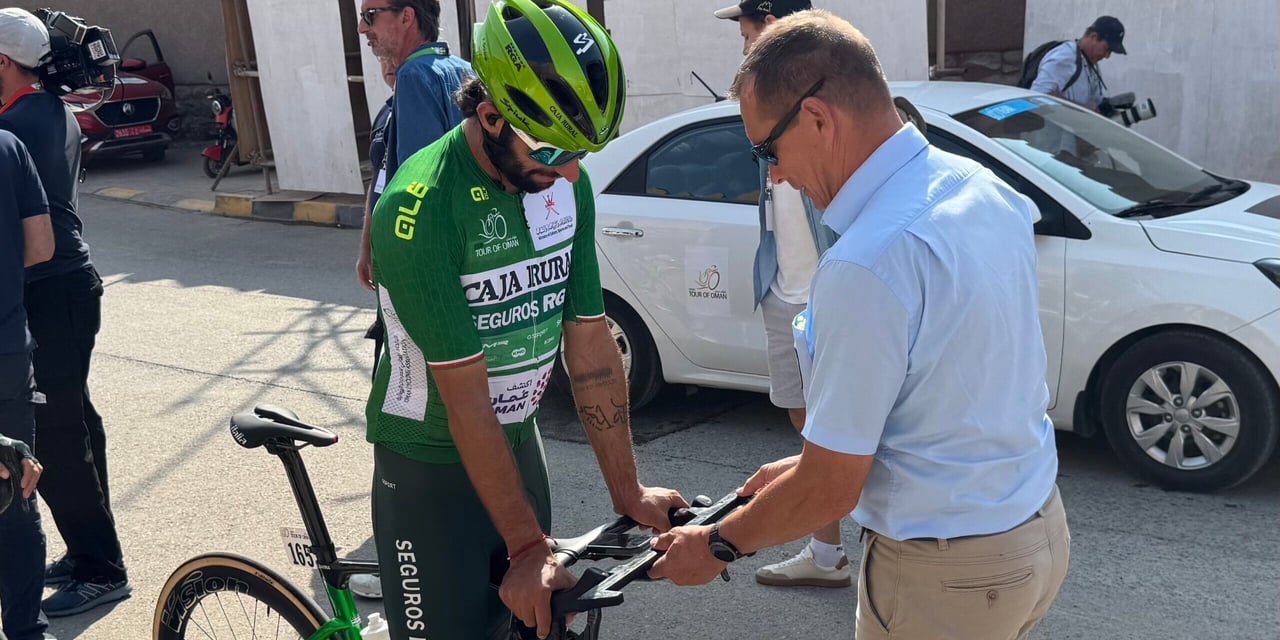
Striking image at the second stage of the Tour of Oman: two UCI commissaires were busy checking riders at the start podium for… their minimum handlebar width. This is one of the first times such a check has taken place.
New rules came into effect this year, which sparked quite a debate over the past months. To counter the trend in the pro peloton of riding with increasingly narrower handlebars, the UCI decided early in 2025 that the minimum width at the widest point of the handlebar would now be 400 millimeters, up from the previous limit of 350 millimeters. The internal width – measured from brake hood to brake hood – was set at 320 millimeters.
After some criticism, the cycling federation decided in September to partially roll back one of the two measures. Measured between the two outermost points, handlebars must still be at least 400 millimeters wide from January 1, 2026, but the minimum internal width has been lowered to 280 millimeters. This means the brake hoods can be positioned closer together than originally planned.
"It is the new rule on minimum internal width that we are checking here," a UCI commissaire explained to us in Oman. Using a 28-centimeter measuring stick, he precisely measured the handlebar width of each participant.
Earlier this week, this was also done as a test during the Muscat Classic. Some riders did not comply then and were given a chance to widen their internal handlebar width. That is no longer the case at this first official measurement. "Anyone who doesn't meet the rules is immediately disqualified," the on-duty UCI commissaire told us when asked.