American cyclocross sensation takes a different path: "I want to succeed in Europe"
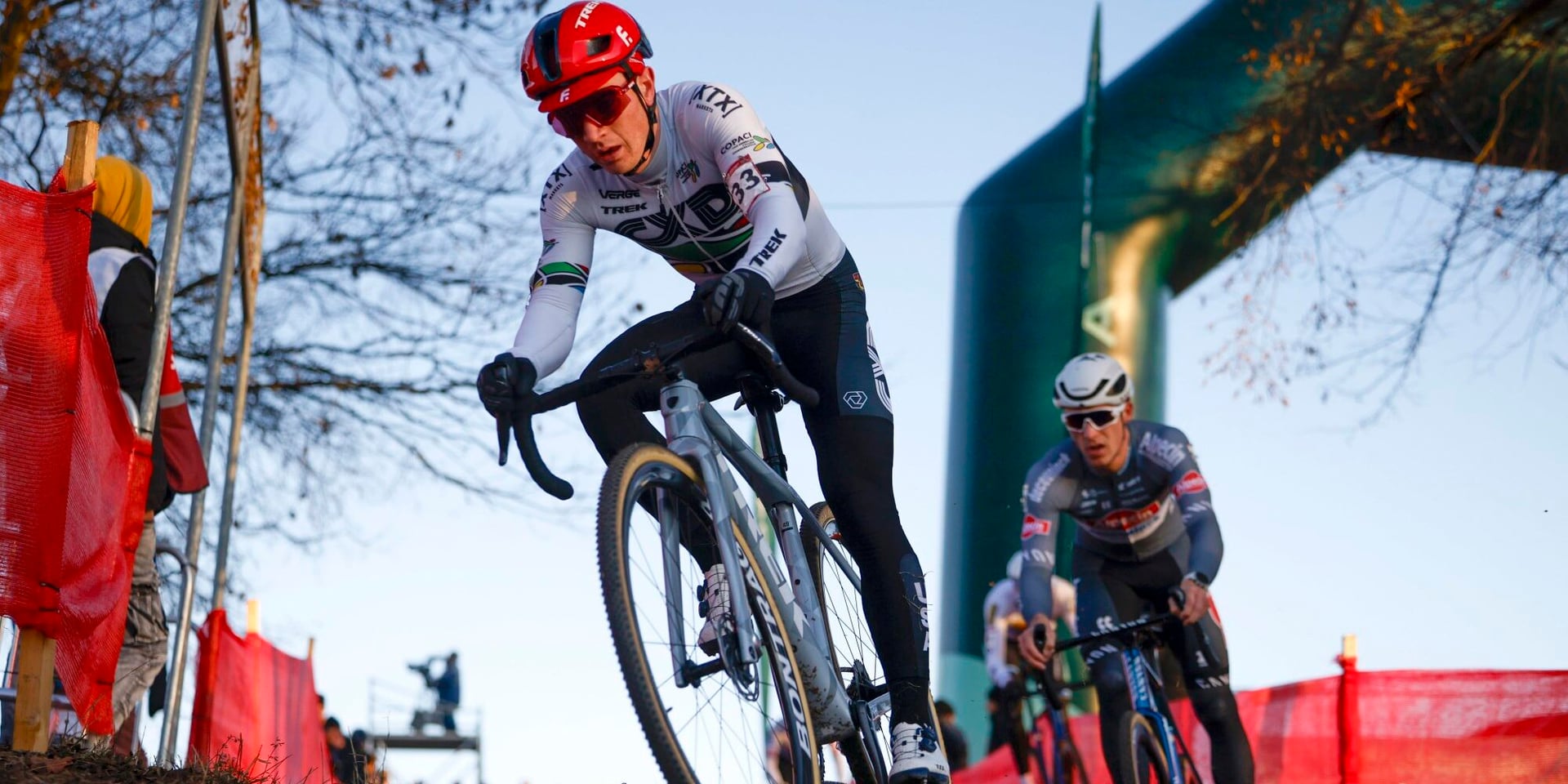
It has been a long time since we last saw an American cyclocross rider competing for top positions in a major race, but 23-year-old Andrew Strohmeyer managed to do just that during the World Cup opener in Tábor, Czech Republic. The American approaches the sport very differently than his predecessors from the USA, who never fully committed to the European circuit.
Anyone following the results of American cyclocross races in September and October has no doubt come across Strohmeyer's name. Just like last year, he won seven of the twelve opening races on American soil. However, how much do those races still mean now that the World Cup has been absent from the US since last season, and the World Championships are unlikely to return anytime soon?
Battle Against Gravel
"Unfortunately, we're having a bit of a hard time at the moment," Strohmeyer admits. "The 'Big Boom' of gravel riding has overtaken cyclocross. Many riders and bike brands have made the switch. It’s 'the next big thing' – because of that, we’ve seen a sharp decline in both participants and spectators at our cyclocross races. Two years ago was probably the worst, but now the numbers are starting to climb back up slowly. People who come to watch often race themselves in amateur events on the course, and at the Pan-American Championships in Washington D.C., we had about 1,200 participants and fans in attendance."
It remains a constant struggle against gravel, Strohmeyer admits. "It’s gotten to the point where many talented Americans quit cyclocross at a young age because they dislike that they can’t make a career out of this sport. All the prize money is in gravel racing. It’s obviously not an Olympic discipline, but it’s something new, and that attracts a lot. For example: you can’t earn any prize money at any national cyclocross championships in America, and that’s been the case for years. But now, with gravel, suddenly more than $12,000 is allocated. It’s absurd. That definitely pushes people away from cyclocross."
According to Strohmeyer, the reason why the World Cup no longer takes place in the US has nothing to do with this decline. "In the end, the World Cup is just one, or at most two, days out of the whole year. Of course, it was nice to race close to home, but I don’t know if it really adds value compared to the other World Cup rounds. What would really help advance the sport is success from an American rider in the European World Cups. If you can perform up front there, you make a difference."
USA Cycling
That is exactly where Strohmeyer has set his personal goal. Before the World Cup round in Tábor, he traveled to Europe with a clear plan to take his first steps in the right direction. He’ll be staying here all winter as well. "Luckily, during the season we can stay in a house provided by USA Cycling in Watersley (the Sports and Talent Park in Sittard, Limburg, editor’s note). That has been happening for a few years now, and it’s starting to feel a bit like home. Especially as the juniors are still here. Soon I’ll be the only one, which won’t feel as nice. Then homesickness will definitely kick in."
It’s not ideal, but this very effort from the American federation – USA Cycling – is what enables Strohmeyer to cope with the challenges. “In the past, it was almost impossible for an American to stay here longer than a few weekends. When you have to pay rent and all those travel costs, you know it’s tough. Another stroke of luck is the ‘Mudfund’ initiative, where people can donate money. Because we’re not an Olympic sport yet, support from higher up is still lacking. But thanks to those donors, a group of Americans can race at the highest level and live here. Those people want nothing more than to see an American back on the podium in cyclocross."
They can’t rely on a team for that. “I don’t get a salary, unfortunately. Neither does any other American cyclocross rider, actually. I have some individual sponsors who give me a bit of money, but that’s it. That’s why my biggest goal this season is to get good results here so I can be picked up by a European team. Then everything changes. I’m even skipping the American Championships to be able to stay here all winter.”
Does it sometimes feel like he has to put in extra effort compared to his European peers? "That’s also true. We have to work harder to come here, but you have to accept that this is a sport spread across two continents. It is a bit niche, of course. But I can put it into perspective because the races in Belgium are my favorites of the year. Racing on terrain not really meant for cyclocross—that’s what the sport is all about, right? Give me Namur or the Koppenberg any day; it’s almost a different sport than the dry courses in the United States."
Passion for the Sport
When you talk to Strohmeyer for an extended time, his passion for the sport is palpable. But why does he persevere with cyclocross when he could also take the step into lucrative gravel racing? "I sometimes ask myself that too," he laughs. "When I was growing up, there was a big cyclocross scene in Maryland, where I lived. There were two races every week nearby, while hardly any mountain biking or road races. That’s how I naturally got into cyclocross. I dived into that discipline and also realized that I perform much better in it than on the road. This is the sport where I really want to break through."
How does he expect to do that? "I’ve been coming to Europe for a few years now, and in the youth categories I sometimes managed a top-5 or top-10 in the World Cups, but with the elites it was never that easy. One problem I’ve noticed over the past years is that I, along with many other American riders, am past my peak form when the World Cup begins. So I’ve made the tough decision to race those American cyclocross races in October but focus on maintaining base training at the same time. This way, I’m in top form from the Christmas period until the World Championships. That’s a sacrifice very few Americans dare to make.”
But it doesn’t stop there. "Many Flemish and Dutch riders improve greatly thanks to group training with their teams—I’m slowly cracking that code. In terms of power, I’m already close to many Belgians, but not with technique yet. You can’t replicate these Belgian forests in the United States; there you mostly have dry grass fields. If I get better at that, it should be possible to consistently finish in the top 10 at the World Cup.”
Belgian team
And then interest from Belgian teams comes naturally? "Exactly. The last American to achieve this was Jonathan Page (Sunweb-Projob signed him after his second place at the World Championships in Hooglede in 2007, editor’s note). Believe me, I’ve now sent emails to almost all Belgian teams to introduce myself, and there was some interest during my U23 years. But cyclocross is a European sport and they tend to choose someone from their own region more quickly. Maybe my level wasn’t quite good enough yet, but that is now slowly changing.”
If he can make that step, Strohmeyer is convinced everything will change. "I once trained with Sven Nys in the forest, and you already see in that one training how they push each other to improve. If I could do that every Wednesday afternoon, I’d only make more progress. Like Cameron Mason did with the Roodhooft brothers. Let’s hope I can make it. Having riders of multiple nationalities at the forefront and in the top teams can only help the sport grow and expand, right? The more international, the better."


