Belgium waits eight years for new Tour win: "Church tower mentality has disappeared"
Nine years ago, in 2017, Philippe Gilbert - notably clad in the Belgian tricolor - claimed victory in the Tour of Flanders. Three years later, Wout van Aert came close again, and in 2021 Greg Van Avermaet stood on the podium in third place. Since then, no Belgian man has come near triumphing in Flanders’ Finest. Why is that? We asked former winner Nick Nuyens and team directors Maarten Wynants and Hans De Clercq.
If you look at the entire history of the Tour of Flanders, Belgians have of course still dominated. In the previous 109 editions, a local rider won 69 times. Up until 2012, there was still a Belgian victory every two to three years, something fans could hold onto. Never before had there been so many editions without a home-country winner.
"The main reason is, in my opinion, very simple," says Nuyens, himself a 2011 winner, in a conversation with WielerFlits. "Others are currently just a bit better and more efficient. That has nothing to do with nationality. Mathieu van der Poel and Tadej Pogacar have dominated the past six editions. That leaves only crumbs for the rest. They rely on pure class, in any race they enter." Or as Hans De Clercq puts it: "These are riders who could have raced alongside Eddy Merckx in the seventies."
But in Nuyens' generation, weren’t there top riders as well? In his surprising victory, he had to fend off an outstanding Fabian Cancellara. "Yes, but beneath him and Tom Boonen there were about ten riders who could all win. Sometimes those two big guns would attack and someone from us would be with them, or a few from us would be there. Sometimes the scenario was that one of those two big guns wasn’t present."
"Among those ten or fifteen names, there was then another layer. I have the impression that this middle layer has somewhat disappeared in the current peloton," Nuyens explains. "Of course, Wout van Aert is competing well, just like Mads Pedersen or Filippo Ganna. They get close on a good day, but looking at the facts, you have to conclude that few others win when those two stars start. That’s impressive, but it’s not always good for the suspense."
More climber types?
The latter could also be a result of the Tour of Flanders becoming 'fairer' since moving to Oudenaarde. The finale is extremely tough with sixteen climbs, which was perhaps less the case with the finish that included the Muur of Geraardsbergen and the Bosberg, used until 2011. "The new route has caused climbers to come to Flanders and have a good chance here," points out Maarten Wynants, team director at Visma | Lease a Bike.
"That toughness, and especially the extra elevation in the finale, has led to more international, but also better riders coming here. Nowadays, the E3 Saxo Classic is the limit for certain classics riders. And the Tour of Flanders has become just too tough for them." Nuyens disagrees with that: "But they use the climbs optimally. Pogacar attacks right before the Kwaremont on the road. But the climbs are just as long as they used to be, you know."
Flanders Baloise team director De Clercq stands between the two opinions. "The Flemish climbs remain specific hills with their own nature like cobblestones and narrow roads. These efforts of two to three minutes are things we Flemings are basically born with. So you must never use that as an excuse. But there is more talent in the peloton. Perhaps it’s fairer to look at how many Belgians make the finale rather than how often they ultimately win. Then we are still doing well."
On the other hand, Nuyens admits the course offers few real advantages for Belgians anymore. "In earlier years, course knowledge might have been an asset, but that was no longer the case even in my time. We’re not coming from the Middle Ages. Preparations were already good back then—riders could look up the course online and do reconnaissance. In recent years, that has evolved further and become more detailed, that’s true. But it plays a bigger role if you go further back."
Besides, climbers can now combine this race with grand tours, partly thanks to technological advancements. "In my first year, I raced ninety events; by the end of my career that was sixty," says Nuyens. "Now the top riders do thirty to forty races, and Pogacar arrives at the start of the Tour of Flanders with only two race days. Everything is more monitored. Top riders like him can train more precisely and pick their races. They have fewer choices to make. All combinations are basically possible."
Less motivation?
Has that perhaps taken away the 'drive' among Flemish riders? For many years in Belgium, the dream of young riders was to one day shine in Flanders’ tough terrain. Whereas, for example, in the Netherlands, the Tour de France held much greater appeal for youth. Wynants sees a change in mentality. "I feel it is less alive among young riders. The church tower mentality has disappeared and the horizon is much broader. I see and feel less of the Flandrien spirit among the youngsters."
"I notice there are enough talents dreaming to excel as climbers or sprinters. Maybe that’s the effect of Remco Evenepoel, while nowadays, of course, Belgium also has several good sprinters. I think the ideal is to become an all-round rider. Just like Pogacar and Evenepoel, performing in the grand tours and also in the classics."
Once again, De Clercq has to put a spoke in the wheel. "I don’t notice that at all in Flanders-Baloise. On the contrary. Everyone is completely passionate about these races. But you need the talent. If you don’t have what it takes to win the Tour of Flanders, you can do whatever you want. We’ve had glorious times with Johan Museeuw and Tom Boonen; after that, other men have come along. There’s still talent, but maybe not always of the highest category."
The contenders
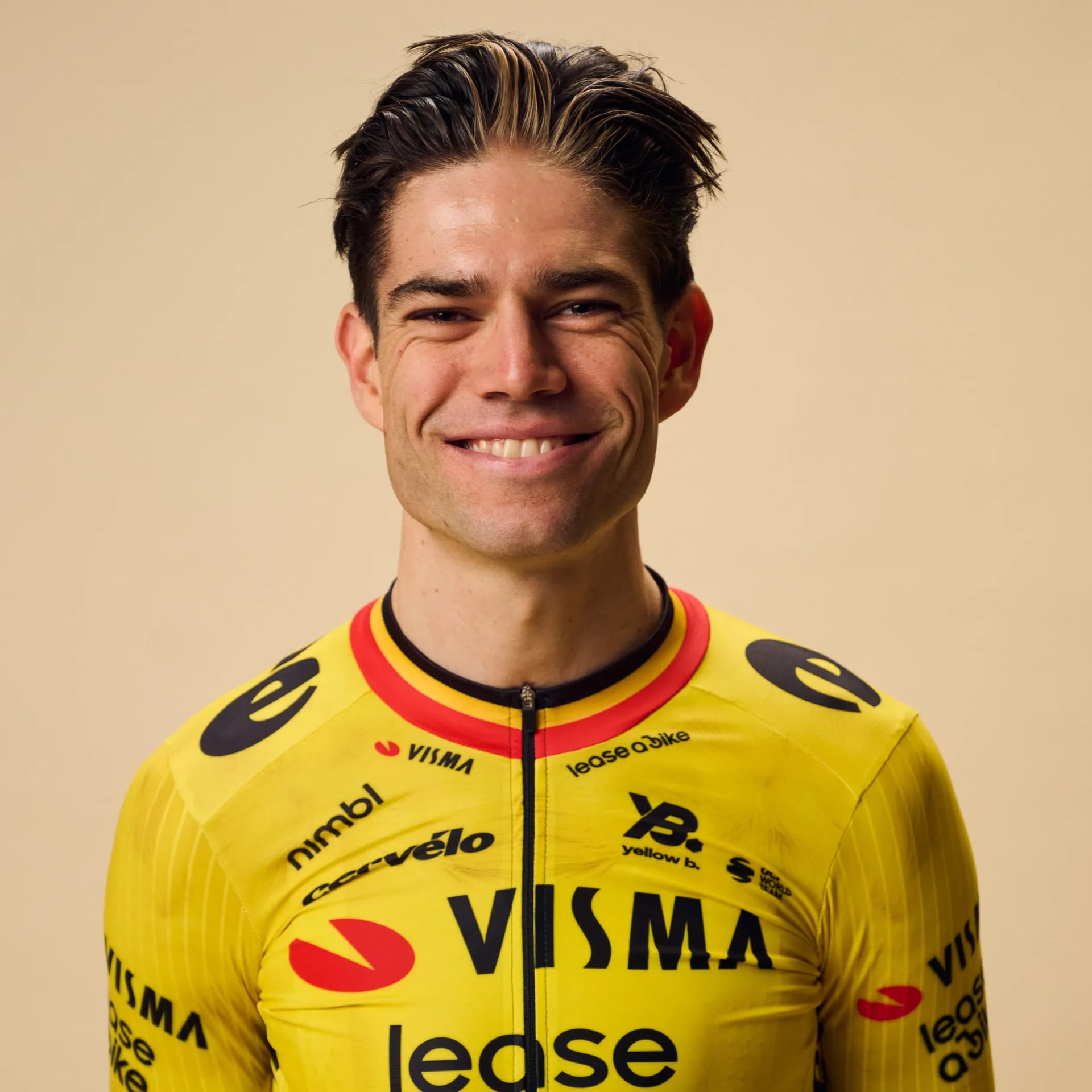
Hello, Wout van Aert? "That’s also a problem. Wout has had his share of bad luck in recent years. As a result, he’s been the man who couldn’t quite make it when he could have. He has it in him. But sometimes it’s been a matter of bad luck or even millimeters at the finish. Still, I definitely haven’t counted him out. And with him, other Belgian riders in the future."
Our three analysts agree that Remco Evenepoel, on his first participation, can be the man to break the curse. "Simply by starting, he will have an impact on the race," says Nuyens. "He is one of the rare riders who can attack from far out and still hold on. He is less explosive than Pogacar, at least on long climbs. But he definitely has it in him. I have no doubt."