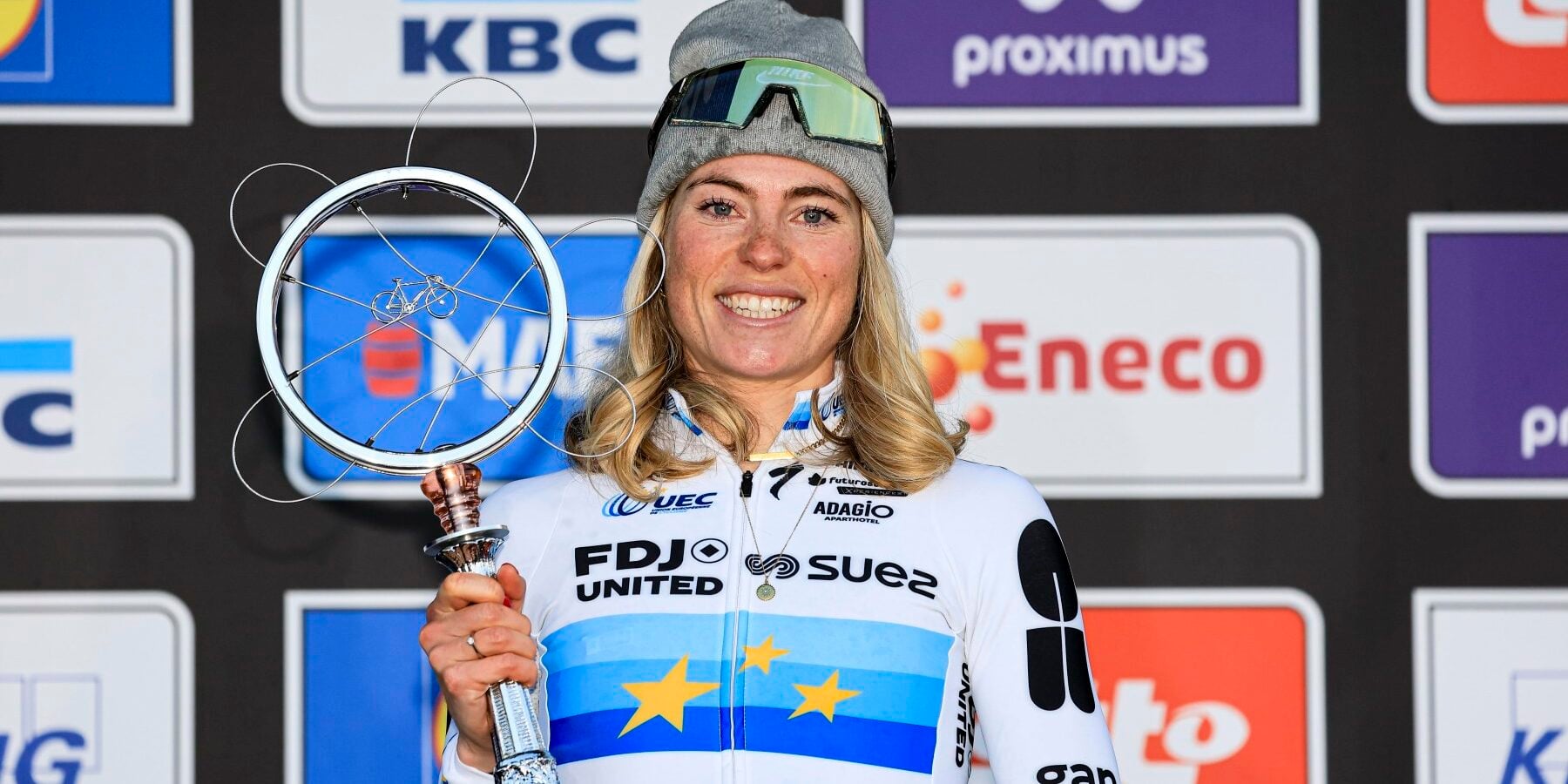
Demi Vollering relates to Jutta Leerdam: "I know what she’s going through"
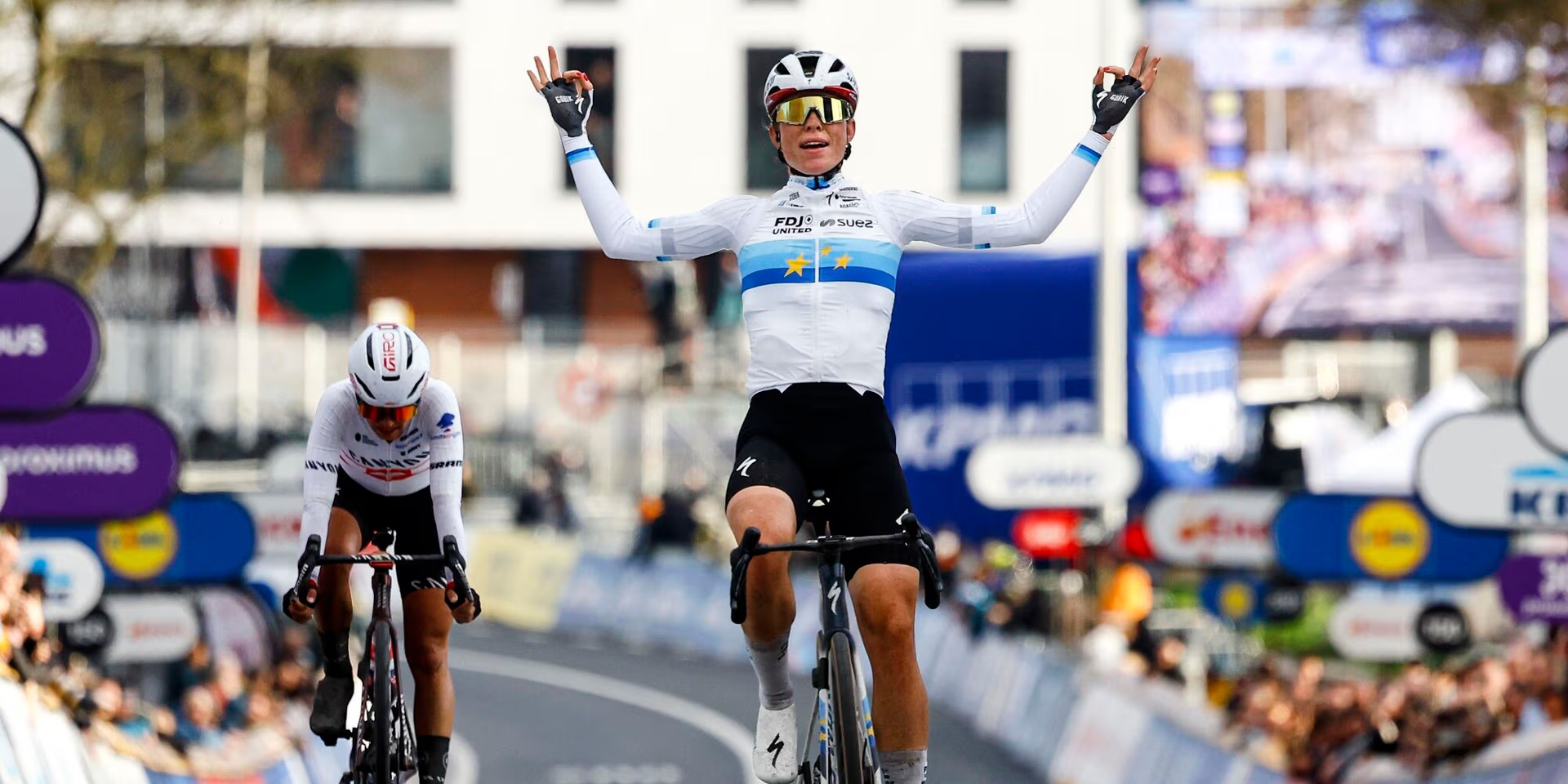
First classic of the year, and immediately the first victory for Demi Vollering in Omloop Het Nieuwsblad. Mentally and physically, the former Tour winner seems to have found the best version of herself again. The inspiration for that mindset came from Dutch Olympic Winter Games champion Jutta Leerdam, Vollering explained after her win.
It almost feels disrespectful to say that Demi Vollering didn’t reach her desired level in her first year with FDJ United-SUEZ, considering she added Strade Bianche, Vuelta, Tour of the Basque Country, and the European Road Championships to her palmarès. However, things didn’t click for her in her biggest goals. That’s why it’s especially satisfying for Vollering to set a high standard right away in the Omloop, one that should also support her in the Tour de France, the monuments, and the World Championships.
Difference from last year
Vollering herself finds it difficult to explain the difference. "Sometimes you just don’t know. In any case, this is my second year with FDJ-SUEZ. That makes a difference. You already know your teammates much better, and they know me better. We understand each other’s preferences more clearly. If something happens in the race, we can respond better. That helps a lot—to know each other inside and out, and I notice it in the race too," Vollering admits honestly.
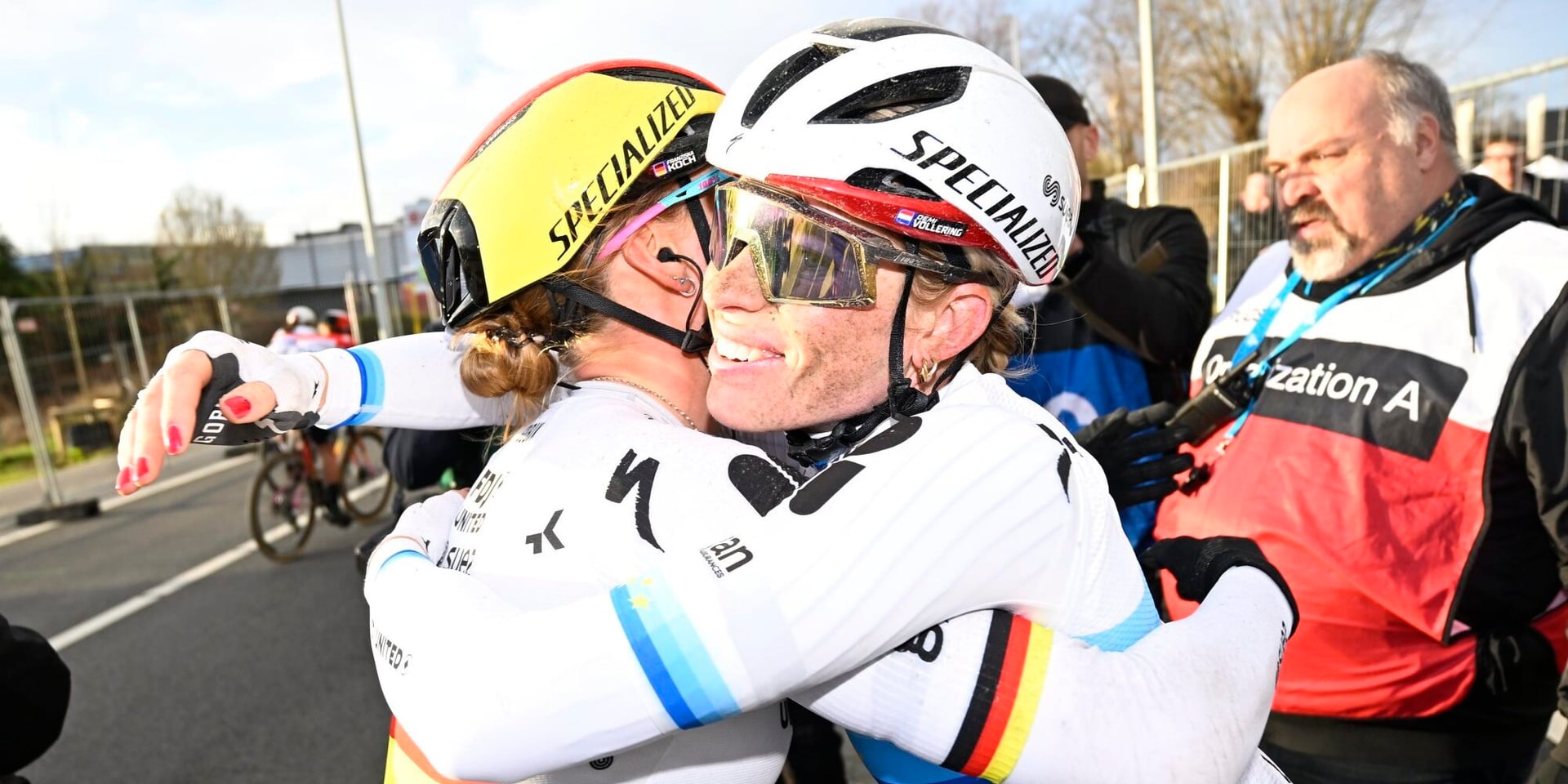
Omloop Het Nieuwsblad was the perfect proof of that. Vollering received a true lead-out from her new teammate Franziska Koch, who came over from Picnic PostNL, a lead-out lasting halfway up the Muur van Geraardsbergen, from where she launched her attack from a perfect position. "She rode so hard I hardly had to do anything," she laughs. "It also characterizes the whole team. We spend a lot of time together, we have fun, and we push each other to a higher level."
But of course, that’s not the only factor at play. "We also tried not to do too much. I did a lot of quality training and spent more time at home. That’s also important, I think. Last year, we did a lot of interviews and media stuff at the end of the year, but this time we cut all that out. I wanted to have time at home to enjoy the mountains and be with my partner and dog Flo. Just enjoying life."
Less pressure
Do interviews get in the way of her rest then? "Fewer interviews probably also means less pressure and less overthinking," she’s honest. "Sometimes a question plants a seed in your mind that you start to obsess over. Now I’ve simply had more structure and time for myself instead of being lived by events. I don’t know if it was really too much, but I felt it was better this way."
As one of the most successful women in the current peloton, Vollering is constantly in the spotlight. Something she also sees happening with her colleagues in other sports. Quite concretely, Vollering—who also has a background in speed skating herself—noticed how Femke Kok and Jutta Leerdam faced a lot of scrutiny at the Olympic Winter Games and had to defend themselves multiple times in relation to the media.
"Jutta was under a lot of pressure and judged by many people and the media, yet she managed to do what she’s best at. I have a lot of respect for that. I think I understand a bit what she sometimes goes through. That’s very inspiring. Sometimes I send her a short message to congratulate her because we used to skate at the same rink in the past. It was very special to see what they did to prepare for the Games."
More enjoyment
Not only does Vollering give fewer interviews, she’s also racing less. "We also learned that from last year. And so far it seems to be working. I feel that I’ve stayed fresher this winter. We discovered that I really enjoy large training blocks, so we’re going to do more of that this year. That way, you start the race mentally 100% prepared and physically fully charged."
You notice it when you talk to Vollering. "I really enjoy racing," she tells us. "Then you want to take those victories. Especially when you’re in good form. I now realize that winning doesn’t always come naturally. You have to stay healthy; it’s still cycling. Last year I was in a different situation. Even if a win was possible, it was taken away from me. I now know how important it is that when you have the chance, you seize the victory."