Giro 2026: Bulgarian start, long flat time trial, and climbs over Blockhaus and Passo Giau
In recent weeks, plenty of rumors about the 2026 Giro d'Italia have already circulated, but on Monday the full route of the 109th edition was officially unveiled in Rome. As previously known, the Giro d'Italia will start on May 8th in Bulgaria. After this foreign opener, three challenging weeks await on Italian soil, featuring a longer time trial and several tough mountain stages.
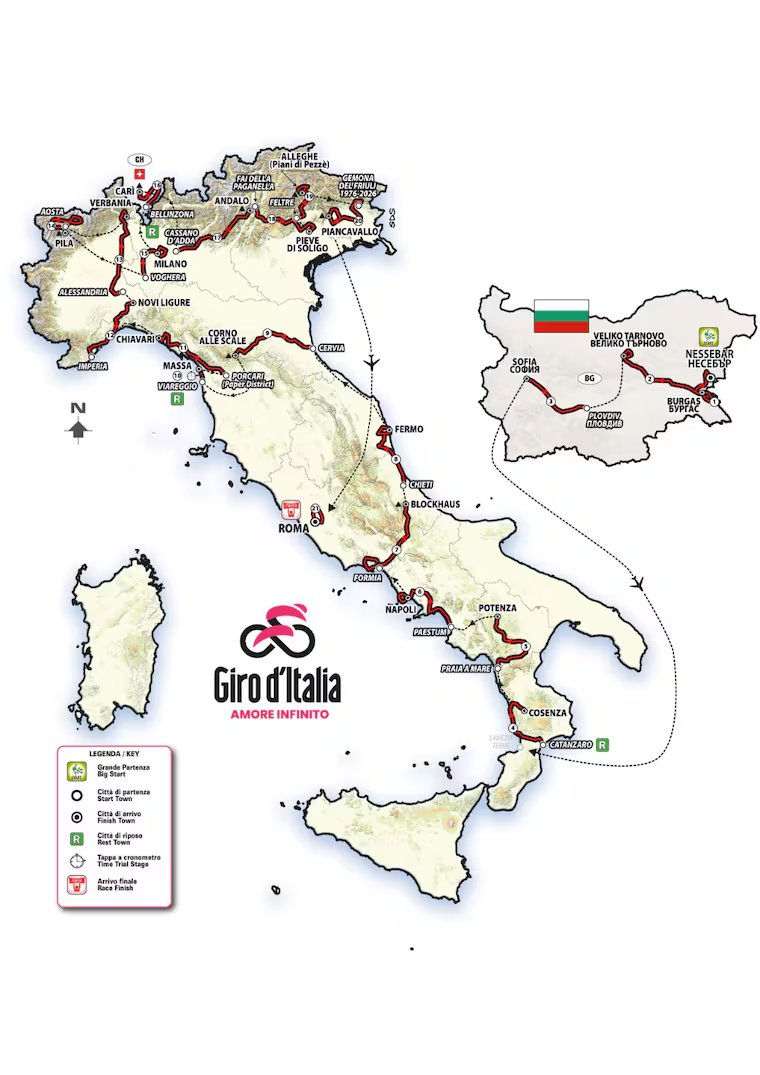
The Giro d'Italia will again start on "foreign" soil in 2026. After opening weekends in Hungary (2022) and Albania (2025), Bulgaria will have the chance next year to host the Grande Partenza. This marks the sixteenth time in Giro history that the race does not begin in Italy.
Sprinters won’t mind: they get an immediate perfect opportunity to seize the pink jersey. The opening stage finishing in Burgas—on the Black Sea—offers few challenges and is tailor-made for the fast men. On day two, the punchers take center stage, as the stage to Veliko Tarnovo is spiced up toward the finale by a climb just over two kilometers long. The Bulgarian trip concludes with a mostly flat stage from Plovdiv to the capital Sofia.
Back to Eddy Merckx’s climb
After the first three stages on Bulgarian soil and a first rest day, the Giro peloton crosses over to Italy via Calabria. Organizer RCS has lined up a stage toward Cosenza, a hilly stage to Potenza, and a sprint stage finishing in Naples for the riders. However, all of this will be child’s play compared to the first real mountain test: a stage finishing on the brutal Blockhaus climb (13.5 km at 8.1%) in the Abruzzo region, via the toughest side from Roccamorice.
The Blockhaus climb (1,665 meters) hasn’t been featured too often in the Giro, but it has already taken a prominent place in the race’s history. In 1967, a certain Eddy Merckx claimed his very first stage victory in a Grand Tour there. The latest Giro passage (men’s race) on the Blockhaus slopes dates back to 2022: eventual winner Jai Hindley crossed the line first then.
After this crucial mountain stage in Abruzzo, the following day features a more than treacherous stage in the Marche. This ride to Fermo can be labelled a ‘Tappa dei Muri’, as numerous steep climbs—well known from the spring race Tirreno-Adriatico—are on the menu. There will be no time to recover from this effort, as on Sunday, May 17th, a mountain finish awaits in the Corno alle Scale nature park.
Good news for the time trialists, brutal final week
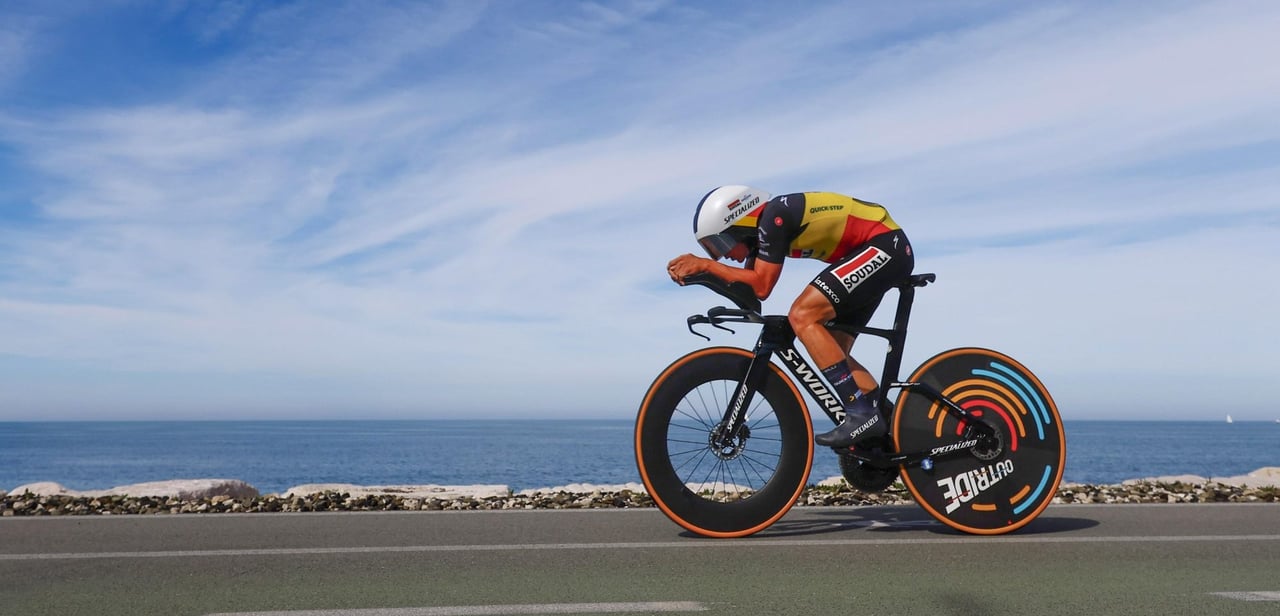
After a surely well-deserved rest day, all hands will be on deck again for the GC contenders, as the race organization has plotted out a flat time trial route in the Tuscany region (with only fifty meters of climbing) between Viareggio and Massa. Following this individual race against the clock are three tough transition stages to Chiavari (featuring three third-category climbs), Novi Ligure, and Verbania respectively.
Another standout from studying the second week of the Giro: riders should brace themselves for a grueling mountain stage in Valle d’Aosta, finishing in Pila. Over just 133 kilometers, three first-category climbs and a total of 4,400 meters of elevation gain are on the menu. The second week concludes with a flat stage finishing in the fashion capital Milan.
In the final week of a Grand Tour, the fight for the overall victory always comes to a head, and we can certainly expect such a scenario in the upcoming Giro d'Italia, especially since several mountain stages are scheduled. The riders will even cross the Swiss-Italian border briefly in week three for a mountain stage between Bellinzona and Carì, which lies at 1,664 meters altitude.
Next up is a semi-mountain stage to Andalo and a typical transition day en route to Pieve di Soligo. GC riders will be particularly wary of the Dolomites stage between Feltre and Pian di Pezzè, featuring climbs of the Passo del Duran, Passo Staulanza, the infamous Passo Giau, and Passo Falzarego. The Giau, at 2,233 meters above sea level, is the Cima Coppi, the highest point of the Italian race. In this mountain showdown in the Dolomites, gaps will undoubtedly widen considerably, but the final verdict will (most likely) come a day later.
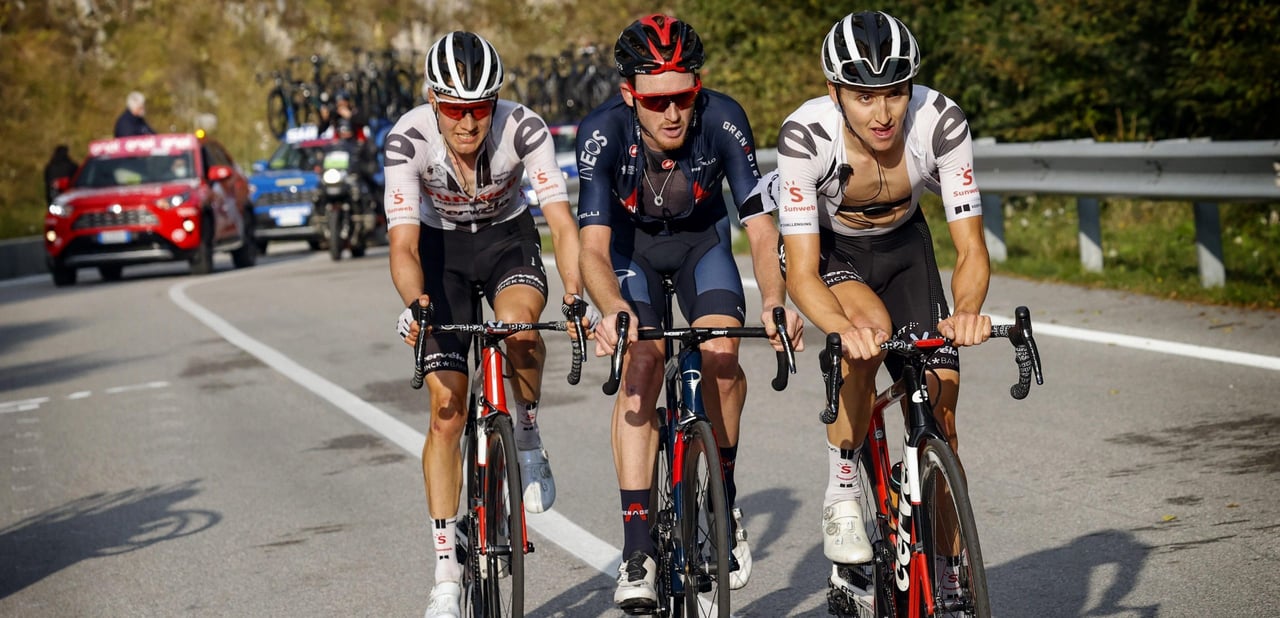
The penultimate stage starts in Gemona del Friuli, followed by passages through the towns of Buja, Majano, and Colloredo di Monte Albano, via Lake Barcis to Aviano. The finale will unfold on the climb to Piancavallo (14.3 kilometers at 7.9%), which must be tackled twice. This is the climb where Tao Geoghegan Hart and Wilco Kelderman battled for the stage win in 2020. The Brit emerged victorious and also took the overall victory that year.
After this final showdown in the (high) mountains, we’ll know the winner of the 109th Giro d'Italia, as the flat closing stage to Rome will end in a bunch sprint free from crashes or last-minute twists.