How Thymen Arensman found joy in cycling again
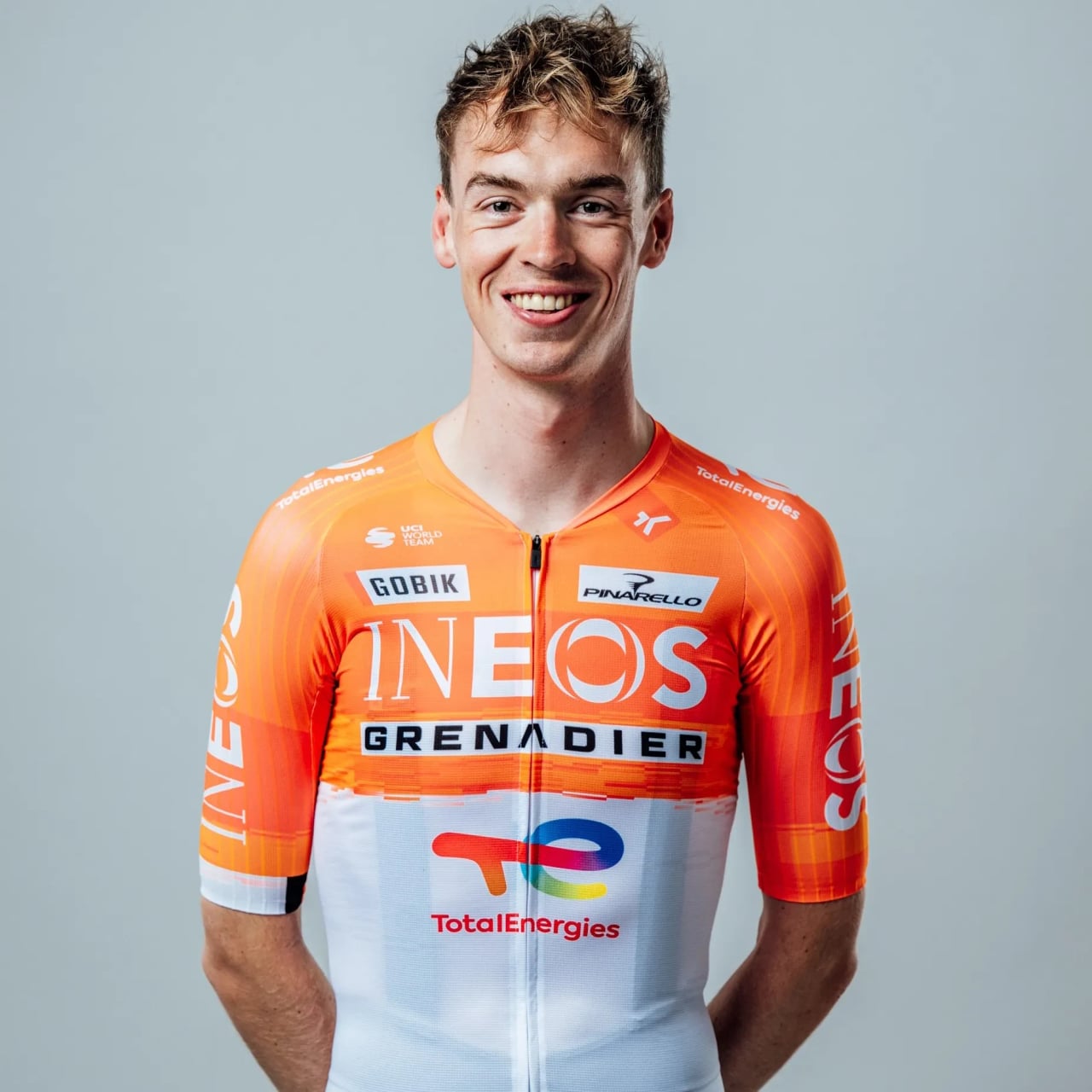
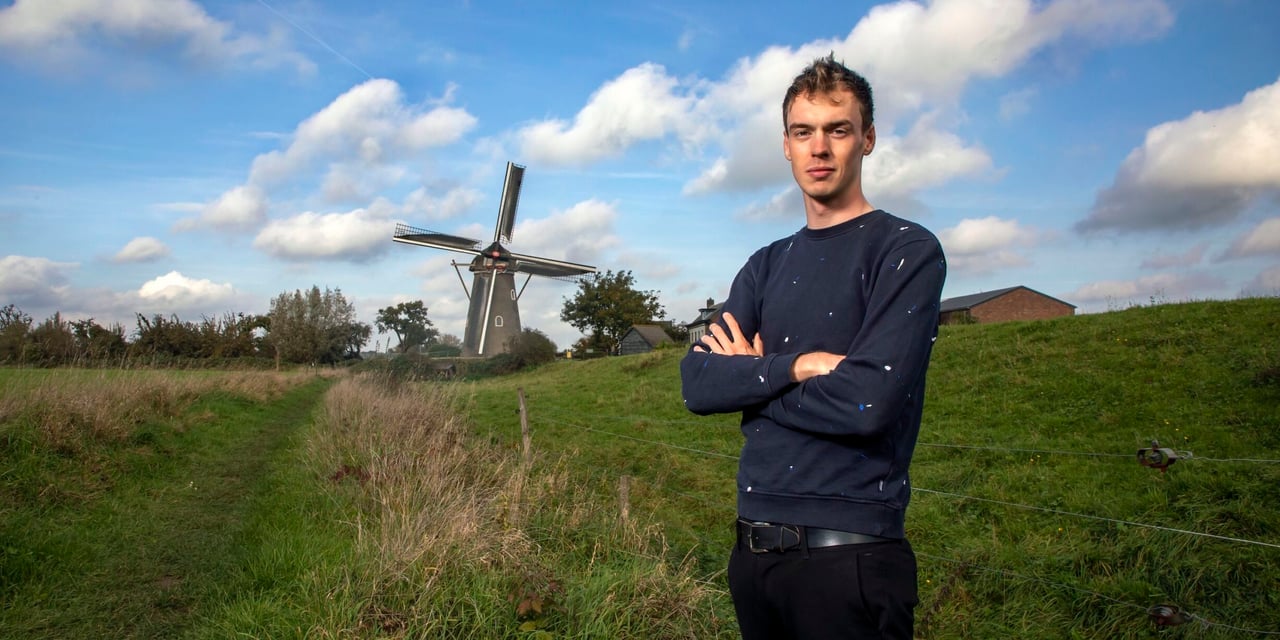
Enjoyment is one of the most important driving forces in elite sports. For Thymen Arensman, the switch flipped completely after a mentally and physically tough 2024. Back to basics was the motto. It has put the Dutchman back on the right track. Now that he rides with joy again, things are going much better. “When you feel good, things usually fall into place,” Arensman said this year in an interview with RIDE Magazine. At that time, he didn’t yet know he would later win two Tour stages.
From Andorra to Beesd. It’s nearly 1,400 kilometers. For Thymen Arensman, this ride has been known since the fall of 2024 as the journey of liberation. Although national coach Koos Moerenhout had already selected him for the World Road Championships in Zürich, he decided to skip the world title battle in favor of this cycling holiday with his brother-in-law Guy.
“After the heavy disappointment in the Vuelta a España, it was simply a priority,” Arensman recalls. He had to abandon the Spanish Grand Tour due to a coronavirus infection. “I had largely lost the joy in cycling and was really looking forward to such a relaxed bike trip. The team also thought it was important that I did that because they had seen that things weren’t going very well.”
The idea to go on a cycling holiday came from his brother-in-law. If anyone knows how to have fun on the bike, it’s him, according to Arensman. “Guy is truly a cycling enthusiast, someone who sees the romance of cycling. During his student days, he was part of the Utrecht student cycling club De Domrenner for a long time, and afterward, he founded the Wielerclub Domkop, where on Saturdays you go for a ride and then spend the afternoon in the pub drinking Kwaremont beers.”
Exactly this kind of relaxed perspective on cycling was just what Arensman needed after the Vuelta, where he had hoped for so much but had to abandon for the second year in a row. Dream gone, all the hard work of more than three months specifically for that Grand Tour wasted. He realized more than anyone that he had to find the joy in cycling again, and a bikepacking holiday of about ten days seemed like a soothing balm for this mental wound.
“The goal was really to have fun and reconnect with the romance of cycling,” he continues. “We wanted to do that by simply stopping at people’s homes at the end of the day and asking if we could sleep there. Almost everyone immediately said, ‘Yes, nowadays you just use the internet to find hotels and B&Bs.’ As if we didn’t know that.”
Arensman and Guy turned to the Dutch foundation Vrienden op de Fiets (Friends on the Bike), where via the website you can look for lodging offered by other cyclists or walkers across Europe. “Maybe it wasn’t exactly the romance we were looking for, but it still was somewhat romantic. We had a lot of great conversations, and for me, it also reduced some stress. I constantly had to share my whereabouts, and it’s handy to have a few addresses booked so you don’t have to do that last minute.”
Discovering France
The romance lay in discovering France, Arensman continues. Although he scored one of his biggest successes on the bike here in 2018, finishing second in the Tour de l’Avenir behind Tadej Pogacar, the country was still relatively unfamiliar to the Dutchman. He doesn’t ride here very often compared to countries like Spain, Italy, or the Netherlands.
“I discovered that France is a beautiful country. The cities are also very nice. Every day, Guy and I planned some villages or towns we definitely wanted to pass through. On the stretches between the towns, he would ride in my slipstream, but once we arrived in a village or town, we’d ride side by side to take in the place, check out the houses and learn about the history.”
Arensman was able to indulge his passion for history during those rides. The Gelderland native studied history at Utrecht University from 2018 to 2020 but eventually stopped because it didn’t fit with a career as a professional cyclist. However, the passion remained. For example, he eagerly wanted to visit Carcassonne during the bikepacking trip, as it is one of the best-preserved medieval cities in the world.
“Carcassonne was very high on my list. Beforehand, I told Guy: we are definitely riding through Carcassonne, you’ll like that too. So we planned it, even though we passed through it after just thirty kilometers on our second day. We insisted on having lunch in the old town. We walked around in our cycling shoes through such an old fortified town. That was pure gold, with all those puzzled looks from people watching us.”
From Carcassonne, Arensman and Guy spent just over a week riding through many French mairies – ‘Guy really wanted to see those town halls in every village’ – back to the Netherlands. They passed through the Massif Central and Auvergne, where they stayed overnight and enjoyed a particularly pleasant rest day with Arensman’s former teammate Romain Bardet.
“I really learned to enjoy cycling again during those days. There might not be specific moments, but I just liked looking around a bit or climbing little cols with the speakers on my stem. The most adventurous day was probably when we rode more than 250 kilometers. I had really never done that before, but we had to because we knew it would rain the next day. That day, we kept pushing back the finish for ourselves.”
“Seeing all those different surroundings again, you realize how beautiful cycling really is. Home is of course very beautiful too, but it’s always a bit the same. You check your training on TrainingPeaks in the morning, then pick a route that fits that training. It’s a bit of a grind; there’s always a plan behind everything. And now it was like: hey, that road looks nice, let’s take that one.”
Rising Star
At (now) 26 years old, Arensman is still a rising star in the cycling world. After finishing second in the Tour de l’Avenir behind Tadej Pogacar in 2018, many in the Netherlands believed ‘we’ had a potential Dutch Grand Tour winner. Since then, Arensman has shown impressive performances. He won the queen stage of the 2022 Vuelta a España ahead of Primoz Roglic and Remco Evenepoel and finished fifth overall that year. In the two years that followed, he also took two sixth places in the Giro d’Italia.
Meanwhile, a growing unease gnawed at Arensman. The pressure from outside was big, but the pressure he put on himself was even greater. In the 2024 Giro d’Italia, things had to happen for Arensman, but he started in Turin nearly overtrained—with sky-high stress levels—and immediately lost five minutes in the first stages. In the last two weeks, he managed to hold on, but after the Giro, the heavy feeling prevailed. A few months later in the Vuelta, Arensman fell ill and gave up in disappointment. Yet another shattered illusion and a bitter disappointment. Burned out, Arensman feels. The joy in the sport had slowly ebbed away.
“It’s something that had built up over the past few years,” he says. “In my first years as a pro in 2020 and 2021, everything was brand new, and I didn’t feel or get any pressure from the team. But in 2021 I showed a lot of potential and was increasingly raced as team leader. Then you have to start racing for the general classification. I tried to push myself because you think that will make you better and it’s good for you. For me, it’s also a personality thing. I’ve always had it in me to do just a bit more than was in my training schedule, but in 2024 it got really extreme. At some point, you have to hit your head to recover again.”
That’s why the cycling trip from Andorra to the Netherlands was also a necessary break. After returning home, Arensman’s cycling season was not over yet. As agreed with his team INEOS Grenadiers, he traveled to Italy to ride the Giro dell’Emilia, Tre Valli Varesine, Gran Piemonte, and the Tour of Lombardy. In the latter race, Arensman attacked for over 170 kilometers, ultimately finishing fifteenth in Como. By far his best result in a monument so far.
“I liked riding so aggressively and ending the season like that in a good way. I might not have been in my absolute best form, but then you see that if you are really motivated and keen, you can go a long way. If I am constantly squeezing myself dry in training without results, I might as well enjoy it. In the end, that might even work better, I hope.”
With that lesson in mind, Arensman went into the 2024 winter: enjoy more, push himself less. He also changed coaches. After years of working together, he parted ways with Dajo Sanders, who also coached him during his DSM days. Now Arensman is coached by Spaniard Adrian Lopez, who coincidentally is also his neighbor in Andorra.
“Sometimes it’s good to step out of your comfort zone. What are the differences between the two coaches? Not that many, they just do slightly different things. For example, since last winter, I started going to the gym for the first time. And maybe I listen to him a bit more, that’s what happens when you work with someone new,” he explains. “That’s also logical in the end.”
Lessons from Tom Dumoulin
The biggest difference, however, came from within, as we already heard in early March when Tom Dumoulin came to talk with Arensman about the mental aspect of cycling and the obsessive focus on marginal gains. “I gained a lot from that meeting with Tom. Of course, you’ve heard everything from the podcast, but even in our private conversations without a microphone, Tom shared a lot. And he wants to keep sharing; I can always call him. I did that in the Tour of Algarve as well when things got a bit rough.”
“Actually, Tom and I have been through similar things. Tom also says: everyone tries to prove themselves and bring the new marginal gain to the market, but you can completely lose yourself in that. Try to be a bit happier; that will also make you ride faster.”
That’s exactly what Arensman tried to do this season. That also meant taking it easier at training. Contrary to his nature. “January was just really relaxed at the altitude camp in Tenerife. I think I was dropped on the final climb almost every day; it didn’t bother me at all if someone rode harder uphill. Normally, I would get a bit stressed when I saw my wattages weren’t as high as they should be, but now I trust that in races it will come, that I can ride 50 or 100 watts more.”
“But I’ll give you another example: since early 2025, I no longer work with a nutritionist. Maybe with a nutritionist, you have the ideal plan, but for me, it didn’t work. I just eat what I want and listen to my body. Over the past years, I’ve learned enough about nutrition, so I have a basic understanding myself. It’s not rocket science.”
“You know how many carbohydrates you need per hour, and obviously, on a rest day you eat less than on a six-hour training day. It’s just logical thinking and listening to my feelings. If I feel like having a piece of chocolate: fine. But now I take dark chocolate instead of milk chocolate. Before, I would have skipped it. Not eating it deliberately later cost me almost more energy than if I had simply eaten the chocolate.”
Want to read more of these special cycling stories? The full interview with Thymen Arensman was earlier published in RIDE Magazine Summer Guide 2025. In every issue, you’ll find a special background story or interview with or about the stars of the peloton. Take advantage of the December Deal, where you get the latest Autumn Guide and Winter Guide 2025 for only €14.95, or choose an annual subscription.