Lotte Kopecky breaks the silence on taboo: "It's often laughed off"
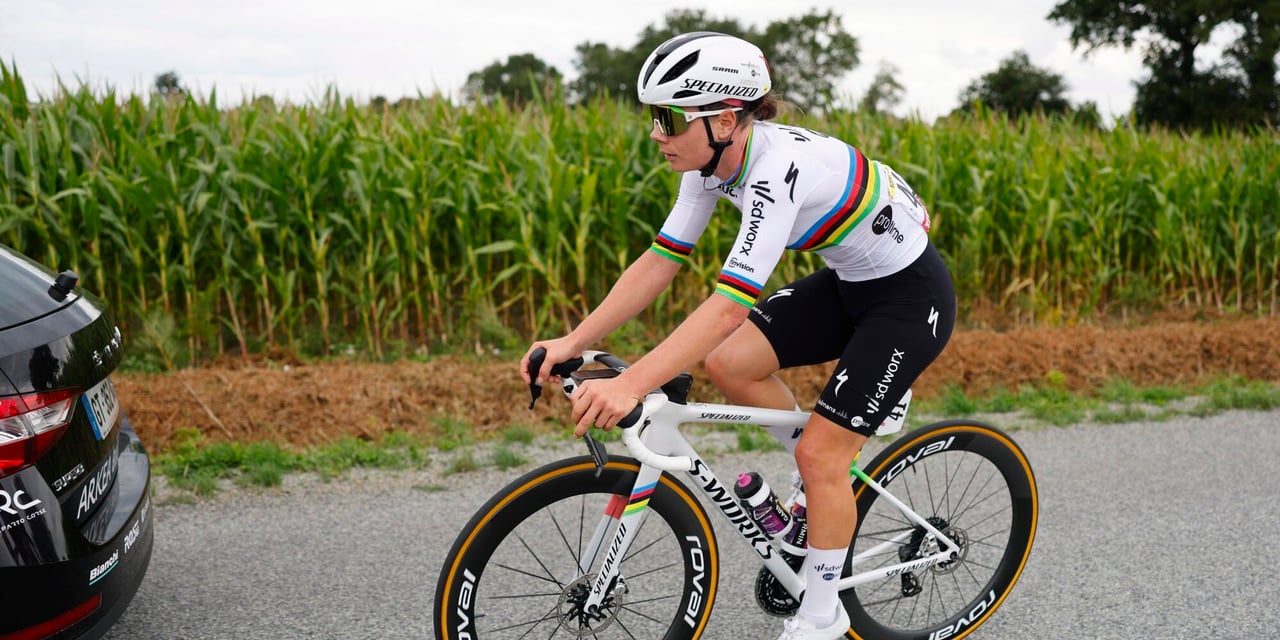
In the past, it was still seen as taboo, but nowadays there is increasing discussion within the women's peloton about the importance of a healthy hormonal balance. Earlier this year, Demi Vollering spoke out in an essay about menstruation and elite sports. Lotte Kopecky is next, but the former world champion sees (much) room for improvement.
Kopecky recently appeared as a guest on the cycling podcast Café Koers by Het Nieuwsblad, following her new Flandrien title. The conversation included menstruation in cycling, which remain a sensitive topic in the sport.
This is also the observation of the two-time road world champion. "Quite a few riders have testified this season that it often brings more discomfort than the outside world thinks. If you say that, it’s often laughed off. While many women experience quite a few symptoms during that period that can hinder performance."
"Especially if it’s a male coach, there is some embarrassment about discussing it," says Kopecky. "On the other hand, that is also an aspect male coaches need to familiarize themselves with when training women. It really should not be a taboo. It’s part of it."
For Kopecky, it is also an important topic. "I used to suffer from it a lot too; my body would retain a lot of fluid. When that happens every month and coincides with an important goal, you have a problem. You need to get to know your body and know how to best manage it. That varies for everyone. My advice is: don’t be afraid to ask for advice."
Demi Vollering
According to Demi Vollering, there is too little discussion about the menstrual cycle in elite sports, which can lead to problems. “Some athletes think it’s good not to have periods anymore because it would be a sign that they train hard enough, but it is NOT normal,” she wrote. Vollering explains that understanding the rhythm of the menstrual cycle has become a strength for her.
A disrupted hormonal balance can lead to the RED-S syndrome. This syndrome arises from prolonged energy deficiency in athletes. This means that the body consumes more energy than it takes in through food, resulting in disturbances in the body’s functioning, such as reduced menstruation, bone health issues, and a weakened immune system.