Made for Van der Poel: Greg Van Avermaet expects classics specialists at Montreal Worlds
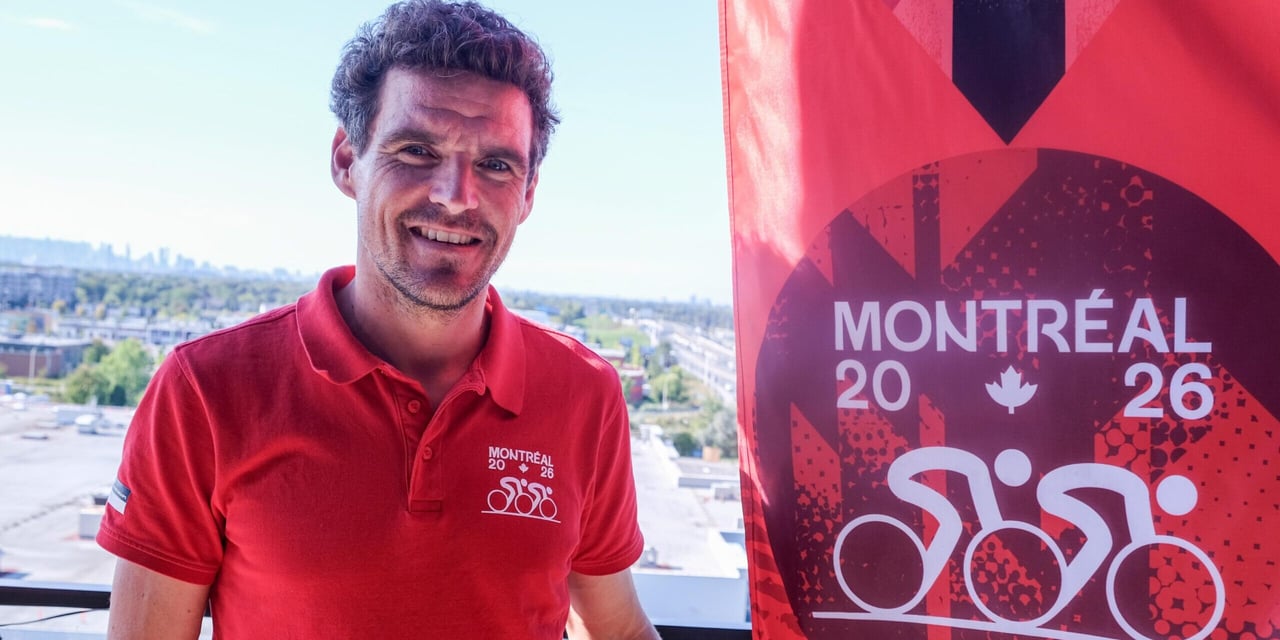
The cycling season has just ended, and we are already cautiously looking ahead to 2026. That year, the Road World Championships will head to Montreal, Canada. Two-time winner (and ten-time participant) of the GP of Montreal, Greg Van Avermaet, is the ambassador for the championship. He sees opportunities not only for his fellow countrymen but also for Mathieu van der Poel.
The finale largely matches the circuit of the GP de Montréal, which has long been over 12 kilometers with 269 meters of elevation gain. These climbs include the long and steep Côte Camillien-Houde (1.8 km at 8%) in Parc du Mont-Royal, and later the Côte de Polytechnique (780 meters at 6%, max 11%). In the last four kilometers, the Pagnuelo climb follows (535 meters at 7.5%) and the final stretch on Avenue du Parc. The final 560 meters ascend at an average gradient of 4%.
Due to the World Championship logistics, a minimal change will be made to the course. But before the road race finale arrives there, the men’s and women’s peloton will make a run through the Montérégie region, just outside the city. This area is mostly flat, with a few short hills. The loop is about 112 kilometers long. The men will ride the final circuit twelve times, the women eight times.
This brings the men’s race distance to 273.2 kilometers, and the women’s to 180 kilometers. According to two-time winner Greg Van Avermaet, this circuit should not be underestimated. "As a rider, I always found the GP of Montréal one of the toughest races of the year. You have to accelerate repeatedly and ride constantly above your limit. And precisely because you race above that threshold, there’s little room for recovery," Van Avermaet told us some time ago.
Still, it won’t be a pure climbing race, believes the former Olympic champion. "Of course, everything depends on how the race unfolds. Most riders already know the course from the WorldTour races in Canada, but with a longer approach and fewer laps, it will be somewhat different. It’s definitely an advantage if you have raced those events before. You know how tough it feels in a live race. More often, it’s a location where racing has never taken place."
Classics riders
Van Avermaet especially sees great opportunities for his Belgian compatriots. "It’s a course that should suit them well. It’s demanding with plenty of elevation, but it really fits both Wout van Aert and Remco Evenepoel perfectly. It’s tough enough to make a difference, but it remains a ‘punchy’ race where efforts never last longer than four and a half minutes. That allows classic riders to have a shot as well."
How should the Belgians approach it? "Wout can always finish it off with an uphill sprint. It’s a sprint that relies on power, and that suits him well. Wout can now also work well with Remco. They are two different types of riders, which definitely plays to their advantage. If Wout waits, Remco can go earlier — and he can really use his strength on the climb. If Pogacar attacks, it’s always tough, but they need to rely on their own strengths."
And when you say Van Aert, you naturally also think of Mathieu van der Poel. "The difference with Wout is that he has never raced in Canada before. Last year in Zürich at the World Championships, he showed that he can be incredibly strong on a tough course. Thanks in part to that result, I count him among my favorites. If he shows up, he’s always a contender because he’s such a killer. I think this race is made for him," Van Avermaet says.