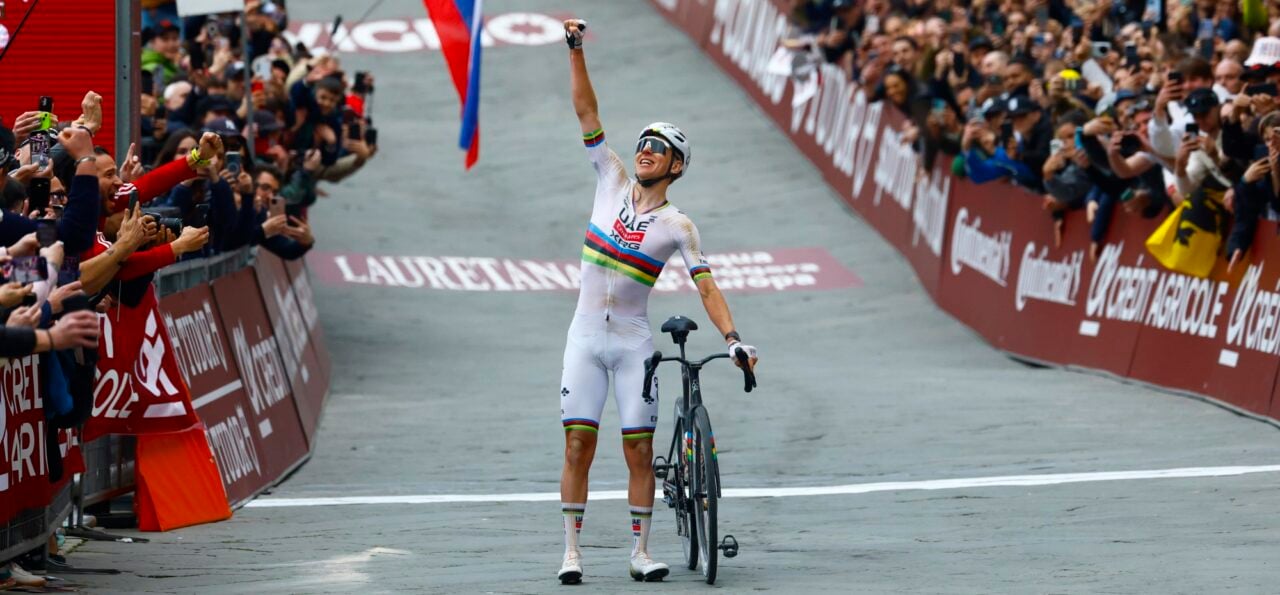
The hunger of Tadej Pogačar and Mathieu Van der Poel is far from satisfied
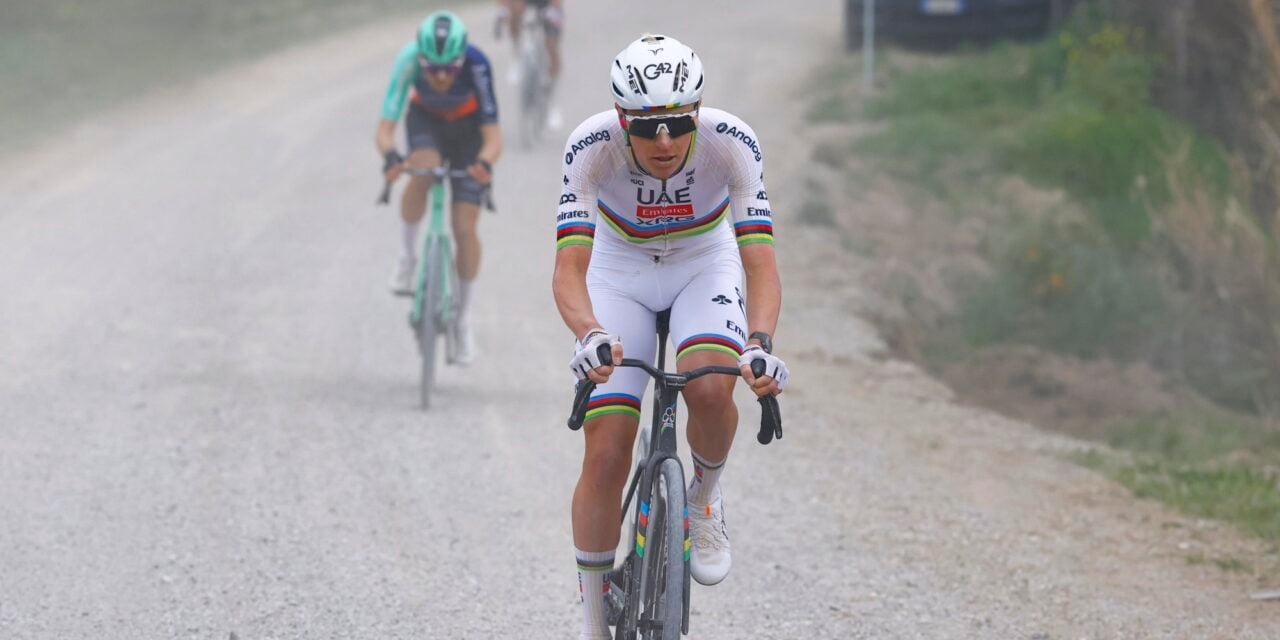
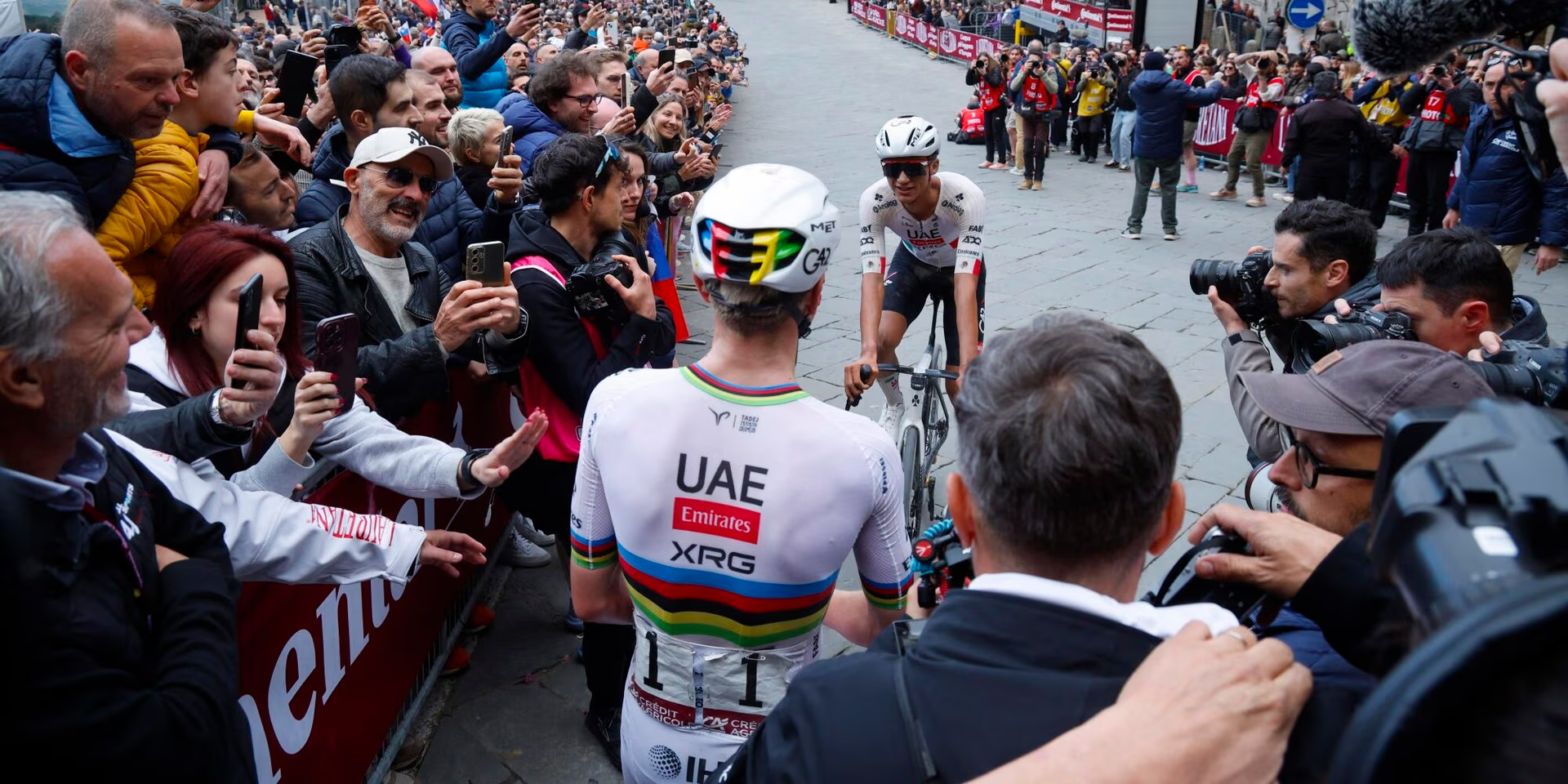
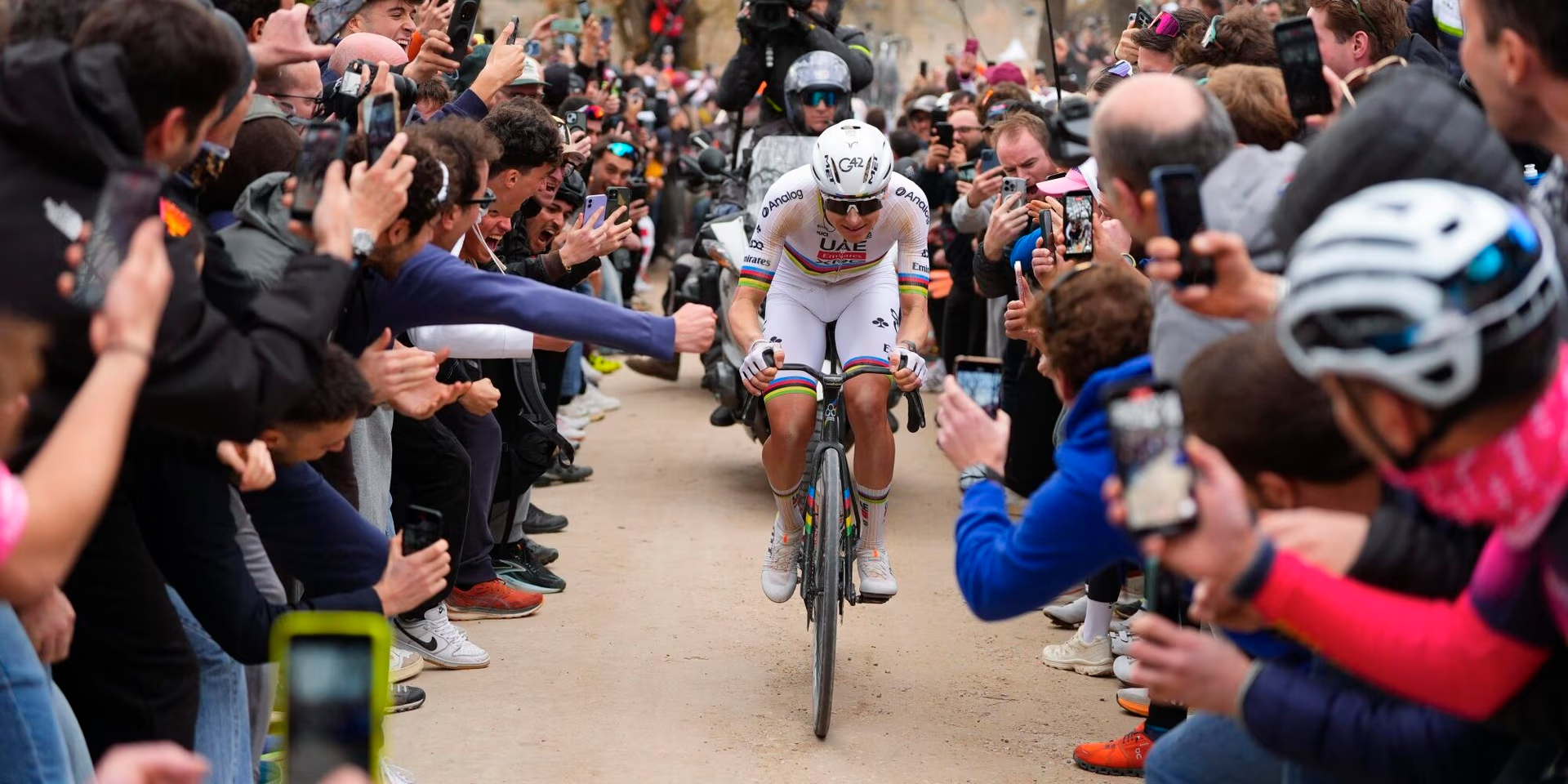
Once again, he left a cloud of dust behind him on the Monte Sante Marie, within which his rivals lost sight of him. In the Strade Bianche, his season opener, Tadej Pogacar seamlessly carried on the momentum from the previous year. The world champion is so strong that in recent years he has used the final executioner of every classic as a launchpad for his attack. How far the finish line lies beyond the obstacle hardly seems to bother him.
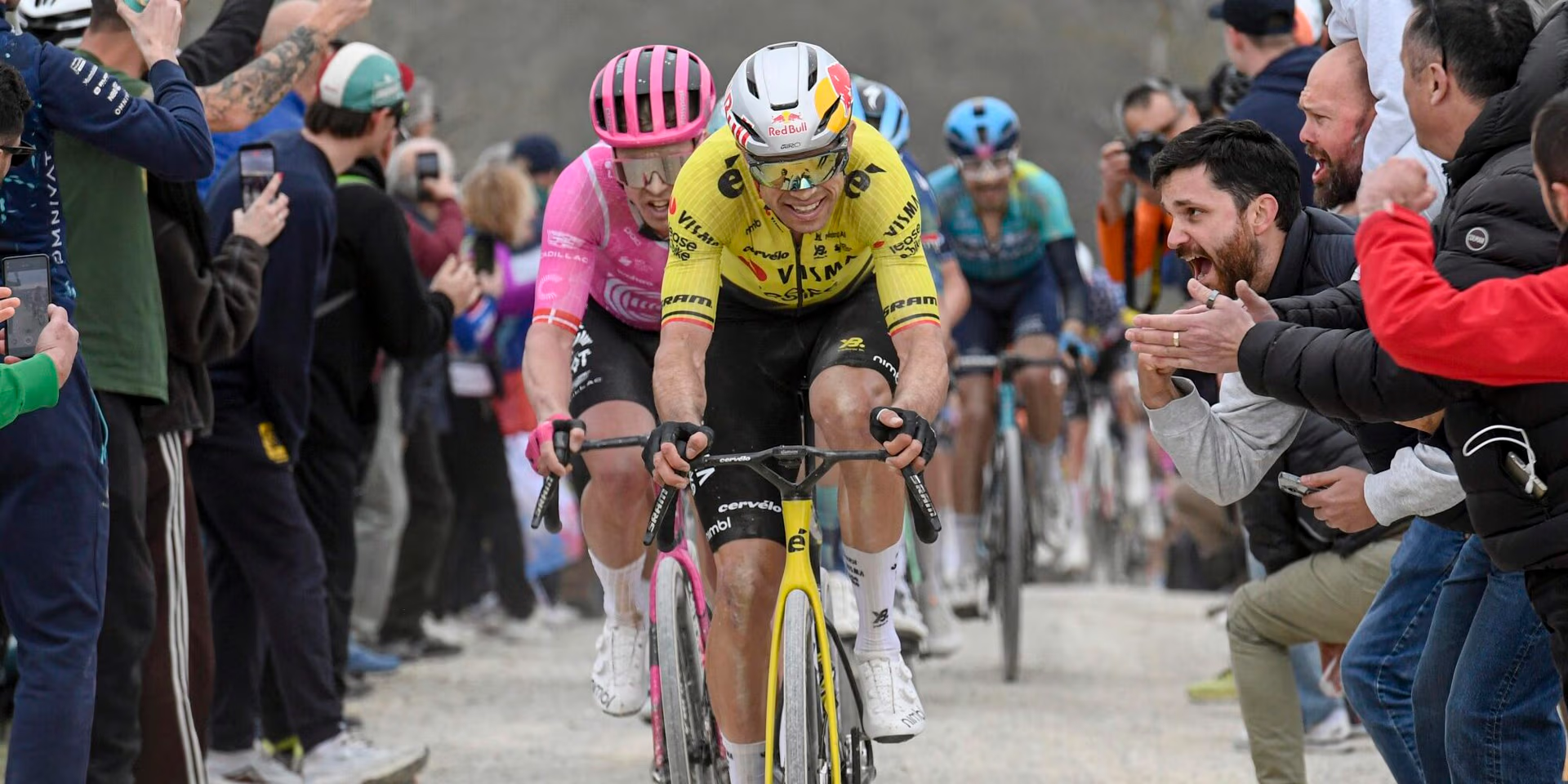
Everyone knew it. The 11.5-kilometer sterrata, the famous white gravel road of Monte Sante Marie, would again become Pogacar’s playground to test his rivals. In his three previous wins in the Strade Bianche, he had already used this longest, toughest, most technical, and most iconic section of the Tuscan classic as a springboard for his attack.
The name Monte Sante Marie refers to a medieval estate connected to religious holdings, of which Italy has many. Presumably, there once stood a farmhouse here under the protection of Mary. The road winds over barren, rolling hills of clay and limestone, where loose gravel replaces the pavement and dust almost always lingers in the air. For centuries, local residents have used this route as a connection between farms and farmland. In earlier times, it was also the road to the market in Siena, where farmers sold their harvest.
For Pogacar, this section has now become the escape route to victory in the culture-drenched Siena four times over. His love for this gravel road began back when he was a neo-pro, riding the classic around Siena for the first time at nineteen. Team leader Rui Costa suffered a flat tire there seven years ago, and the young debutant had to give up his wheel. He stood by the roadside for minutes waiting for a new bike. Once back in the saddle, he started a long chase, picking off rider after rider. That raid gave him so much joy that he already said then he would one day return to win this race.
At Pogacar’s first victory in 2022, Monte Sante Marie was still about fifty kilometers from the finish. In 2024, he attacked there already at 81 kilometers out. In 2025, it happened roughly forty kilometers from Siena, after which he dropped his breakaway companion Tom Pidcock only 18.5 kilometers from the finish on the Strade di Colle Pinzuto. This time, he went again at about eighty kilometers from the line, although there was no explicit plan to leave everyone behind there. Only before his first win had he openly stated his intention to attack on the Sante Marie.
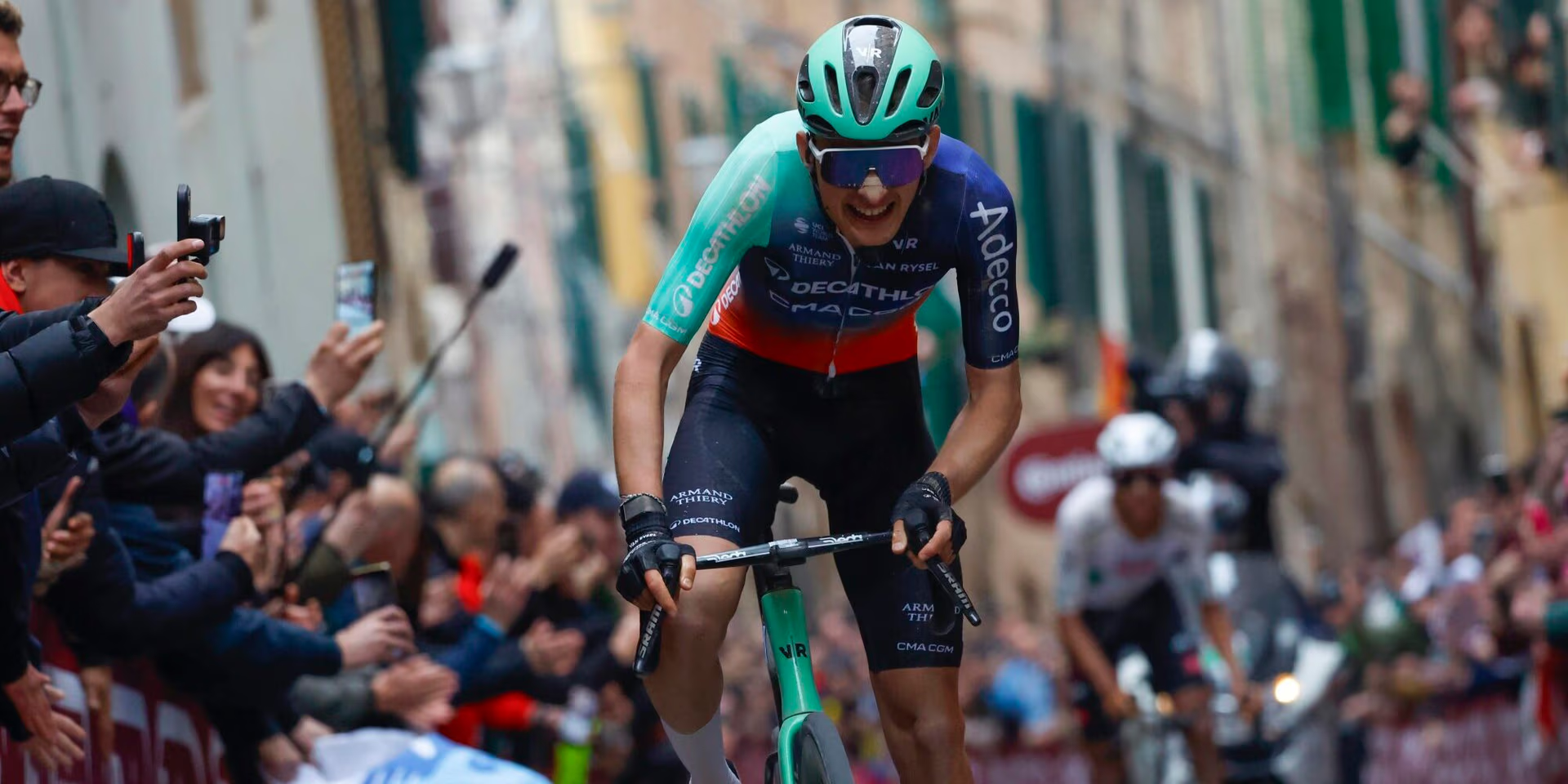
Initially, Tom Pidcock was still on his wheel, but the Brit had to drop back when his chain slipped off the chainring. Then it was the nineteen-year-old revelation Paul Seixas and teammate Isaac Del Toro who could follow the Slovenian longest. Especially the performance of the very young Seixas feeds the hope that the Frenchman might narrow the gap with Pogacar in the coming years.
For now, however, we still live in the Pogacar era. The indomitable willpower with which he wears down his rivals borders on the incredible. Think of how last year in Rwanda he became world road champion for the second time by attacking more than a hundred kilometers from the finish. Or his solo rides of thirty kilometers in Liège–Bastogne–Liège and thirty-four kilometers in Il Lombardia. On the way to his fourth Tour de France victory, he also wore the yellow jersey for fourteen days. His dominance increasingly has something manic about it.
Only a few could stand up to him on certain days last year: Mathieu van der Poel in Milan–San Remo, the Tour of Flanders, and in the Tour stage to Boulogne-sur-Mer; Remco Evenepoel in the time trials; and Wout van Aert on Montmartre in Paris.
For cycling enthusiasts, Pogacar’s pedal strokes have something majestic about them. The audience who switches from sport to sport, however, tends to lose interest more quickly, simply because the tension arc is missing and elite sport is at its best when unpredictability is involved.
Of course, every era of great champions eventually ends, sometimes sooner than expected. But honestly, I don’t see that happening to Pogacar in 2026 yet. At present, he is too dominant for that. At 27 years old, he is still young, and his hunger seems far from satisfied.
That was already clear last winter, when week after week he smashed Strava records. On December 19, for example, he set a new best time on the famous Coll de Rates, just a stone’s throw from Calpe. He was a full 24 seconds faster than his previous record—during a training ride he named “Merry Christmas and Happy New Year.” Just so you know.
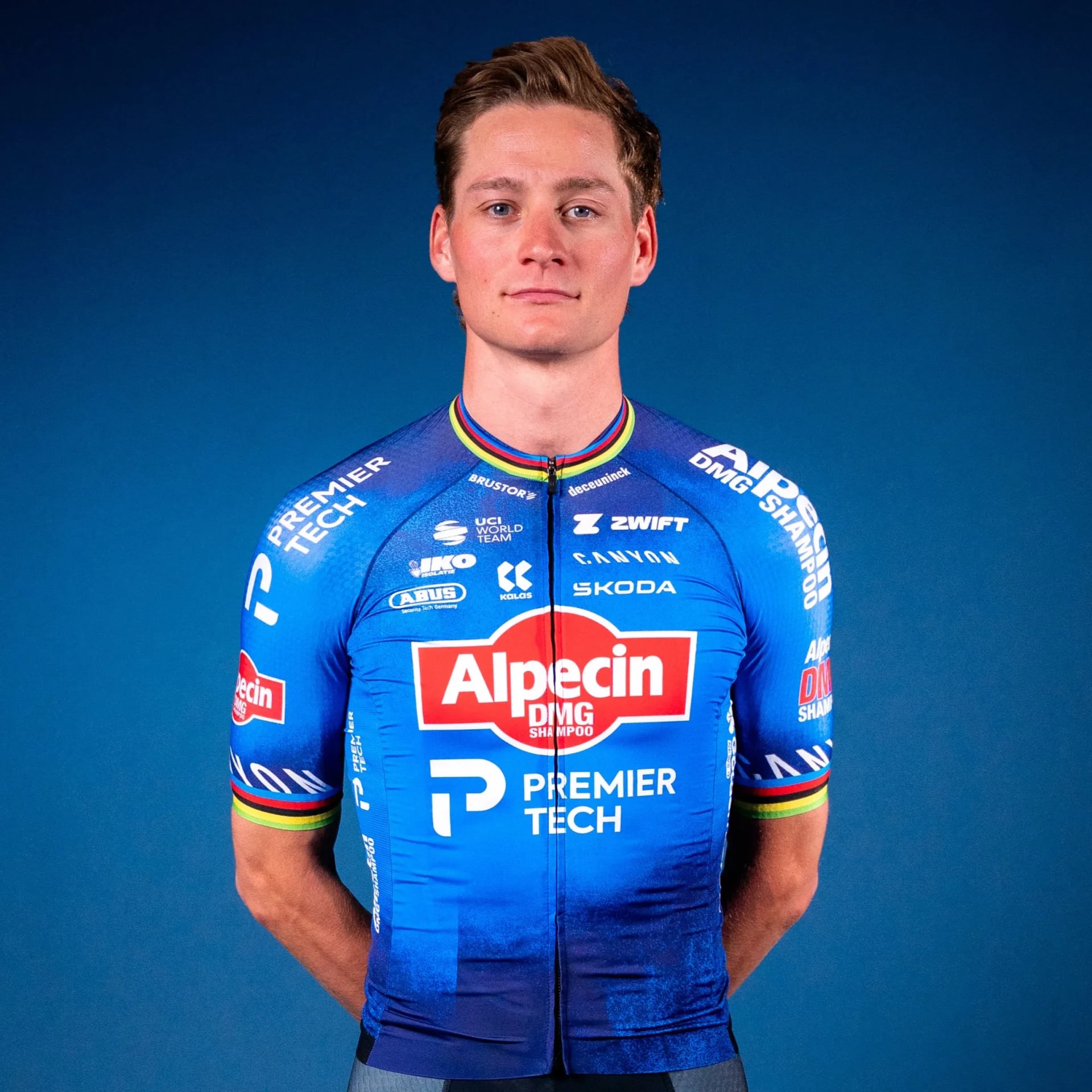
Secretly, we are already looking forward to the confrontations this spring between Tadej Pogacar and Mathieu van der Poel, who last week won Omloop Het Nieuwsblad after a long attack. Both started their season immediately with an impressive victory. And Van der Poel also seems to still be far from satisfied. After the Cyclocross World Championships in Hulst, the leader of Alpecin-Deceuninck already looked ahead to spring 2027. “Where would I stand if I could prepare all winter focused on the spring classics?” he wondered aloud.
After two spring classics, it is again clear who the rulers are. But at least as clear is that these two greats are far from done yet.