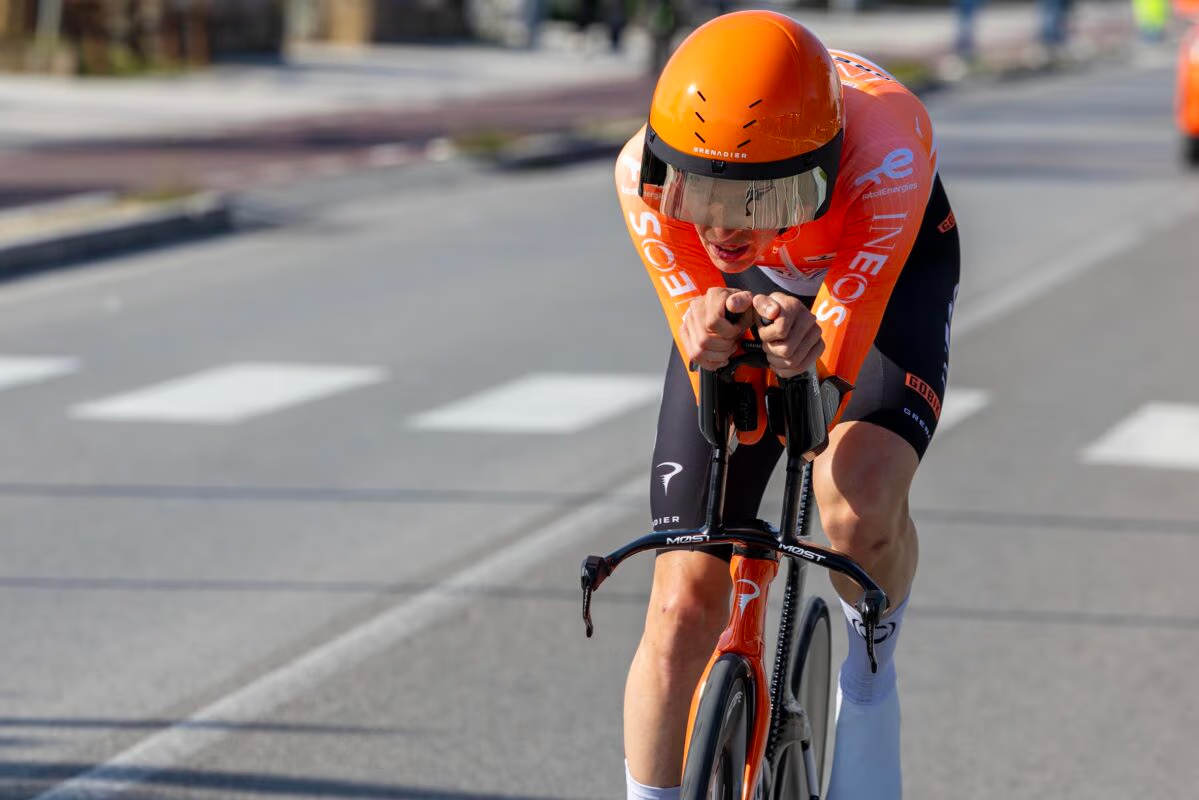
Tour 2025: Preview of Stage 13, Mountain Time Trial to Peyragudes - Short but Powerful
After five years, a true climbing time trial is finally back in the Tour de France. The last one is etched in many cycling memories, as it was the decisive uphill time trial to the summit of La Planche des Belles Filles in 2020. Now, we get a new edition on the steep slopes of Peyragudes, the Pyrenean climb that has been notorious in the Tour peloton for nearly fifteen years.
Route
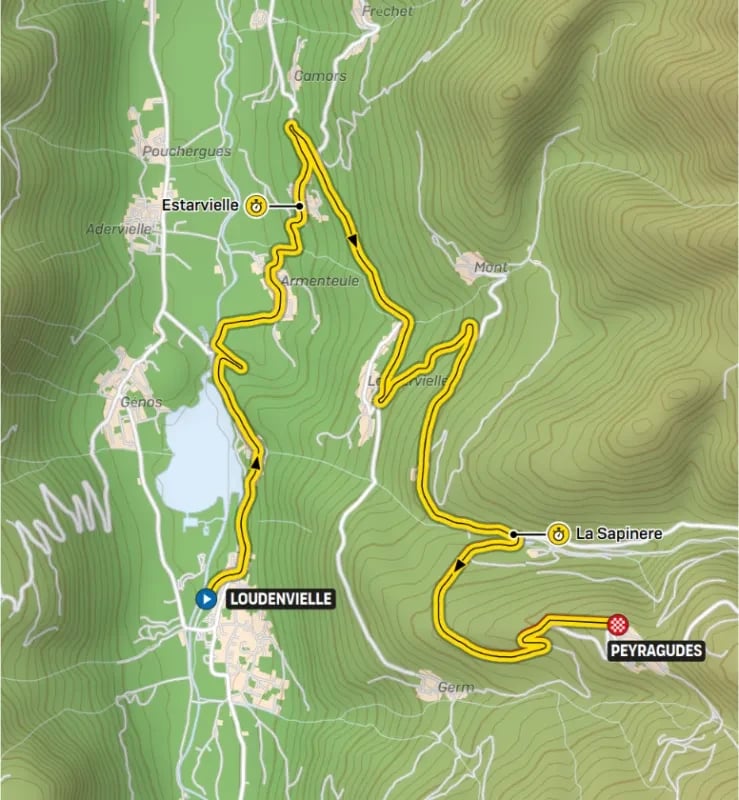
Stage thirteen of the Tour de France also features a mountain that has already seen quite some history between Jonas Vingegaard and Tadej Pogačar: Peyragudes. This time, the organizers have transformed the Pyrenean climb into a time trial, promising significant time gaps. This works to the disadvantage of the riders who aren’t fond of climbing, since they’ll have to haul themselves up as well. Because of the need to manage effort carefully, these could be the toughest eleven kilometers of this entire Tour.
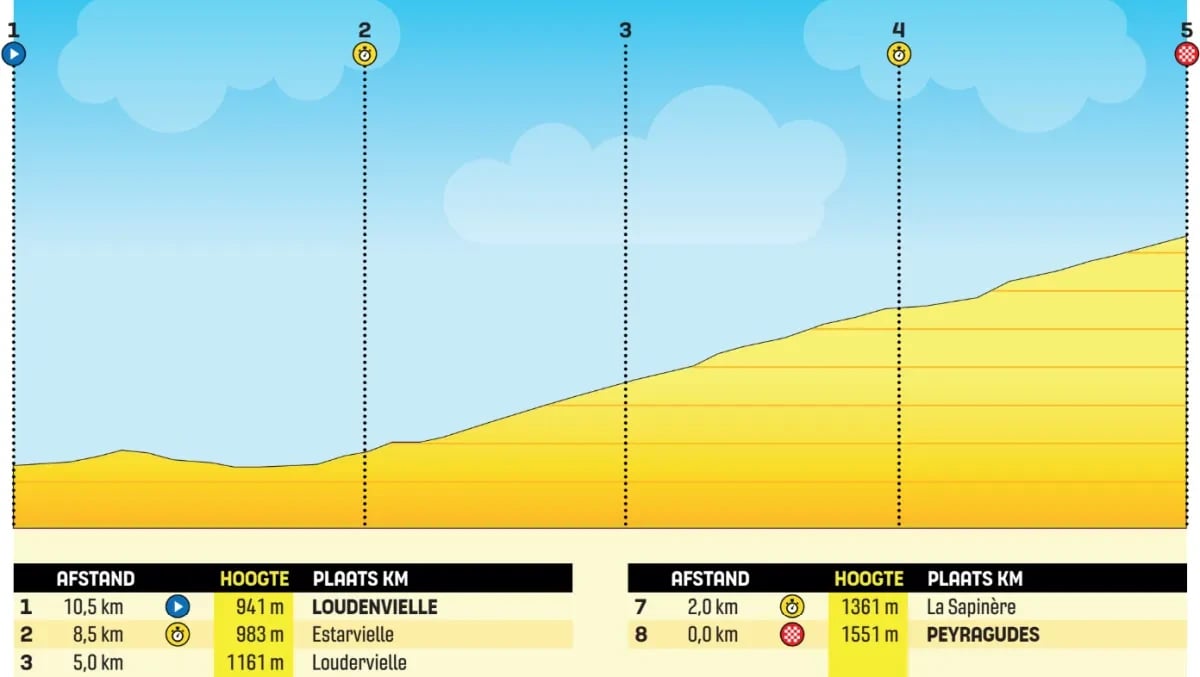
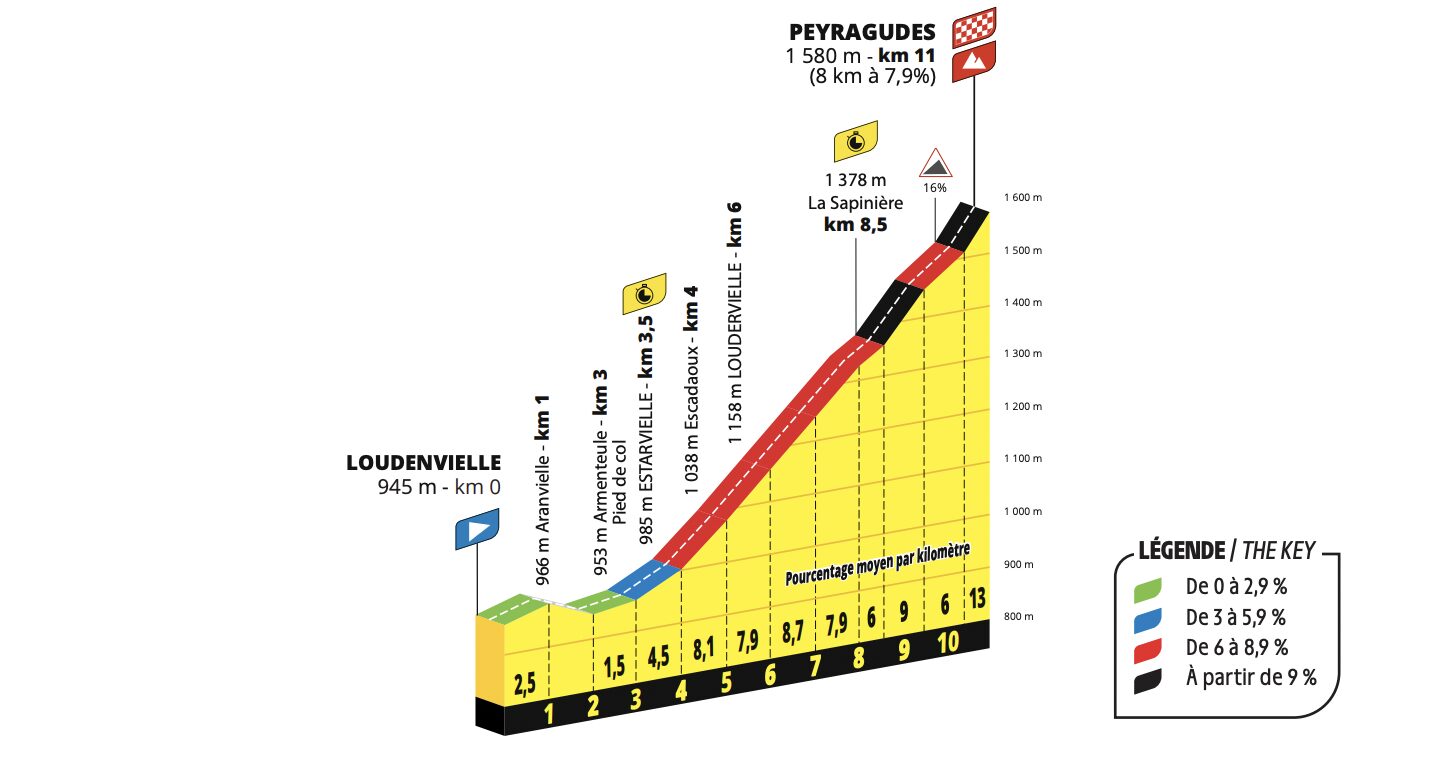
The time trial takes riders from the valley town of Loudenvielle up to the landing strip of the airport atop Peyragudes. After a (very) short flat opening, the rest of the time trial is a continuous climb to nearly 1,600 meters altitude. Peyragudes (8 kilometers at 7.8%) resembles a hyperbolic curve: the gradient gets steeper and steeper. The final kilometers rarely dip below 10%, and the steepest section at 16% lies in the last kilometer of the time trial. Intermediate time checks are located after 3.5 kilometers and 8.5 kilometers.
It’s questionable whether a bike change will make much sense. In recent hilly time trials, riders sometimes switched between their time trial machine and a climbing bike at the base of the final climb. But here, only the first three kilometers are flat, then the route is uphill all the way. Will everyone therefore start on a regular climbing bike?
Vingegaard and Pogačar had their last showdown here in 2022. The Slovenian won that day (thanks largely to Brandon McNulty’s long pulls at the front), but failed to truly break Vingegaard. As a result, the Dane retained his roughly two-minute lead in the GC and could start the final four stages in a comfortable position. Still, Peyragudes does not have a very long history. The climb made its Tour debut in 2012, when breakaway rider Alejandro Valverde soloed to victory. Five years later, Romain Bardet was the first to cross the finish line after climbing the steep airport strip.
Now, this steep finishing stretch sets the stage for the grand finale of a climbing time trial. This very specific discipline has actually appeared only five times in the Tour since the turn of the century. The first was in 2001, when Lance Armstrong triumphed in a climbing time trial to Chamrousse. Three years later, the stripped winner repeated the feat on l’Alpe d’Huez. Then there was the duel between Chris Froome and Tom Dumoulin to Mégève, with the Brit coming out on top. And, of course, the 2020 climbing time trial to La Planche des Belles Filles, where to everyone’s surprise Pogačar took the Tour victory at the expense of Primož Roglič.
Favorites
Before the first real mountain stage of the Tour de France, expectations were high and many questions unanswered. Jonas Vingegaard and Visma | Lease a Bike hoped to test Tadej Pogačar and crack the Slovenian, but it was the reigning Tour winner who blew his rivals away on the final climb to Hautacam. Vingegaard was dropped on ‘his’ mountain, losing more than two(!) minutes at the finish.
The 112th Tour de France is only halfway through and the toughest stages are still to come, but after Thursday’s uppercut, the fight for the overall victory seems all but decided. The gap between yellow jersey Pogačar and closest challenger Vingegaard is now 3:31. While the UAE Emirates leader can start thinking about consolidation, the camp of Visma | Lease a Bike is left licking its wounds.
But there’s little time to mourn the lost seconds. Friday brings the second crucial GC battle, this time against the clock. After five years, the climbing time trial returns to the Tour de France.
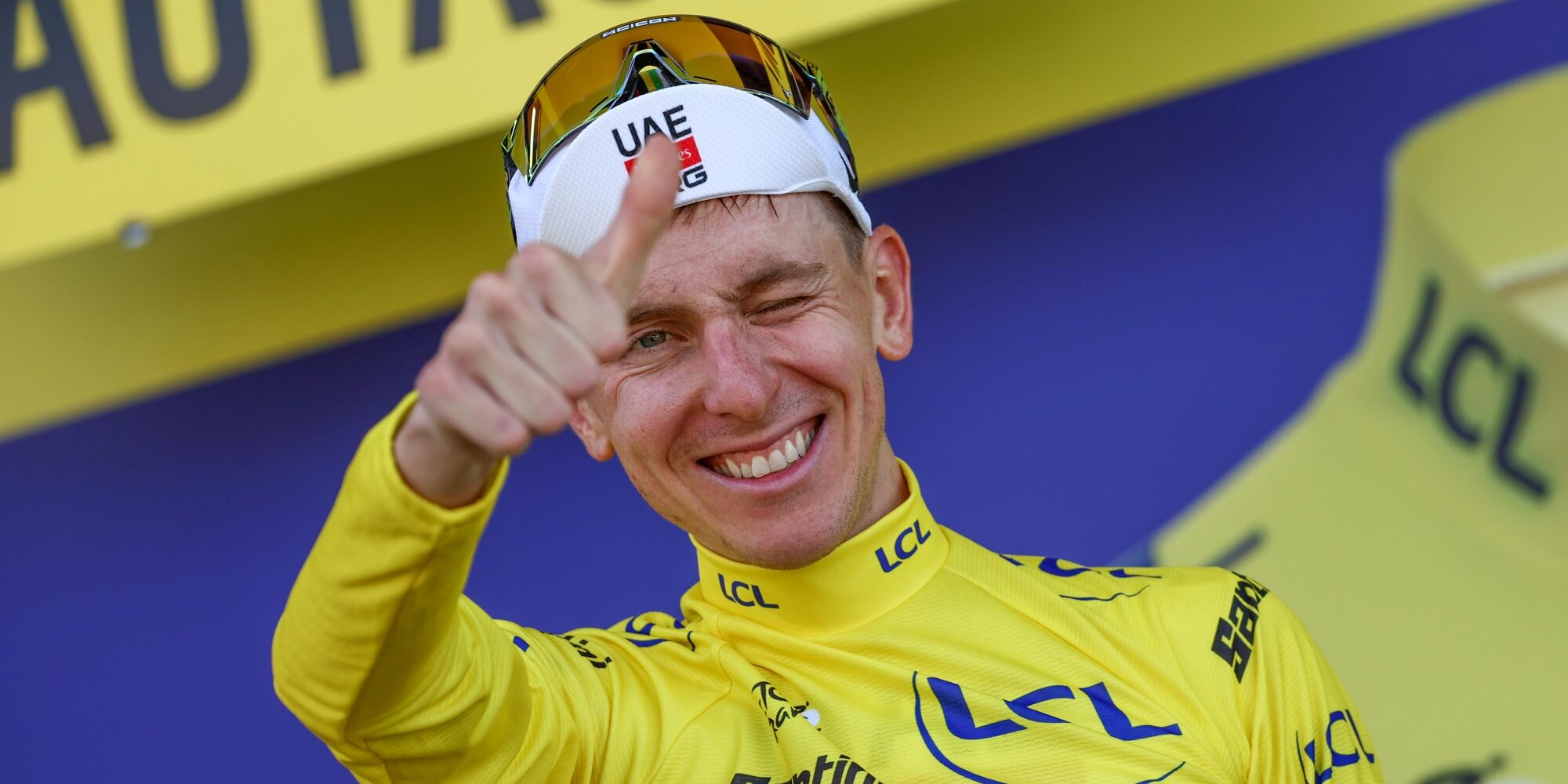 Tadej Pogačar seems on course for his fourth Tour victory – photo: Cor Vos
For the last real mountain chrono, we must look back to 2020. That time trial is engraved in every cycling fan’s memory: from Lure to La Planche des Belles Filles. In this 36+ kilometer battle against the clock, we witnessed one of the most nerve-wracking conclusions to the yellow jersey fight. Primož Roglič seemed to have the overall victory all but secured, only to see his dream shattered at the last moment.
While one Slovenian suffered the biggest defeat of his career, another took the overall win. The then 21-year-old Tadej Pogacar surprised everyone by winning the Tour de France that year. Of course, Pogacar was already considered the rising star at the time, but Roglič had been the clear favorite ahead of the race. It was Pogacar’s first, but certainly not last, Tour victory. Five years later, the UAE Emirates leader looks – especially after his demonstration in the Hautacam stage – ready for his fourth Tour triumph.
Based on what we’ve seen so far, Pogacar is the overwhelming favorite for the stage win, but a climbing time trial is a different discipline altogether. It bears no comparison with a regular mountain stage or a flatter individual time trial. In the first time trial to Caen, Jonas Vingegaard took a beating from Pogačar, but can he match the Slovenian on the way to Peyragudes? After Thursday’s drubbing, it seems unlikely, but maybe Vingegaard will feel much better the next day.
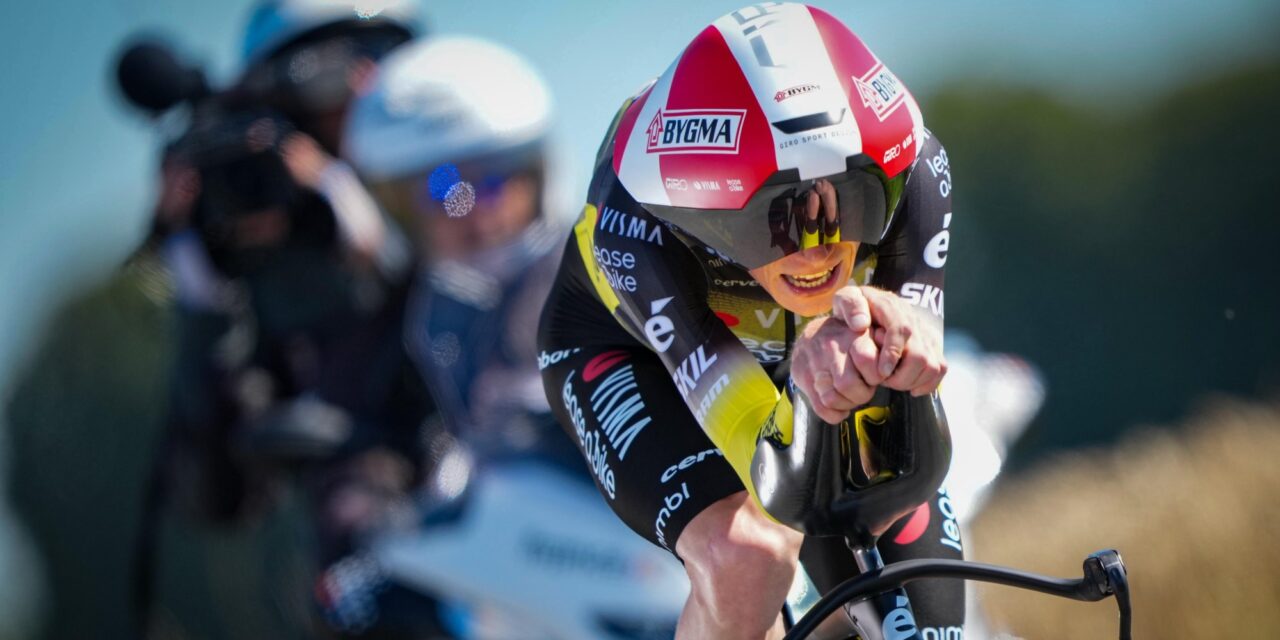 Can Jonas Vingegaard make up time on his big rival? – photo: Cor Vos
The fact that riders have to climb mostly all the way to the finish in Peyragudes is certainly not a disadvantage for lightweight Vingegaard. The Visma | Lease leader hasn’t raced many climbing time trials before, but he undoubtedly knows how to pace himself well in this relatively short but intense time trial. If he still wants to fight for the yellow jersey, he needs to make up time on his Slovenian rival, since his gap in the GC has grown considerably.
For the stage win, the focus remains on the two best climbers of the moment, but perhaps Remco Evenepoel, reigning world time trial champion, can pose a challenge alongside Pogacar and Vingegaard. In the first Pyrenean stage to Hautacam, he looked ready to crack after a bad moment on the Col du Soulor, but still managed to somewhat recover before the finish. Evenepoel lost three and a half minutes to Pogacar on Thursday but remains virtually third in the GC.
Evenepoel will want to take revenge in his favorite discipline, but he has yet to race a climbing time trial like Peyragudes at the pro level. Still, Evenepoel doesn’t see that as a disadvantage. "The only difference is that you have to produce more watts per kilo and it’s not flat. I’ll do my best to give everything I have. At least it helps that the start is calm and the legs won’t be too tired yet."
"I think I can compete for the win, but it's hard to say if that will happen. We still need to decide on equipment — whether to ride the regular road bike or the time trial bike. But it’s going to be special. I can only do my best," he said on the first rest day.
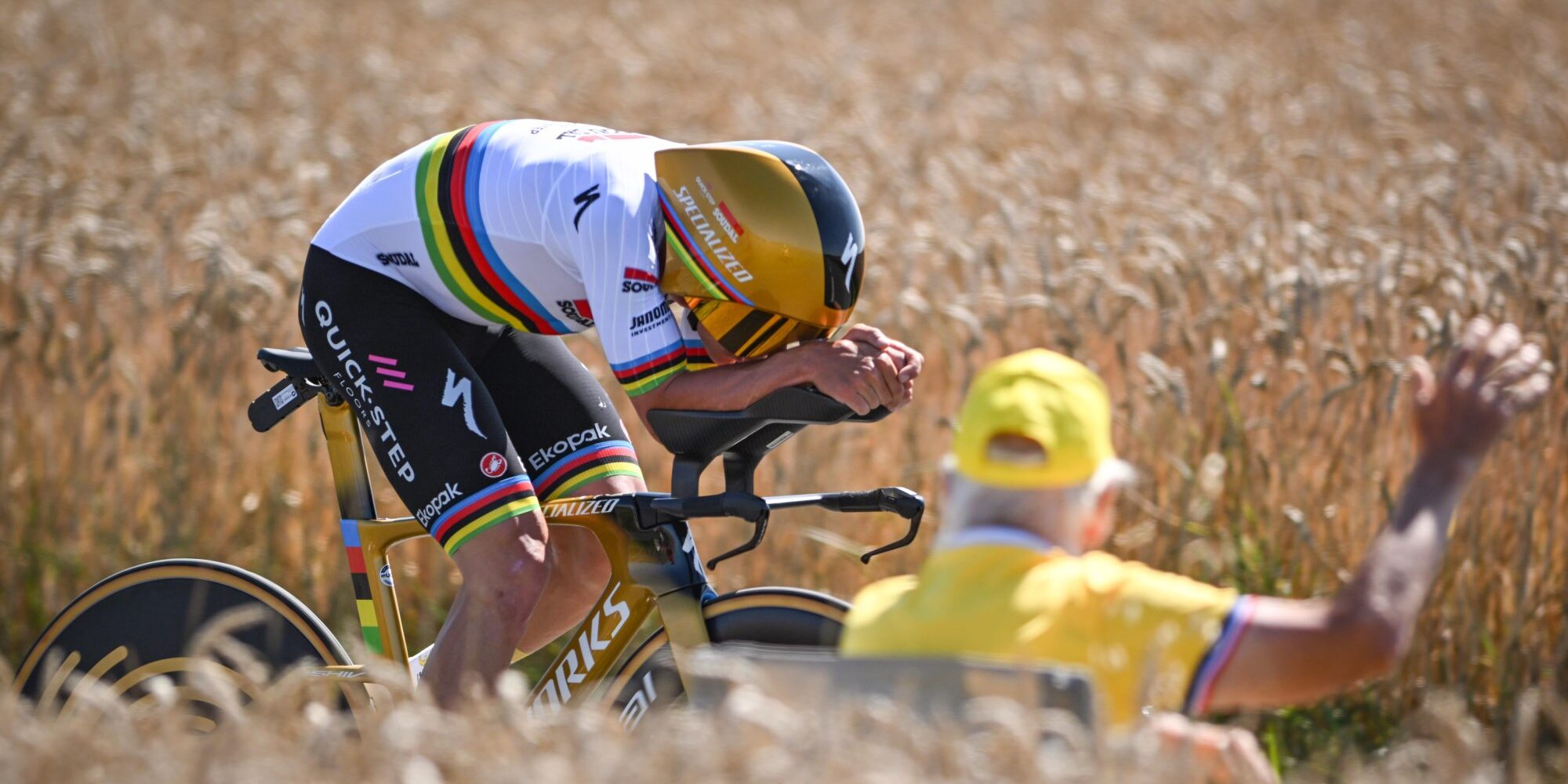 Remco Evenepoel is the world’s best time trialist – but in a climbing time trial as well? – photo: Cor Vos
For the other GC contenders, the strategy will likely be damage control — the level gap, especially compared to Pogačar and Vingegaard, is considerable. Or will Primož Roglič strike back as in his best days? The Red Bull-BORA-hansgrohe rider will certainly hope not to dwell too much on his painful defeat in his last Tour climbing time trial.
Will he break the curse of La Planche des Belles Filles five years on? However, we expect even more from teammate Florian Lipowitz. The German impressively finished third in the Hautacam stage and got very close to Vingegaard in the finale. That must give him a huge confidence boost hunting a podium finish. Given his very strong time trial abilities, we’re definitely considering a potential explosive performance.
Two other riders in the provisional top-10 of the GC, Felix Gall (Decathlon AG2R La Mondiale) and Oscar Onley (Picnic PostNL), recently faced a climbing time trial in the Tour of Switzerland. Both performed very well: Gall was only beaten by João Almeida, who has since abandoned this Tour, and Onley finished third. This should give both climbers confidence that they can deliver a strong performance in Friday’s time trial to Peyragudes.
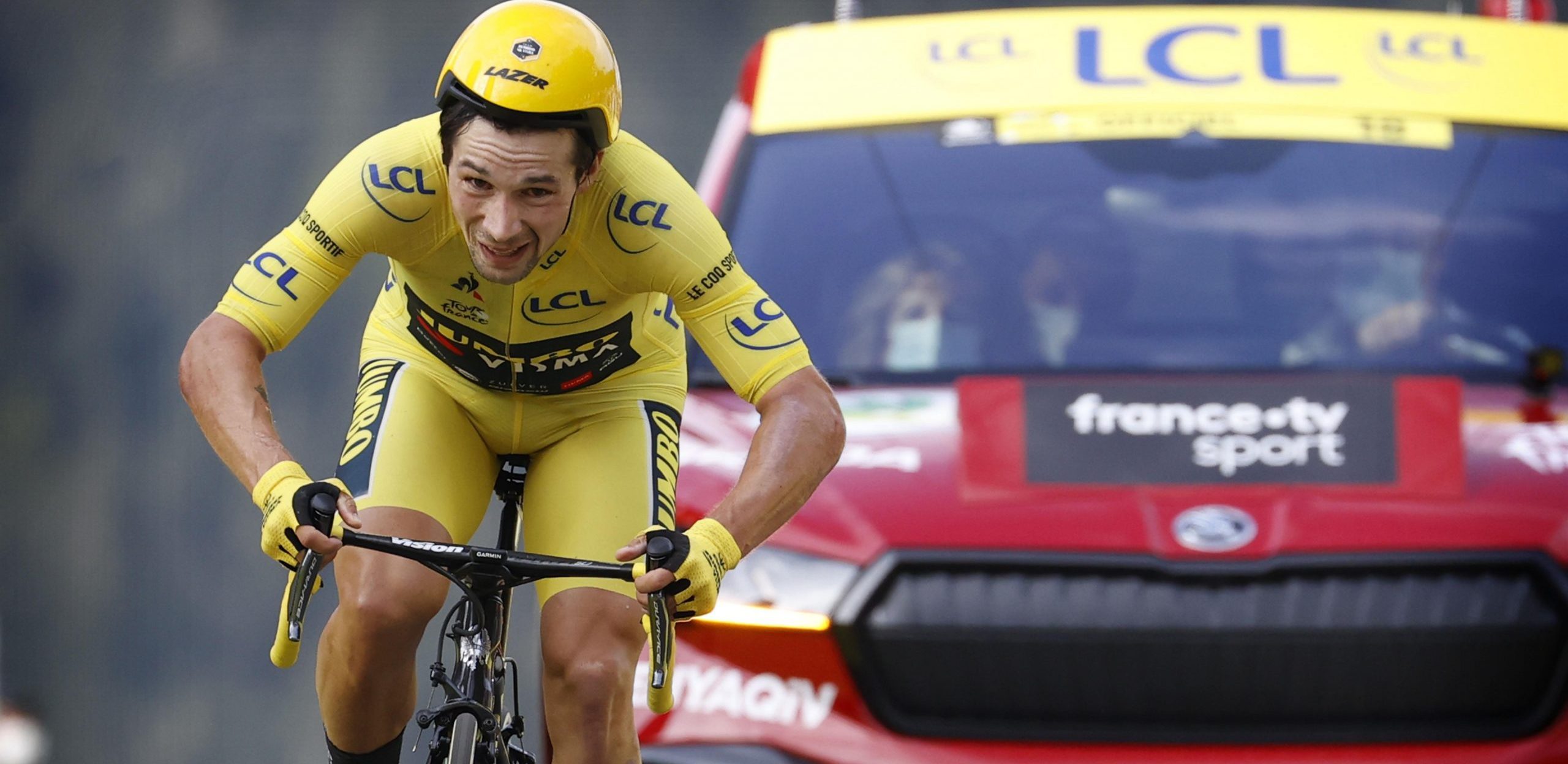 Primož Roglič’s last climbing time trial in the Tour did not end well – photo: Cor Vos
We also keep an eye on a strong performance from Matteo Jorgenson, who lost a lot of time on the way to Hautacam, and French hope Kévin Vauquelin from Arkéa-B&B Hotels. The latter finished a solid fifth in the first time trial to Caen, but Friday’s stage is a completely different kettle of fish. We’re also watching Enric Mas (Movistar), the very strong Tobias Halland Johannessen (Uno-X Mobility), and Carlos Rodríguez (INEOS Grenadiers).
While we mainly focus on the GC riders on Friday, there are also plenty of climbers with bigger deficits who could come out strong unexpectedly. We think of — and this may sound strange — Aleksandr Vlasov. The Russian climber is having a disappointing season and an equally colorless Tour, but he has been very consistent in time trials this year. The Red Bull-BORA-hansgrohe rider was sixth in the recent climbing time trial at the Tour of Switzerland.
Finally, we note the names Simon Yates (Visma | Lease a Bike), Mattias Skjelmose (Lidl-Trek), Ben O’Connor, Mauro Schmid (Jayco AlUla), Thymen Arensman, Geraint Thomas (INEOS Grenadiers), Harold Tejada (XDS Astana), Pablo Castrillo (Movistar), Michael Woods, Joseph Blackmore (Israel-Premier Tech), Maximilian Schachmann (Soudal Quick-Step), and Michael Storer (Tudor Pro Cycling).
Weather and TV
The riders will tackle the climbing time trial in almost dry conditions, although there is a small chance (15%) of some rain between 3:00 pm and 6:00 pm. In the start town Loudenvielle, it will be around 26 degrees Celsius, while at the finish in Peyragudes it will be about 22 degrees Celsius.
The thirteenth stage is broadcast live from start to finish on Eurosport 1 and via HBO Max. The NOS and Sporza also hold the broadcast rights for the Tour de France and will be covering live. For exact broadcast times, you can always consult our Cycling TV guide.