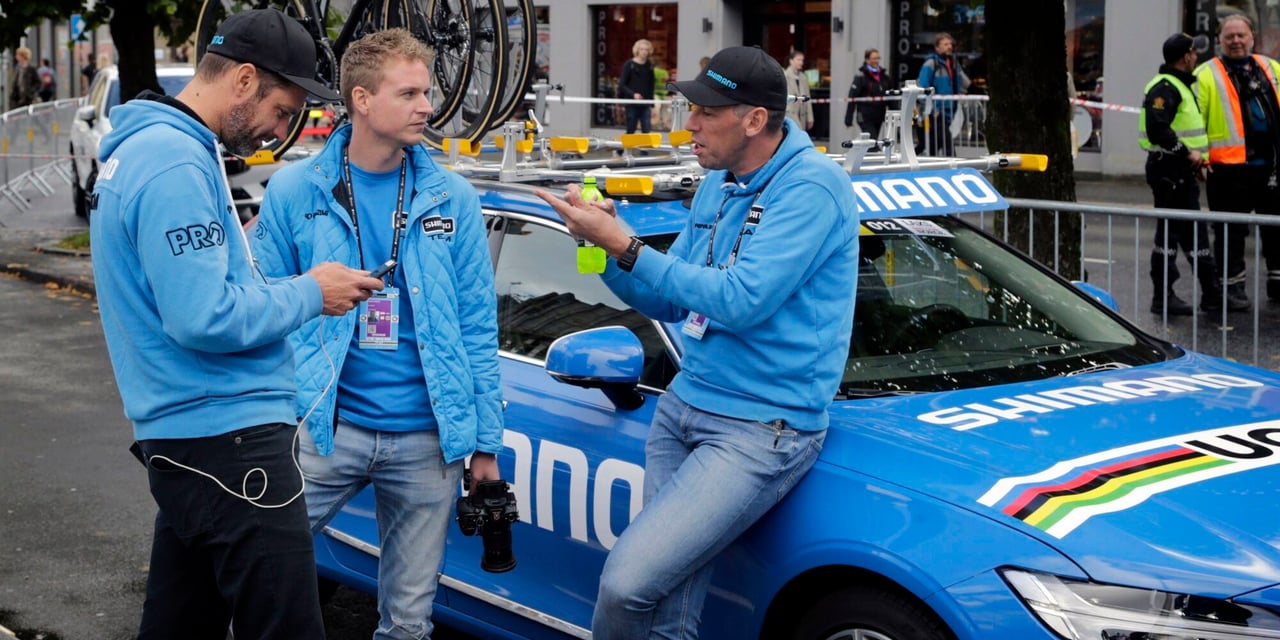
Why Spain is indispensable for Shimano in December
Take a flight to Alicante or Valencia these weeks, and there’s a good chance that female riders and racers will be on your flight or returning from it. The Costa Blanca is the ideal base for the global cycling world in December and January. Riders, staff, sponsors, journalists, and mechanics are there in large numbers. So are Joost Hoetelmans and Bert Roesems from Shimano, who tell WielerFlits why this is so important to them.
For the Dutchman and the Belgian ex-pro from Shimano’s Sports Marketing team, it’s a busy time. We meet with them mid-December at Restaurant Tango, a trendy lunch spot on the boulevard of the cycling spa town Calpe. Hoetelmans has just come from behind the scenes at the famous Sol y Mar hotel, where he helped the mechanics of Groupama-FDJ out of a jam. Although he is primarily responsible for the shoes of the (top) riders at Shimano, Hoetelmans also assists teams using Shimano groupsets with the setups of their new bikes. Roesems has various appointments as well and joins a little later for lunch.
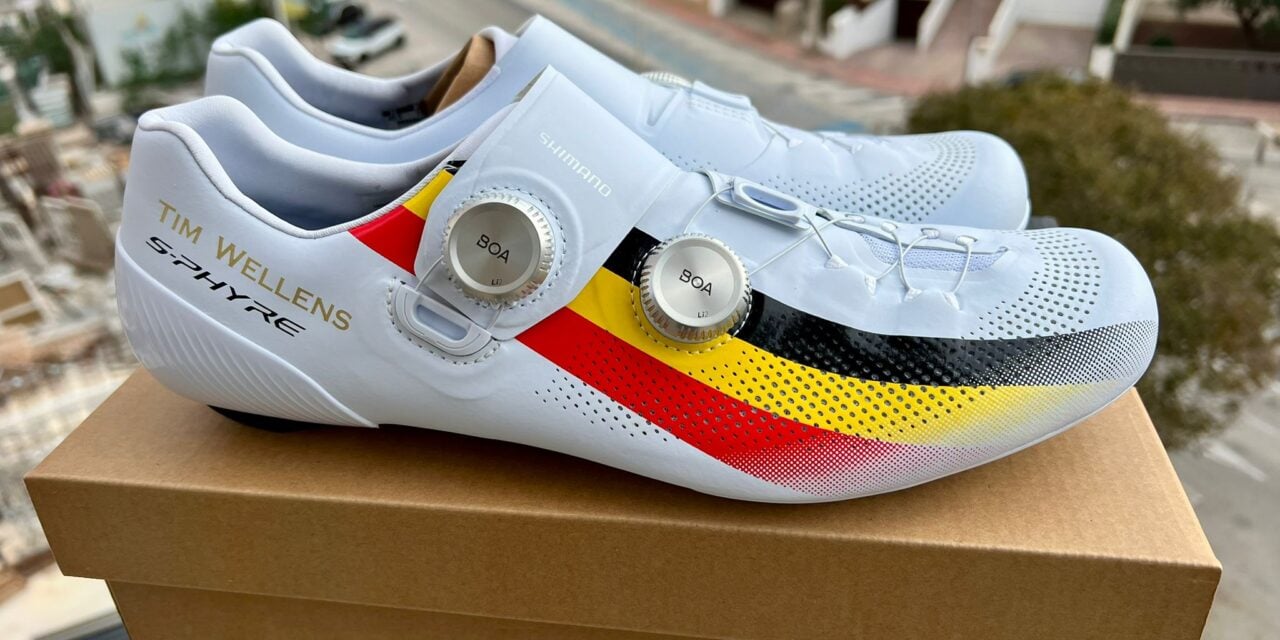
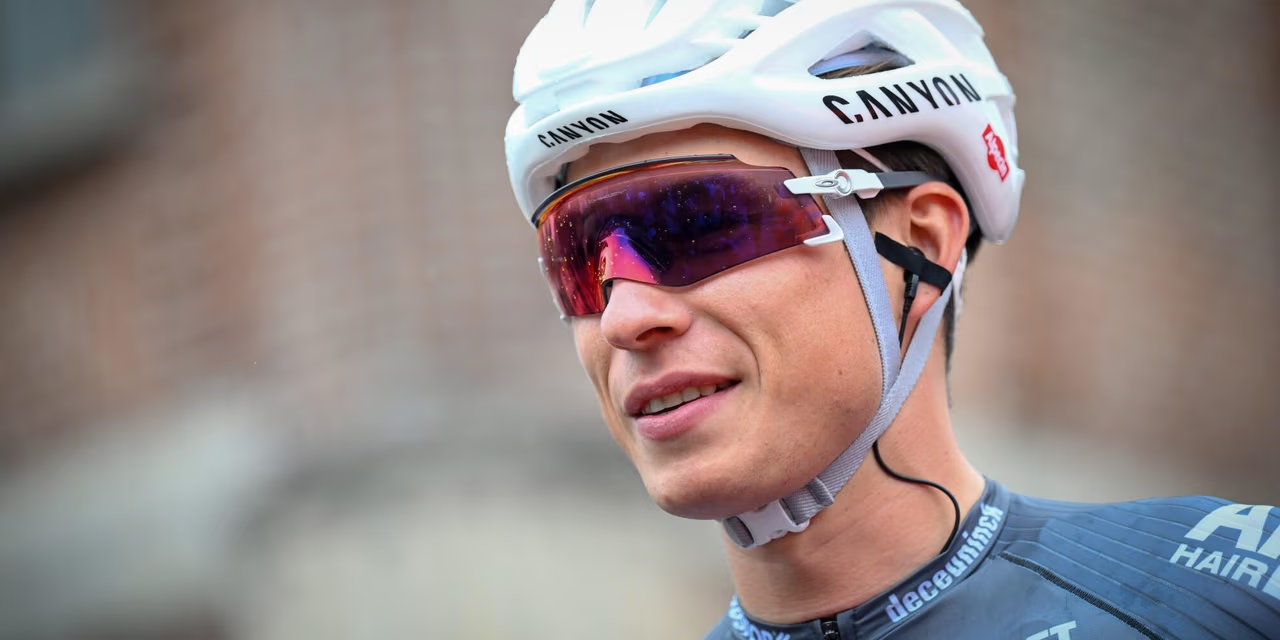
Both have been in Calpe for a few weeks and will stay until after the New Year. In the afternoon, there is a content session scheduled with UAE Emirates XRG and world champion Tadej Pogačar. Hoetelmans also has a little present for Tim Wellens. He is getting new, custom made Shimano shoes matching his kit as Belgian champion. “Sometimes I send boxes to riders’ hotels, sometimes I drop off a pair at someone’s home, and I filled my car up to the brim here,” laughs the Gelderlander. Mathieu van der Poel is also receiving shoes from him. The Japanese company makes special custom shoes for the Dutch top rider.
Technical support laying the groundwork for 2026
“I always combine two weeks of work in this period with vacation days that I try to save up throughout the year,” says Hoetelmans. “That has developed over the years. Then I also try to stay here privately before and after the Christmas period. That always works out well because almost all teams are present here anyway. Jayco AlUla, for example, was already here on November 27 this year. Officially, I was on holiday then, but I did go there for an appointment. I looked at the bikes with the mechanic, and some of the riders use our shoes. There were also people from Giant, so that was useful.”
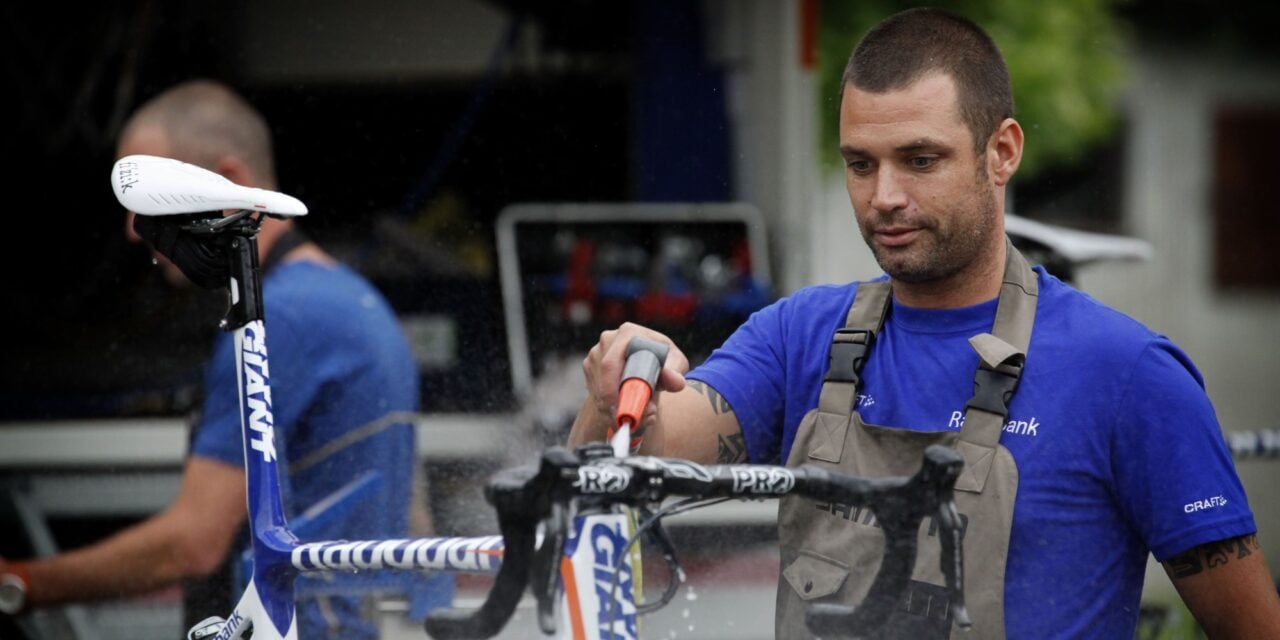
Hoetelmans was himself a mechanic for years at Rabobank, Blanco, and Belkin. Afterwards, he worked for Garmin and in recent years for Shimano. Besides being ‘head of shoes,’ he is also a materials expert at the Japanese parts manufacturer. He updates the teams’ mechanics on recent innovations and assists with building setups for the new season. They can always turn to him with questions. “We maintain contact here with the teams we sponsor. Bert handles the contracts; I’m mainly responsible for developing new products and providing technical training. During this period, we lay the foundation for 2026.”
Research shows: shoes need to be wider
At the beginning of December, two Japanese colleagues also joined them. They are working on developing a new cycling shoe. “They are studying the current footwear here, but also looking at feet. They make 3D scans to see if certain trends are noticeable. Everything you create new must be an improvement. Especially for pros, because for them it’s all about performance. However, at Shimano, it also has to result in a product they can sell in stores. An interesting and funny observation is that there is – especially from the American market – demand for wider shoes.”
“We suspect this is because people are growing taller,” Hoetelmans continues. “In height but also in girth, you see that reflected in children on the street. The study my Japanese colleagues are doing is to see if this also applies to professional athletes. Maybe then you have to make an extra shoe for the consumer market. Anyway, this is the place where you test new equipment. I've seen so many new kits pass by, teams on different wheels or with different material sponsors. Perhaps not smart to do that here, because the whole cycling world is in Calpe and surroundings during this period. But we do that ourselves, haha!”
An entire hour with Pogačar
According to Hoetelmans, he and Roesems should ‘just’ be in Spain during this time of year. “All our stakeholders are also here,” adds Roesems. “In the past, we visited teams at races. That remains, but as you know as a journalist: the pressure there nowadays is much greater than before. That’s why days like these are ideal to visit a service course. In December, you can still talk to everyone, basically. During training camps in January, there is a day and night difference. Many riders are no longer around then; other priorities come into play. Creating content is then completely out of the question.”
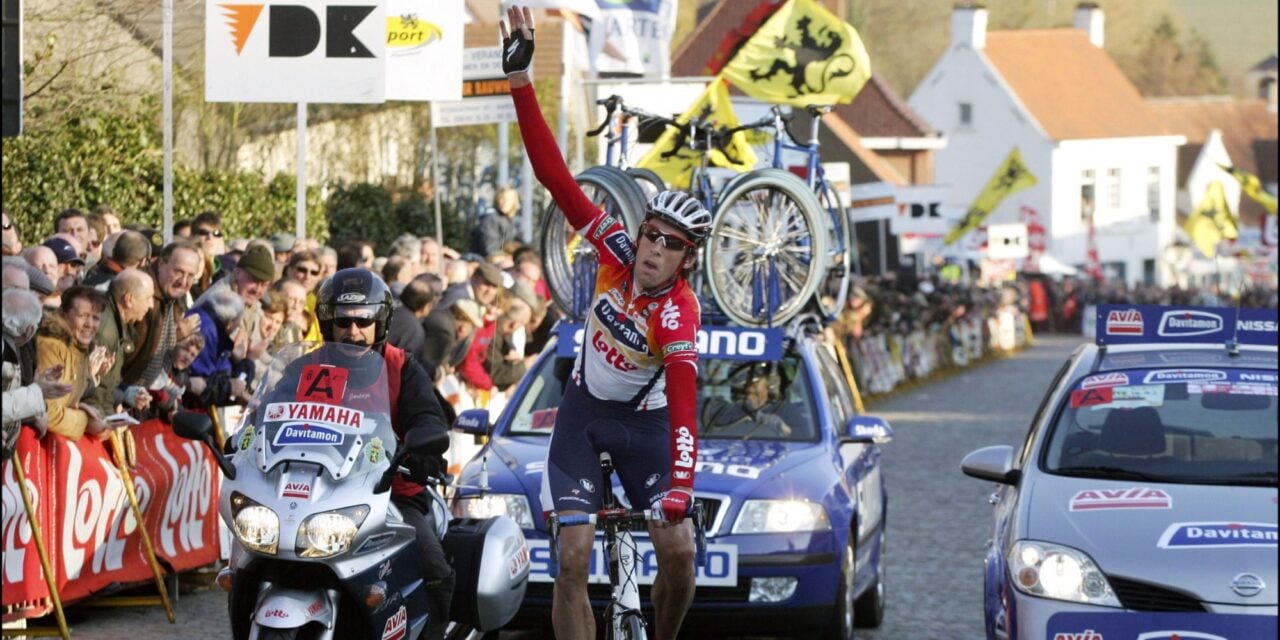
“We have seen this change enormously over the last few years,” continues the former Belgian time trial champion. “For example, if there are specific technical questions or requests now, we can arrange them before everyone is deep into the season. Also, many teams have media days for journalists in December and January, but also sponsor days for us. Then we can as a brand indicate which videos we want to create, and they facilitate that. Now, for example, we can record content with Pogačar for later this year; otherwise, we might not see Tadej again for a year. You can’t approach him with that in March anymore.”