World Cup returns to Sardinia with brand-new beach course a year after storm cancellation
Last year, the organizers of the World Cup in Sardinia faced the worst possible scenario for any race promoter. Due to a severe storm, they could no longer guarantee the safety of riders and spectators, forcing a last-minute cancellation of the race. This Sunday, the World Cup returns to the Italian island, albeit on a brand-new course.
It was quite a disaster in Cabras, almost a year ago. The night before the race, an improvised bar and dining area set up by the organization next to the course was completely destroyed by a lightning strike. To make matters worse, the press room also burned down. Gusts of wind exceeding 100 kilometers per hour caused even more damage. Despite the organizers’ efforts to get the course race-ready at the last minute, canceling was unfortunately the only option.
Financial blow
“For a local organizer, something like that is terrible,” Chris Mannaerts from the umbrella organization Flanders Classics explains to us. “I suspect they took a big financial hit. You can insure yourself, but not for everything. They didn’t let that bitter pill keep them down, and they wanted to get back on the calendar quickly. That World Cup in Sardinia absolutely had to happen, so they got the chance to do it again from us.”
Though no longer in Cabras, but about forty kilometers further south in Marceddi, Terralba. “A tiny fishing village that feels Afro-Italian thanks to the small, cozy houses and narrow streets. A few small boats line the course, evoking a typical Italian beach atmosphere. We didn’t stage that; everything is exactly as we found it here,” says Mannaerts.
This new location was not chosen specifically to avoid a repeat of last year’s weather scenario. “Nature is always unpredictable, but on this course you’re less exposed to the wind than in Cabras. But I think they would have switched anyway. The disadvantage of the previous course was that there were zero facilities on that lonely beach. Here, you have ten times as many: several restaurants, a block for the press and the race office, and so on. So it was mostly a logistical decision by the local organizer.”
Sand course
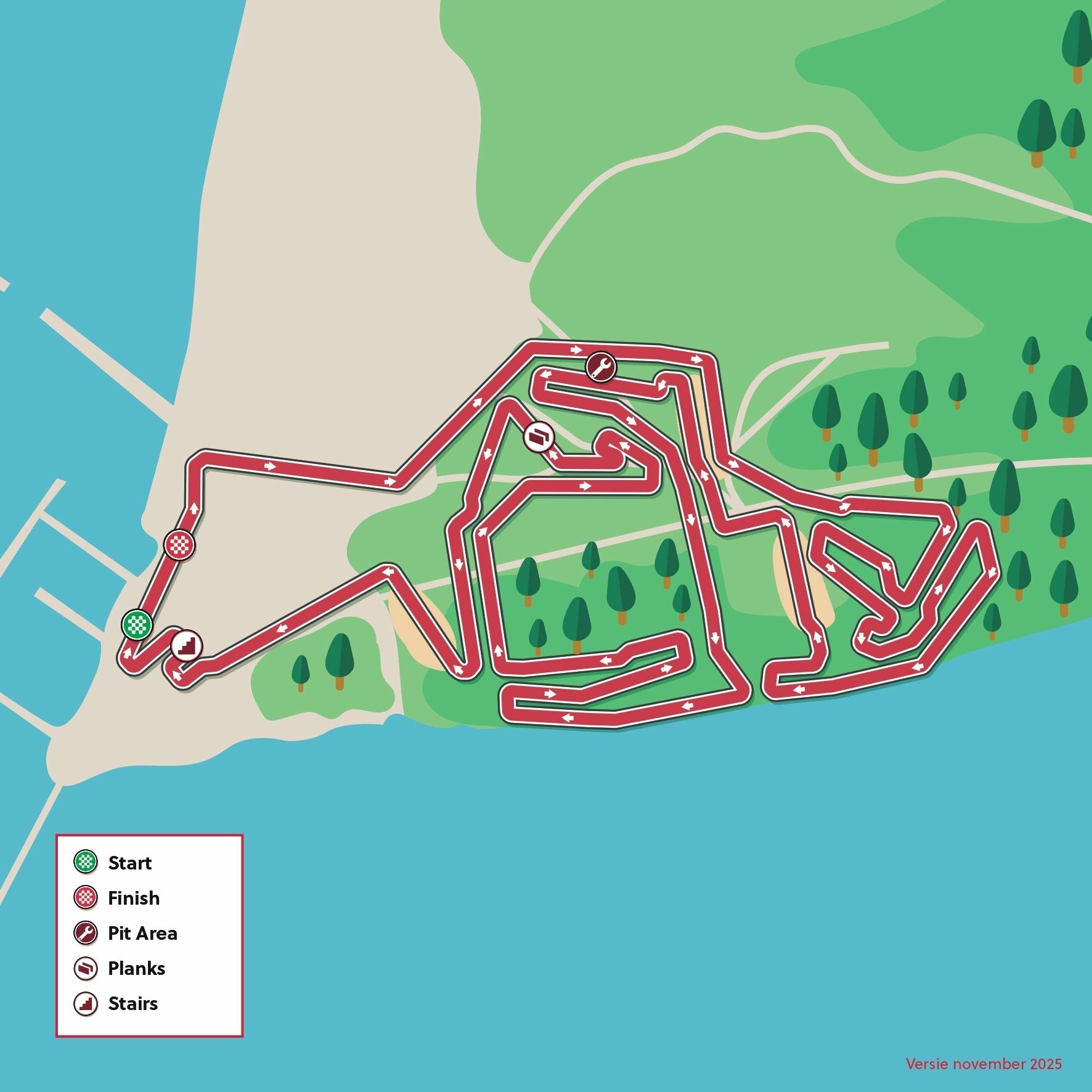
By the beach, Mannaerts and his team have designed a course where, according to the cross specialist from Flanders Classics, one thing immediately stands out. “The elevation gain will be less than one meter. It’s really flat as a billiard table. But that doesn’t make it any less tough. Due to rainfall, the ground is much heavier than expected. In the summer, we thought we might have to slow down the pace a few times around the loop to avoid it becoming too dangerous. That’s absolutely not the case.”
The highlight of the circuit is four short sandy stretches. “Don’t think of a beach like Ostend. These are more sandy paths among greenery, like you see in places like Oostmalle. But with much less sand. The rest of the terrain is mostly very green. It’s a beautiful loop with wide sections. We made sure not to turn it into a tight technical circuit but to design a race with a good flow.”
Furthermore, the course includes a beam section, which Mannaerts says coincidentally is on a tough patch. “Riders will have to dismount there. Then it goes quickly towards the last sand stretch, and just before the finish, there’s a small staircase by the chapel where they must get off their bikes a second time before hitting the final sprint. All these little things will wear them down.”