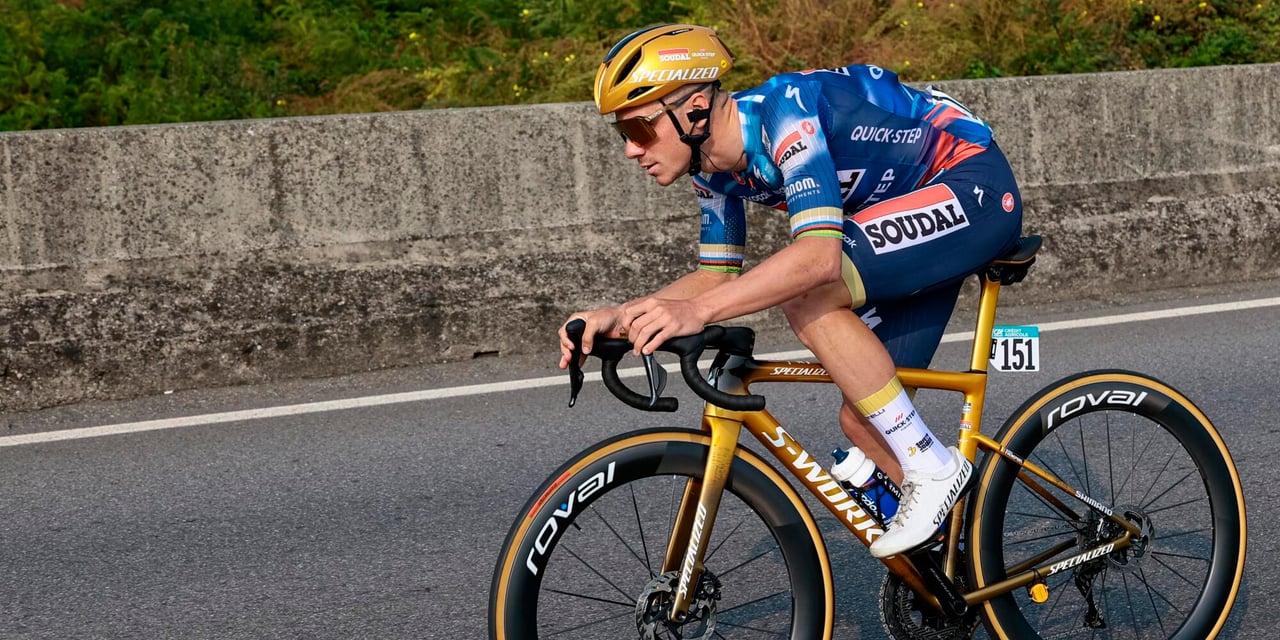
Will he ride or won’t he? Remco Evenepoel and the Tour of Flanders—that’s the flirtation that has Flanders intrigued following rumors from Het Laatste Nieuws and La Gazzetta dello Sport. According to the newspapers, the chances that Evenepoel will start in Flanders’ finest race are growing by the day. And we don’t think he would be without a chance either. Here are five reasons why a victory for Remco in the Tour of Flanders is not unrealistic.
Ten years ago, you could still say that a climber like Evenepoel needed to focus mainly on week-long stage races—supplemented by climbing classics like Liège-Bastogne-Liège and the Giro di Lombardia. Today, cycling has changed profoundly. Driven by world champion Tadej Pogacar, but also Wout van Aert and Mathieu van der Poel, specialization is making way for top riders who can perform across almost every terrain they face.
This also applies to the versatile Evenepoel, who can handle short and long climbs, flat roads and uphill sections, on both the road bike and time trial bike. So climbs like the Oude Kwaremont, Koppenberg, and Paterberg should be within his reach, right? After all, it was Evenepoel who passed Tadej Pogacar on the cobbled climb near the finish at the Rwanda World Championships time trial? That certainly shows Evenepoel doesn’t need to fear those cobblestones, although the ones in Flanders are often in worse condition.
As Marc Sergeant and Dirk De Wolf pointed out in Het Nieuwsblad, Evenepoel’s biggest challenge will likely be his less developed positioning skills. Those even hampered him last year in Liège-Bastogne-Liège. Fortunately for him, the Tour of Flanders is no longer a race decided in the last 50 kilometers. Nowadays, big races—and certainly the Tour of Flanders—tend to explode more than 100, sometimes 150 kilometers from the finish, making positioning less critical.
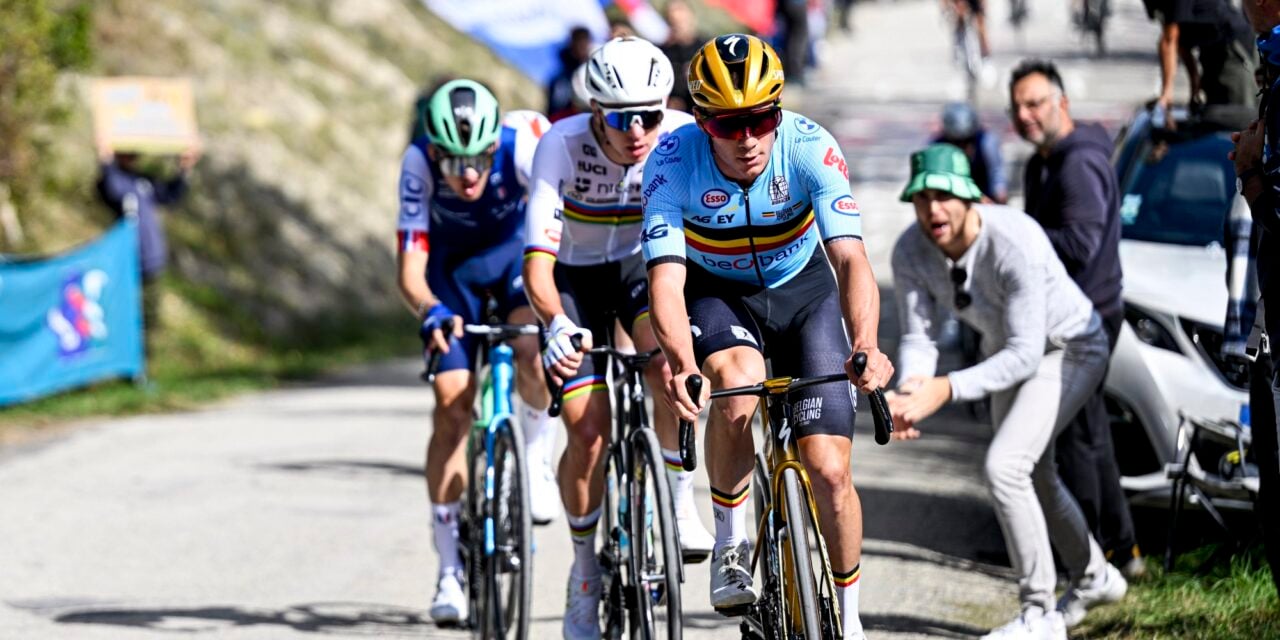
Evenepoel often goes long - photo: Fotopersburo Cor Vos
This racing style has naturally been popularized by Mathieu van der Poel and Tadej Pogacar, but Evenepoel thrives in these kinds of race conditions as well. If he breaks away early with several strong riders, he doesn’t have to fight as much for position. Moreover, the great engine of the comet from Schepdaal comes more to the fore compared to his more explosive rivals. Their finishing sprint might be somewhat blunted that way. It’s no coincidence that Evenepoel beat Wout van Aert in the sprint at the Brabantse Pijl this year.
Don’t be mistaken: although Evenepoel has never raced the Tour of Flanders, as a resident of Gooik he regularly trains on Flemish roads, except for occasional trips to Spain. Evenepoel openly admits that during those training periods he sometimes rides on the routes of the Tour of Flanders. In recent years, he has even been present several times during Soudal Quick-Step’s recon rides for the race, where he held his own on climbs like the Koppenberg.
Evenepoel also has years of racing experience on Flemish roads. As a junior, he won Kuurne-Brussels-Kuurne and Nokere Koerse, which feature numerous cobbled climbs. In his first pro season, he took the cobbled stage in the Baloise Belgium Tour. Not to mention the World Championships in Leuven, the Druivenkoers (both including the Moskesstraat), and the Brussels Cycling Classic (with the Muur van Geraardsbergen and Bosberg). Furthermore, Evenepoel rarely makes a poor impression at his debuts, as seen in this year’s Amstel Gold Race.
Although Red Bull-BORA-hansgrohe, Evenepoel’s team in 2026, had already invested heavily in the classics this year by signing Jan Tratnik, Oier Lazkano, Mick and Tim van Dijke, and Laurence Pithie, the unit never really clicked. The team aimed to score in spring races with some breakout riders from the previous year, but it completely fell apart.
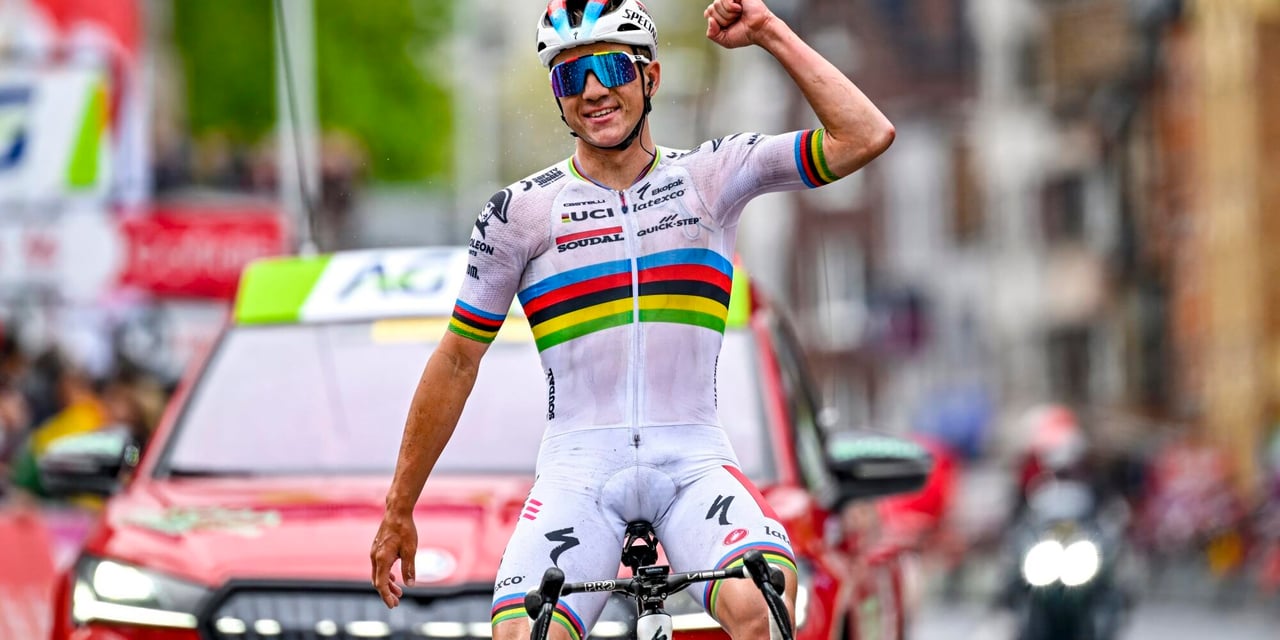
Evenepoel won twice in Liège - photo: Fotopersburo Cor Vos
“It’s been a difficult process, with many new riders coming into a new project. Many riders have been sick, and we’ve had to make last-minute changes to our selections more than once. I don’t want to use that as an excuse, but it certainly made it harder to build something from scratch,” said team director Heinrich Haussler at the time. The team also lacked a true finisher for those Flemish races, which it now has with Evenepoel (and super domestique Gianni Vermeersch) in its ranks.
Evenepoel has a knack for one-day races. Aside from his Vuelta a España win and Tour de France podium, it has often been challenging for the Belgian to maintain top form for three weeks. Often this was due to disrupted preparation or bad luck, but there’s no denying that his road world title, two world time trial championships, wins in Liège-Bastogne-Liège, the Clasica San Sebastian, and two Olympic gold medals rank among the best achievements in his palmarès.
In short, in one-day races Evenepoel always seems to have that little extra. Perhaps it’s due to the distance suiting him better, peaking for a single day, or something else, but it certainly doesn’t diminish his chances in the Tour of Flanders.