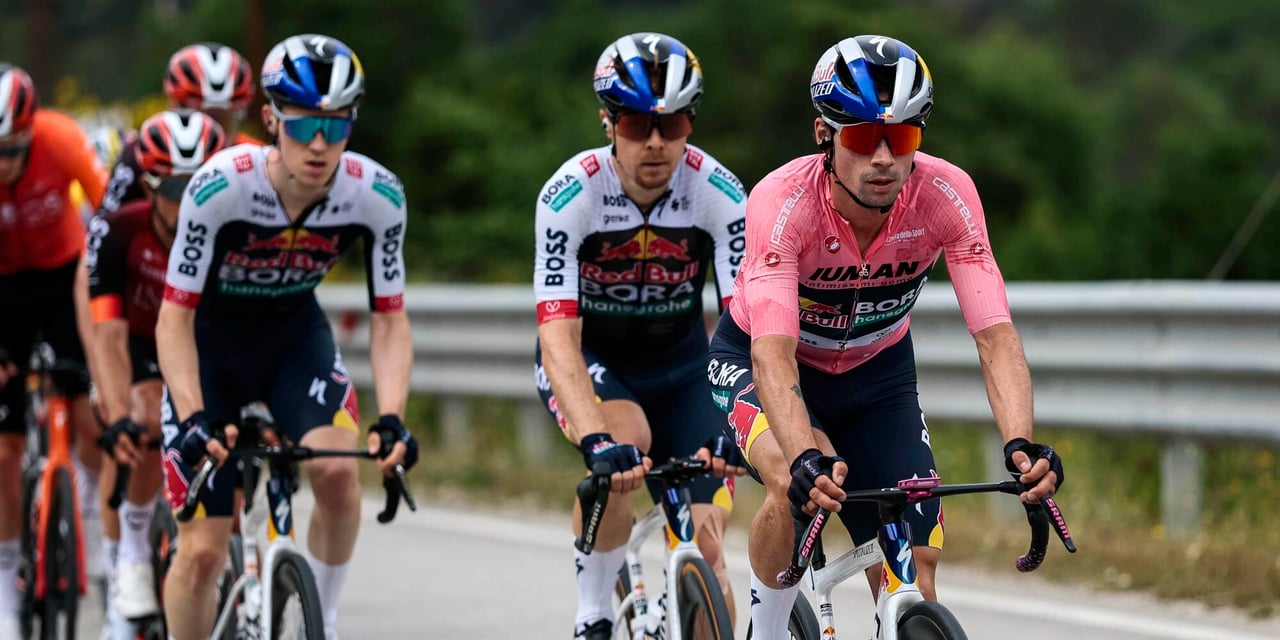
Now that the complete route of the 2026 Giro d'Italia has been unveiled, we can already draw the first conclusions. What are, for example, the key stages in the battle for the overall victory? WielerFlits takes a closer look at five (on paper) crucial stages.
In recent weeks, there have already been plenty of rumors about the 2026 Giro d’Italia, but on Monday in Rome the full route of the 109th edition was officially presented. As was known for some time, the Giro starts on May 8th in Bulgaria. After this foreign opener, three challenging weeks await on Italian soil, featuring a longer time trial and multiple tough mountain stages.
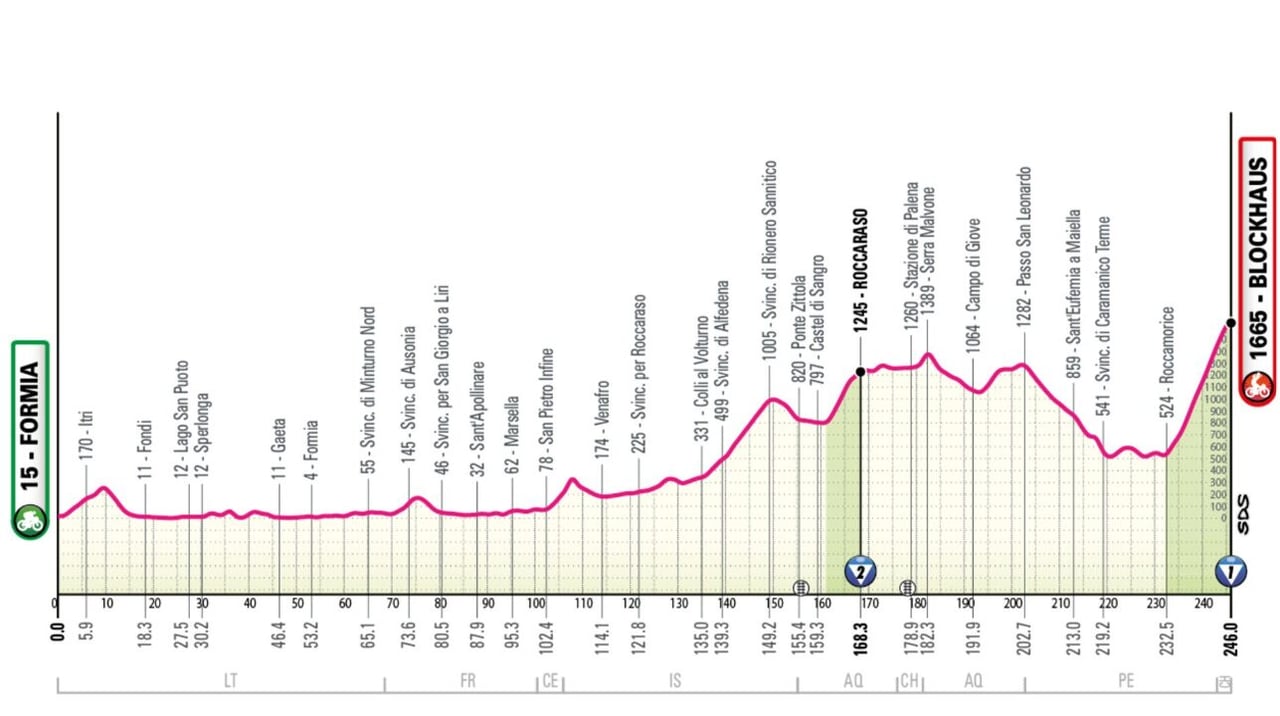
Stage 7 - Image: RCS Sport
In the opening week, there are already some climbs, but the first real showdown between the climbers comes in stage seven. The riders will finish on the slopes of the punishing Blockhaus climb (13.5 km at 8.1%) in the Abruzzo region, ascending via the toughest side from Roccamorice. An interesting note: at 246 kilometers, it is by far the longest stage of this Giro.
The Blockhaus climb (1,665 meters) has not featured very often in the Giro, but it has already taken a prominent place in the race’s history. In 1967, a certain Eddy Merckx claimed his very first Grand Tour stage win there. The most recent Giro passage (for the men) over the slopes of the Blockhaus dates back to 2022: that day, eventual overall winner Jai Hindley crossed the line in first place.
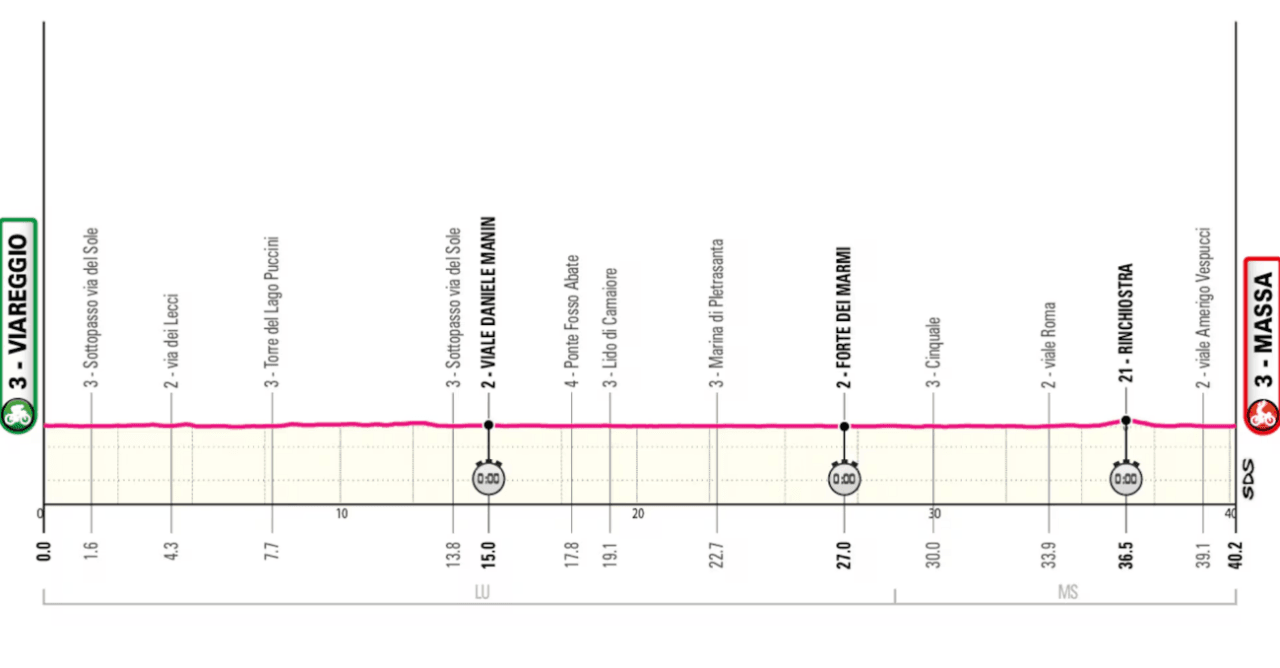
Stage 10 - Image: RCS Sport
A Grand Tour is often decided in the mountains, but the overall winner also has to perform well in the time trial. That is no different for the upcoming Giro d'Italia. After an undoubtedly much-needed second rest day, it’s all hands on deck for the GC contenders as the organizers have laid out a flat time trial route (with only fifty meters of elevation gain) between Viareggio and Massa in the Tuscany region.
This individual test against the clock is 40 kilometers long, which is quite rare to see in modern cycling. For pure climbers, it will feel like an ordeal; for the stronger time trialists, it’s a prime opportunity to deliver a blow and build a cushion ahead of the decisive mountain stages in weeks two and three.
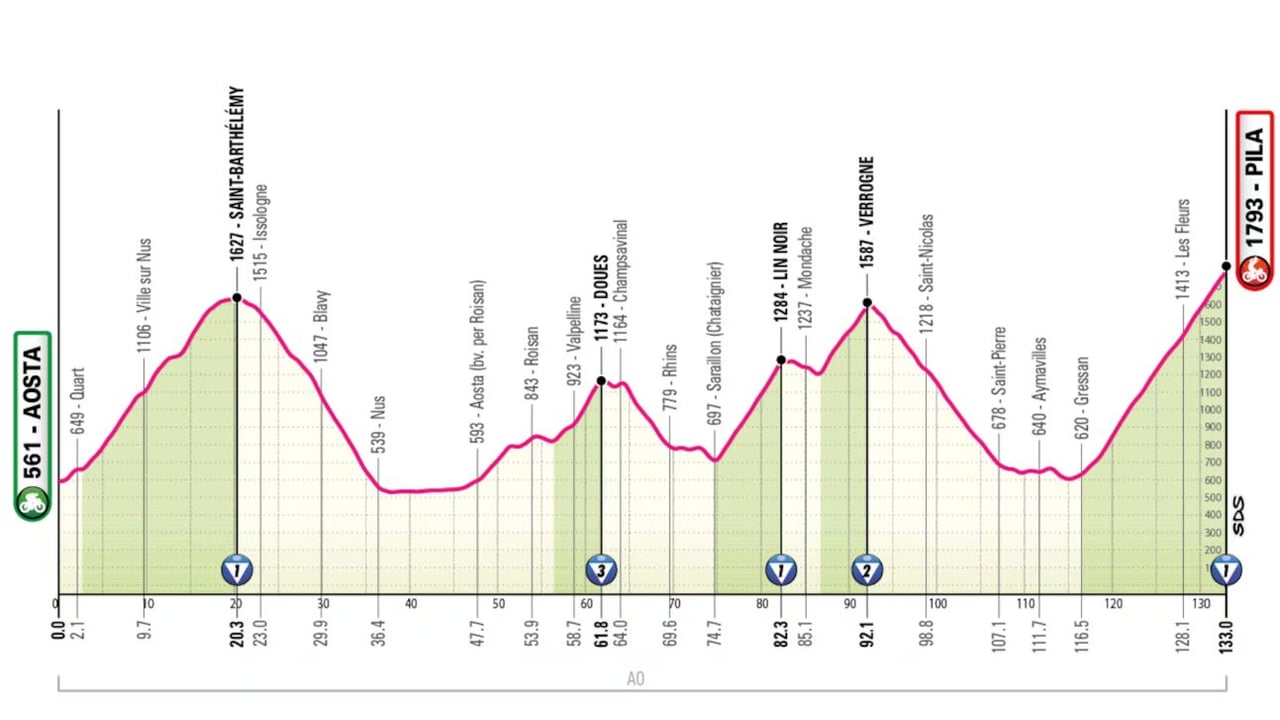
Stage 14 - Image: RCS Sport
For the climbing specialists, it’s important to limit losses in the lone time trial before striking in one of the following mountain stages. Stage fourteen, for example, finishes in Pila. In this tough mountain stage through the Valle d'Aosta region, riders face three first-category climbs and a total of 4,400 meters of elevation gain over just 133 kilometers.
With the Saint-Barthélémy climb (first category), Lin Noir (first category), and the final ascent to Pila (also first category), the stage looks hard enough to create gaps. The last climb is 17.6 kilometers long with an average gradient of over 7%. Tough stuff!
The final week of a Grand Tour usually sees the battle for the overall win decided, and a similar scenario can be expected for the upcoming Giro d’Italia. Especially since several mountain stages are on the agenda. For instance, the riders will cross the Swiss-Italian border briefly in week three for a mountain stage between Bellinzona and Carì, which sit at 1,664 meters.
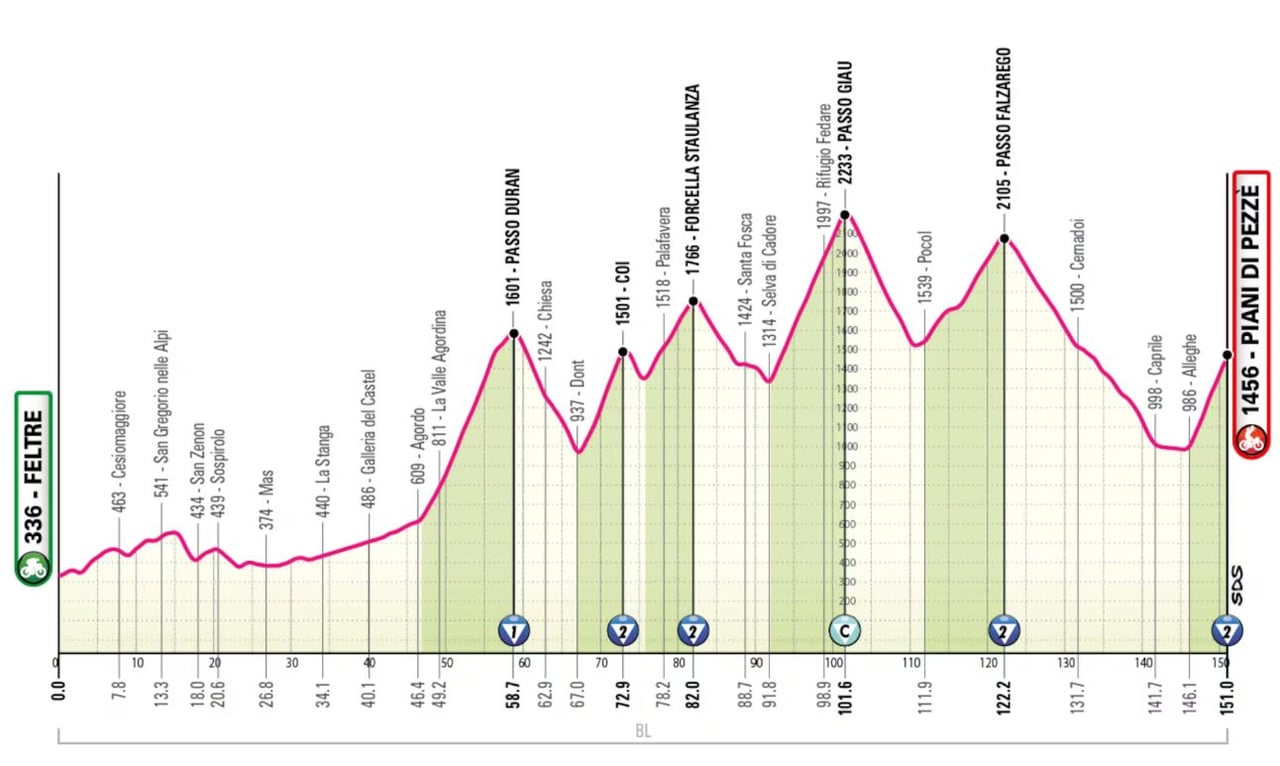
However, the GC riders will be particularly wary of the Dolomites stage from Feltre to Pian di Pezzè, featuring climbs of the Passo del Duran (first category), Passo Staulanza (second category), the notorious Passo Giau (hors catégorie), Passo Falzarego (second category), and the final ascent to Pian di Pezzè (second category).
Giau, which rises to 2,233 meters above sea level, is the Cima Coppi—the highest point of the Italian race. In this Dolomites battle, gaps are sure to widen significantly, though the final verdict will likely come just one day later.
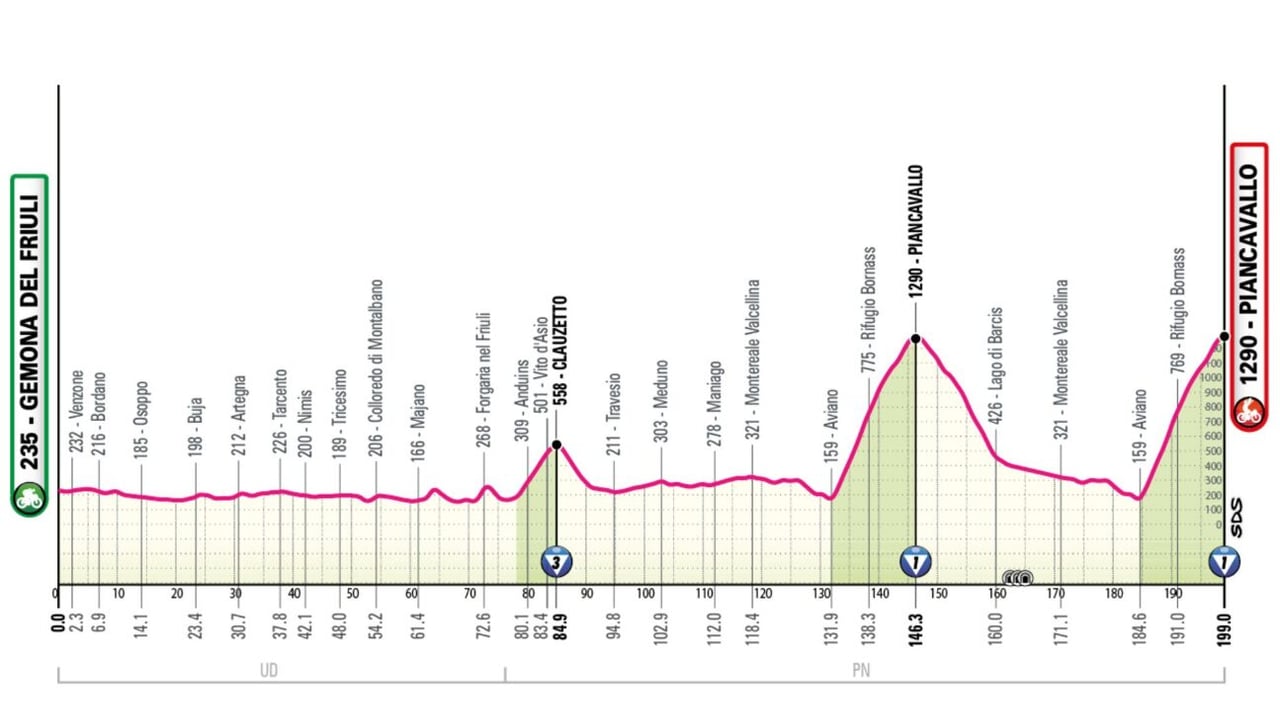
The decisive penultimate stage starts in Gemona del Friuli, after which riders will pass through the towns of Buja, Colloredo di Monte Albano, and Majano—via Lake Barcis—before reaching Aviano. The finale will take place on the ascent to Piancavallo (14.3 kilometers at 7.9%), which must be climbed twice.
This is the climb where Tao Geoghegan Hart and Wilco Kelderman battled for stage glory in 2020. The Brit emerged victorious and also took the overall win that year. In 2020, Hart and Kelderman only had to climb Piancavallo once, however. On the summit of this climb, we normally get to know the overall winner of the 109th Giro d'Italia.
Stage 19 - Image: RCS Sport
Stage 20 - Image: RCS Sport
| Date | Stage | From | To |
|---|---|---|---|
| 08-05 | 1 |  Nessebar | Burgas |
| 09-05 | 2 | Burgas | Veliko Tarnovo |
| 10-05 | 3 | Plovdiv | Sofia |
| 12-05 | 4 |  Catanzaro | Cosenza |
| 13-05 | 5 | Praia a Mare | Potenza |
| 14-05 | 6 | Paestum | Napoli |
| 15-05 | 7 | Formia | Blockhaus |
| 16-05 | 8 | Chieti | Fermio |
| 17-05 | 9 | Cervia | Corno alle Scale |
| 19-05 | 10 | Viareggio | Massa |
| 20-05 | 11 | Porcari | Chiavari |
| 21-05 | 12 | Imperia | Novi Ligure |
| 22-05 | 13 | Alessandria | Verbania |
| 23-05 | 14 | Aosta | Pila |
| 24-05 | 15 | Voghera | Milano |
| 26-05 | 16 |  Bellinzona | Carì |
| 27-05 | 17 | Cassano d Adda | Andalo |
| 28-05 | 18 | Fai della Paganella | Pieve di Soligo |
| 29-05 | 19 | Feltre | Piani di Pezzè |
| 30-05 | 20 | Gemona del Friuli | Piancavallo |
| 31-05 | 21 | Roma | Roma |