Preview: Gree Tour of Guangxi 2025 - Who Will Win the Season’s Final WorldTour Race?
The WorldTour season now (almost) traditionally comes to an end in China. At the Tour of Guangxi, the WorldTeams get one last chance to score crucial UCI points. Who will take the victory? WielerFlits looks ahead.
History
Last edition
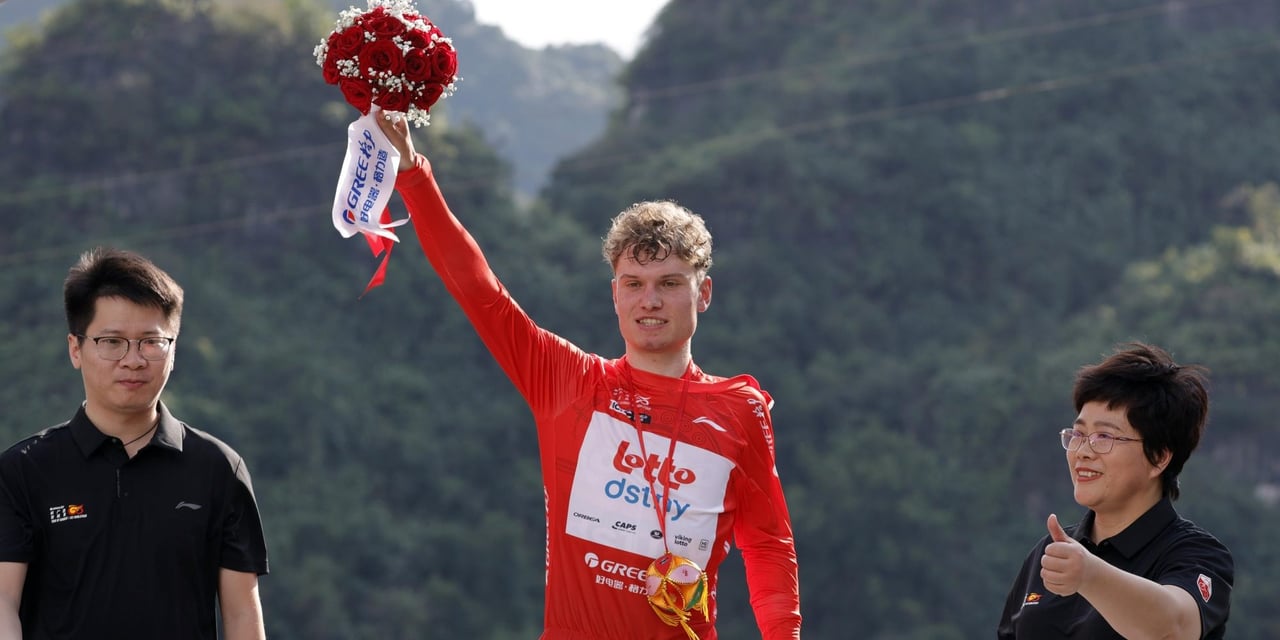
In 2024, the Tour of Guangxi could be described as at least Belgian-flavored. No fewer than three Belgians won stages in China, and the overall classification was won by Lennert Van Eetvelt, who struck on the penultimate day in Nongla, taking the leader’s jersey from Max Kanter.
The German had claimed the leader’s jersey by finishing second twice and placing in the top eight twice during the first four flat stages. Stage wins in those days came as surprises from Lionel Taminiaux, Warre Vangheluwe, and twice Ethan Vernon.
But the final act was yet to come. On the final climb to Nongla (3.3 kilometers at 6.6%), it was Van Eetvelt who took control of the race ahead of Oscar Onley and Alex Baudin. In the last stage, the Belgian’s leader’s jersey was never in danger.
Route
The sixth Tour of Guangxi covers a total of 1019 kilometers through the Guangxi autonomous region. The race is by now traditionally won on the climb to Nongla. Around that finish, many stages will be decided in sprints—although some stages will require surviving a climb or two.
The first stage of the Tour of Guangxi is almost entirely flat and keeps the peloton around Fangchenggang. The peloton covers 149 kilometers in total, split over four laps of about 35 kilometers each. The biggest obstacle in that circuit is a 1-kilometer climb at 5.5% gradient.
Stage two in the Tour of Guangxi is a bit hillier. From Chongzuo to Jingxi, nearly 180 kilometers must be raced. Will it end in a sprint? That seems likely. However... at 30 kilometers from the finish lies the summit of National Road (7.7 kilometers at 4.2%). Who can survive here?
The third stage in the Tour of Guangxi is the longest of the race at 214 kilometers. The stage goes from Jingxi to Bama and is very hilly, though nowhere truly difficult. In the finale, there are three categorized climbs, but none are particularly demanding. Although the first climb extends almost nine kilometers, with a gradient of 2.8%.
Stage four includes almost 2500 meters of elevation gain. On paper it is the queen stage, but it won’t be where the Tour of Guangxi is won. The finish is not uphill but in Jinchengjang. The last serious hill is 25 kilometers out and is nearly 4 kilometers at 6.4% gradient.
The Tour of Guangxi will be decided, as in previous editions, on the climb to Nongla (3.2 kilometers at 7.2%), which is, on paper, the only first-category climb in this race. The approach to the final climb from Yizhou is almost flat—except for a small climb at 50 km from the finish. It all kicks off at the base of Nongla!
The Tour of Guangxi traditionally finishes in Nanning. The organizers have designed a flat 134-kilometer stage but with a great danger appearing five times: a climb of 1.3 kilometers at 11.5% gradient. This climb must be tackled for the last time twenty kilometers from the finish. Will differences still be made here?
Favorites
Who will win the Tour of Guangxi? It will depend on who still has legs this late in the season and who even still has the motivation. Looking at the start list in China, quite a few strong names are still present.
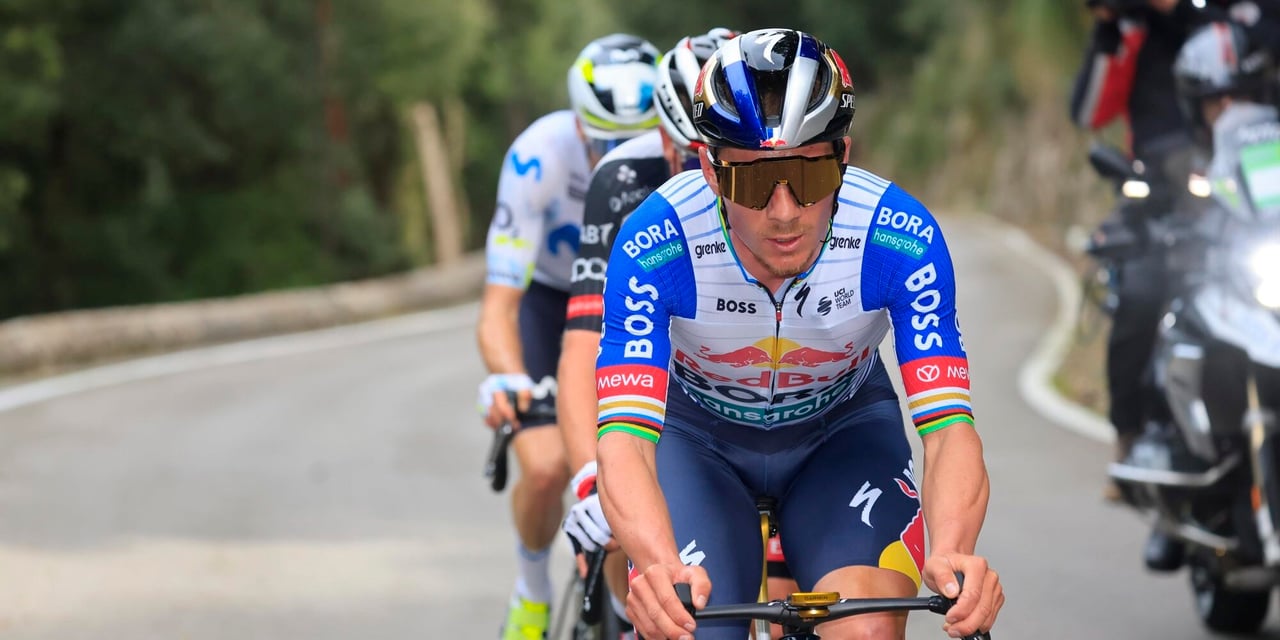
What about Mattias Skjelmose? The Danish winner of the Amstel Gold Race starts alongside Bauke Mollema in China, and the climbs in Guangxi seem tailor-made for the Dane. Skjelmose looks to be the man to beat.
As often this season, the men from UAE Emirates XRG are the biggest rivals. Just look at who the team has lined up in Guangxi: Jan Christen, Felix Grosschartner, and Jhonatan Narvaez... Take your pick. Based on the season and current form, it will likely be the Ecuadorian.
Finally, we see many 'one-star candidates.' Alan Hatherly, Aurelien Paret-Peintre, Cian Uijtdebroeks... All should be able to show something here. The same goes for riders like Frank van den Broek and Pello Bilbao, who fall just outside the stars here. Paul Magnier still gets the last star; perhaps he will gather enough bonus seconds along the way to survive the climb to Nanning.
Sprinters
When it comes to sprinters, we naturally look at Paul Magnier. But in China, a whole army of sprinters will appear at the end of the season. From a Dutch perspective, it’s interesting to keep an eye on Marijn van den Berg and Casper van Uden. Especially Van den Berg could try to challenge Magnier in the slightly more selective sprints.
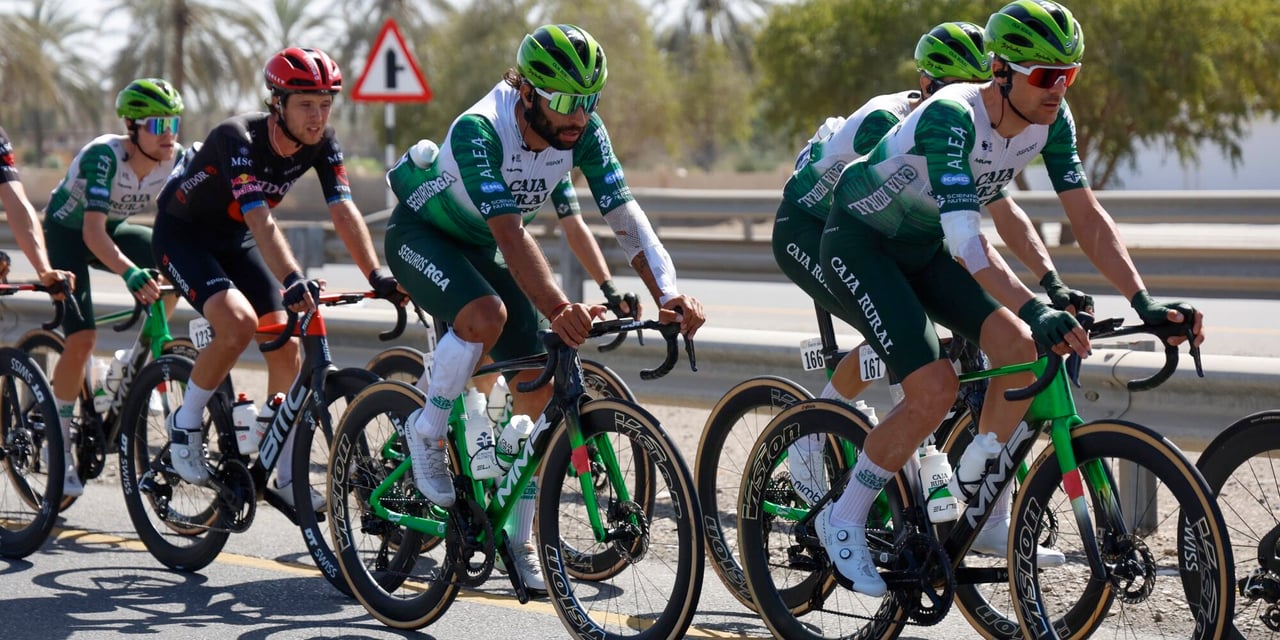
We also see Belgian sprinters starting, such as Jordi Meeus, Arne Marit, and Steffen De Schuyteneer. Who else are we missing? Riders like Max Kanter, Fernando Gaviria, Oded Kogut, and Phil Bauhaus.
Weather and TV
It will be particularly warm next week in the Guangxi area. Between Tuesday and Sunday, temperatures will range between 28 and 32 degrees Celsius, with significant (thunder)showers expected especially on Tuesday. This could lead to interesting situations in the stages. The race will be broadcast on Eurosport. Check all TV channels and broadcast times in our TV guide Cycling on TV.