Tadej Pogacar emphasizes that Strade Bianche course should actually be different
The Piazza del Campo in Siena has become familiar ground for Tadej Pogačar. For the fourth time, he finished his Strade Bianche victorious on the famous shell-shaped square. This time after an eighty-kilometer solo, a display of dominance that has almost become a trademark by now.
After the finish, the UAE Emirates XRG leader took a deep bow to the crowd, as if concluding a performance. And in a way, it did feel like that: a leading role player leaving the stage after an impressive performance.
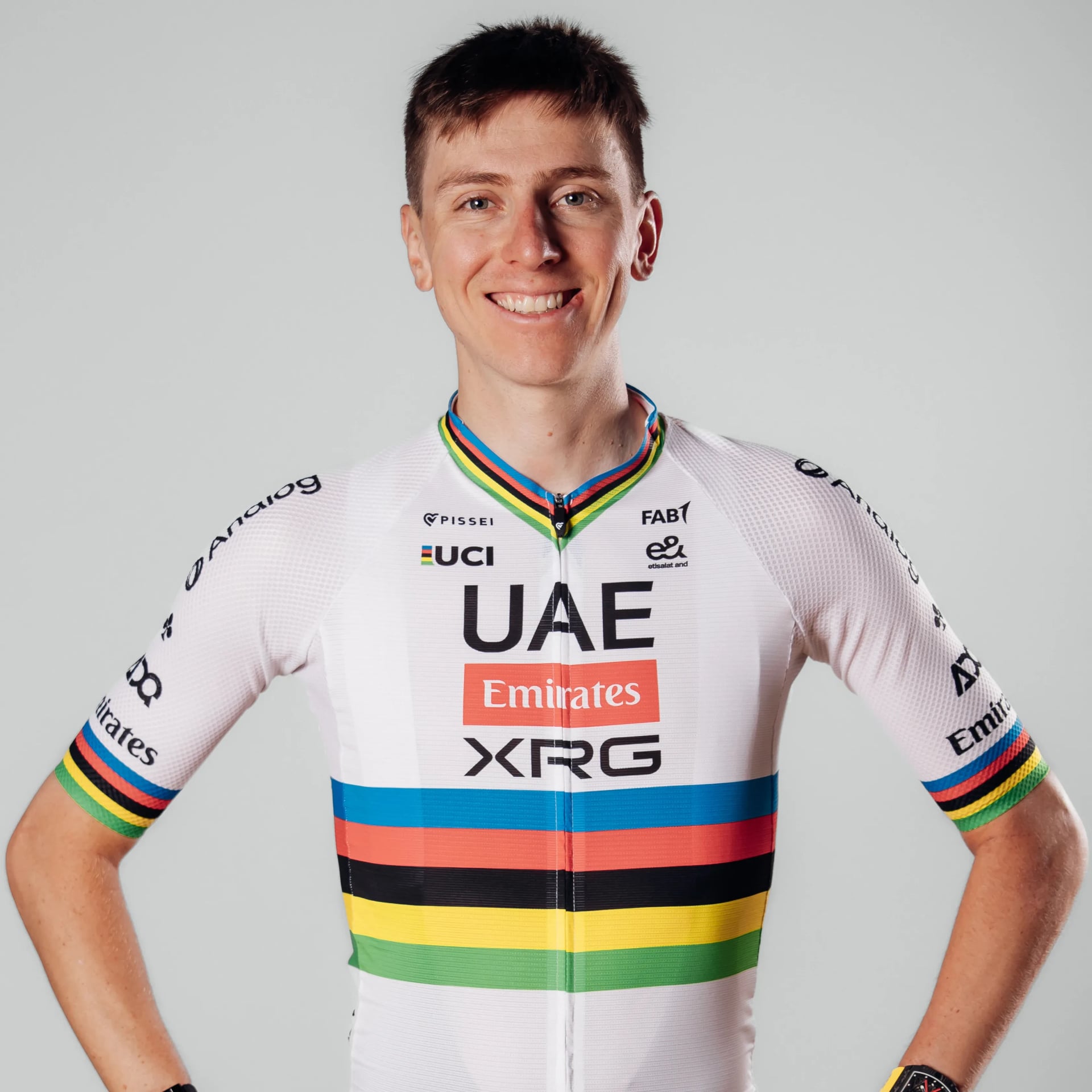
An hour and a half later, Pogačar appeared in the press room in the heart of Siena. With his blond-dyed hair and relaxed smile. To get him there, security had to first escort him across the Piazza del Campo to keep persistent fans at bay. That says something about his status. Cycling has rarely had a rider who is both so dominant and so popular.
Still, the Slovenian made a notable remark about the race he had just won again.
What do you actually think of those long-distance attacks?
“I'm actually not a fan. It mostly comes down to the way they design the course. They simply add thirty extra kilometers at the end, which doesn't really add much when you’ve already had the hardest and most beautiful part of the race.
Previously, for example, there were fifty kilometers from Monte Sante Marie to the finish; now it’s eighty kilometers. That’s why you see those long attacks: the hardest part of the race lies there.”
Do you think the course will change again? Do you riders talk about it or complain?
“I don’t know. Of course, we can complain all we want, but ultimately it’s not our decision to make the course. They remain beautiful races. If the organizers want it so that only small groups remain from eighty kilometers to the finish and almost everyone rides alone in the last two hours, that’s fine too. We can’t complain too much – especially if we win.”
This is the second time you ride Strade Bianche as the first race of the season. Other times you’ve raced earlier in Europe. Is it different as the first race of the season?
“Yes, it’s a bit different. It’s the first race and you come into somewhat unfamiliar territory again. You work hard all winter; that’s the same every year. But the first race always makes you a bit nervous. That was also the case this year. It was a wonderful feeling to finally start the season and ride Strade Bianche right away as the first race.”
Was there a moment when you thought Paul Seixas would stay on your wheel?
“Yes, at one point I looked back after the first steep section on Monte Sante Marie. I can’t say it was flat afterwards – it never really is – but it was a moment to catch my breath. I looked back and Paul was a bit behind.”
Then I thought: until the top of the last steep section, I really have to give everything and try to widen the gap. Luckily, I succeeded. Otherwise, he would have been on my wheel and we would have gone on together. I’m happy with how it went.”
You rode almost two hours alone in the attack. What do you think about during such a solo? Do you stay fully focused on the road or do your thoughts sometimes wander?
“When I attacked, I thought that new guy (Paul Seixas, ed.) was really strong and it would be better to increase the gap as fast as possible.
After that, I didn’t know exactly how big the lead was and kept wondering how much time I had. I also didn’t know where my teammate Isaac Del Toro was. When I got that information, I started thinking more about the kilometers still to come. I also enjoyed the crowd and tried to manage my effort well while continuing to eat and drink.”
Is there one win out of the four that you prefer the most?
“I don’t think so. They’re all unique in their own way. But I’m proud and happy with all four.”
You have often said that Milan–San Remo is the toughest race for you to win. Is that only because of the course or are there other reasons?
“Milan–San Remo is very different from, for example, Strade Bianche or the Tour of Flanders. Until you get to the coast, it’s not an extremely tough race. But once you’re there, it gets nervous. There are lots of villages, many twists and turns, continuous ups and downs, and the speeds are incredibly high.
In the finale, you see the classics specialists and sprinters up front. That also means that the speed on the flat is even higher. In a way, it’s also a bit of a scary race because of the enormous nervousness, especially approaching the Cipressa or when riding through some towns.
On the Cipressa, you can’t be at a hundred percent, but at one hundred and ten. Approaching that climb, everything revolves around positioning. On the Poggio, you then have to be positioned even better. The climbs go incredibly fast; we sometimes ride up there at forty kilometers per hour. It’s hard to really make a difference there.
It’s also not just about the Poggio climb. You also have to consider the descent, and after that, there are only a few kilometers to the finish. It’s a very special race. In a way, it’s a beautiful classic and also a very interesting race to ride.”