
Tour 2025: Preview of Stage 15 to Carcassonne
The second week concludes with a genuine transition stage. The various GC contenders and their teams will either use this stage as an additional 'rest day' or to recover after three tough Pyrenean stages. For attackers like Mathieu van der Poel, this presents a golden opportunity to (once again) secure a stage win in this Tour de France. So get comfortable; Cyclingflash looks ahead!
Route
The second week wraps up with a stage starting in Muret. This town in the Occitanie region is known for the AirExpo airshow, the third largest in France. It’s a unique event, entirely organized by students. Additionally, this town is the place of death of Antoon van Schendel. He was a pro—like his younger brother Albert—from 1934 to 1943.
Both brothers were born in the Netherlands but moved with their parents at a young age to the Toulouse region. Their parents started a farm there. Antoon won two Tour stages and was for years a teammate of Theo Middelkamp, the first Dutchman ever to win a Tour de France stage (1936) and to claim the world championship (1947).
Muret has twice before been a Tour start city: in 2015, the stage headed to Rodez and Greg Van Avermaet scored a double triumph. Also in 2021, a stage started there, bringing riders to the top of the Col du Portet. Tadej Pogačar broke away in the final meters from the then-surprising Jonas Vingegaard and Richard Carapaz.
Carcassonne as the finish has a longer history with the Tour. It passed through in 1947 and last served as a finish in 2022. On a sweltering day (with temperatures over 40°C), Jasper Philipsen took the win. A year earlier, history was made there when Mark Cavendish equaled Eddy Merckx’s record 34 Tour stage wins.
The city itself needs little explanation for most. After Paris, Versailles, and Mont-Saint-Michel, Carcassonne is France’s top tourist attraction. This is because it’s one of Europe’s best-preserved fortified towns. The old town is fully restored and has been a UNESCO World Heritage Site since 1997.
Carcassonne dates back to the Middle Ages, which is clearly visible. Despite its fame, it’s a relatively small town with just under 50,000 inhabitants. You might also recognize Carcassonne from the board game named after it. The southern French city inspired the popular strategy game, which is celebrating its 20th anniversary this year. With numerous expansions and its relative simplicity, the gameplay variations are endless.
The same goes for the 170-kilometer stage itself. Between Muret and Carcassonne lies a true transition stage, meaning attackers will be eager at the start. Early on, there are several short climbs where breakaways can make a difference. Given it’s the day before the rest day, the peloton will likely accept that. We predict a sizable early break with plenty of tactical games. In the second half, the attackers can separate the wheat from the chaff on two longer climbs.
Especially the Pas du Sant suits this. This climb is ‘only’ 3.2 kilometers long but averages a stiff 8.8%. From the summit, riders must continue climbing for another 3.8 kilometers to the Col de Fontbruno. That climb, however, is easier at just 3.8%. From the top, it’s still 42 kilometers to the finish, with over thirty of those descending. In the final kilometers, riders pass the Aude river and ride alongside the Canal du Midi. This also favors attackers, as they quickly disappear from the view of chasers.
Classifications
Favorites
No, this time we really won’t see Tadej Pogačar in the front yellow group. After three consecutive mountain days, the tide has turned. Looking ahead to Carcassonne, our focus shifts to other names: riders who have quietly preserved energy over the past days, saving themselves for this rare chance in the second Tour week.
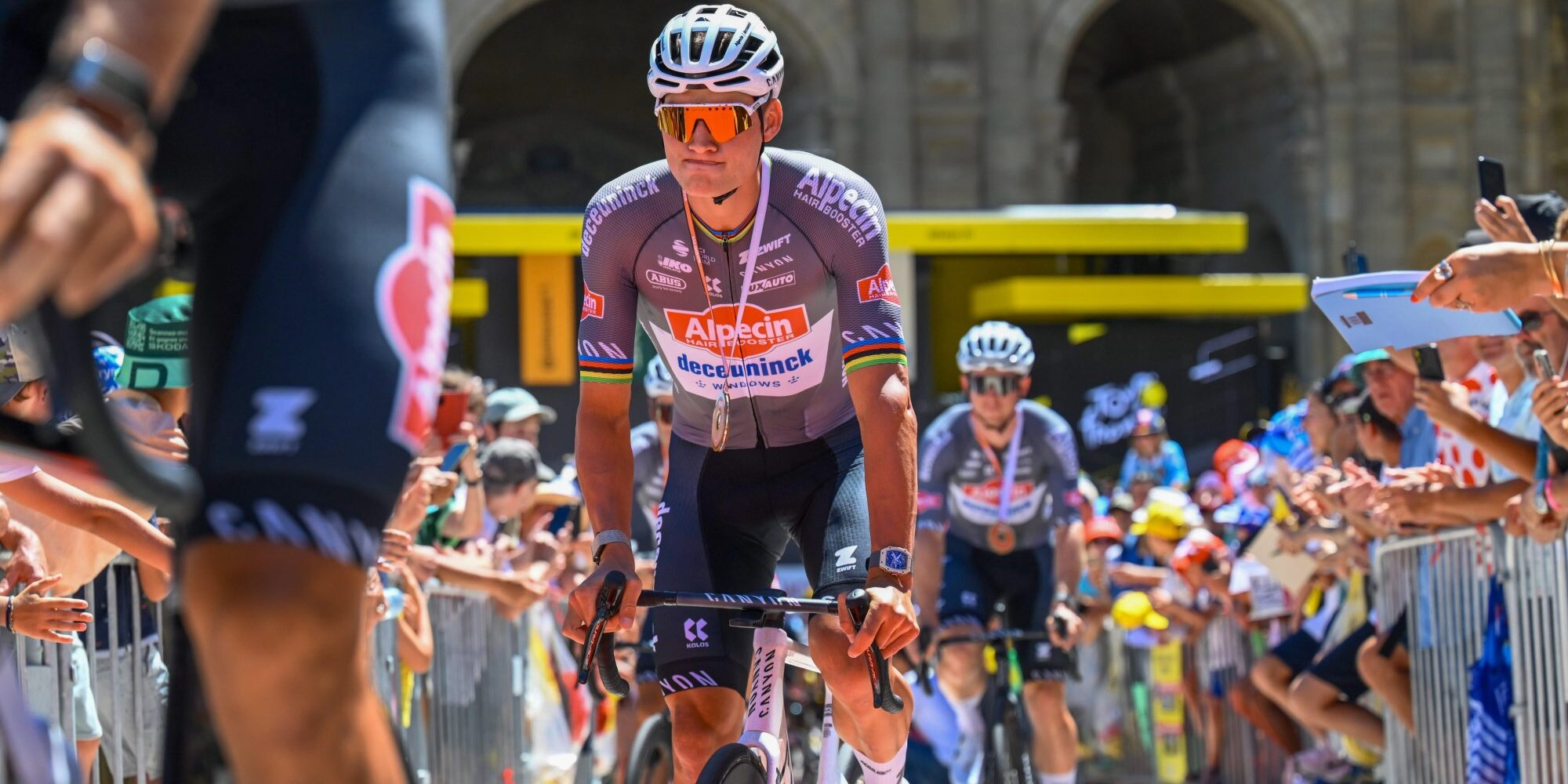 Van der Poel kept a low profile – photo: Cor Vos
There was one previous opportunity this week, in the stage to Toulouse. There we saw which riders—those who perform better on flat terrain and short climbs—are in good form. We therefore mainly look at those who fared well there, and to a lesser extent at the men who shaped the Ben Healy-winning stage to Vire Normandie. On paper, the stage could favor a sprint with the stronger men, but a large breakaway group being allowed some room seems a more realistic scenario.
In any case, whatever scenario unfolds, it comes down to Mathieu van der Poel. The Dutchman from Alpecin-Deceuninck has rediscovered his joy in this Tour de France. Over the past weeks, several stages perfectly suited to his strengths have passed, which is why Van der Poel was also voted the most aggressive rider in the first ten days. The stage win and yellow jersey on day two were a fine reward, already marking his Tour a success.
But Van der Poel still has a slight chance for the green jersey and naturally doesn’t like to sit still. If his wasp sting no longer hampers him, we expect Van der Poel will eagerly be one of the instigators of the day’s breakaway. And if Van der Poel is in the move, he always plays a leading role. His main challenge is that the stage’s long finale is no longer selective. Naturally, all eyes will be on him then. Van der Poel will have to drop his breakaway companions before that or at least thin out his group.
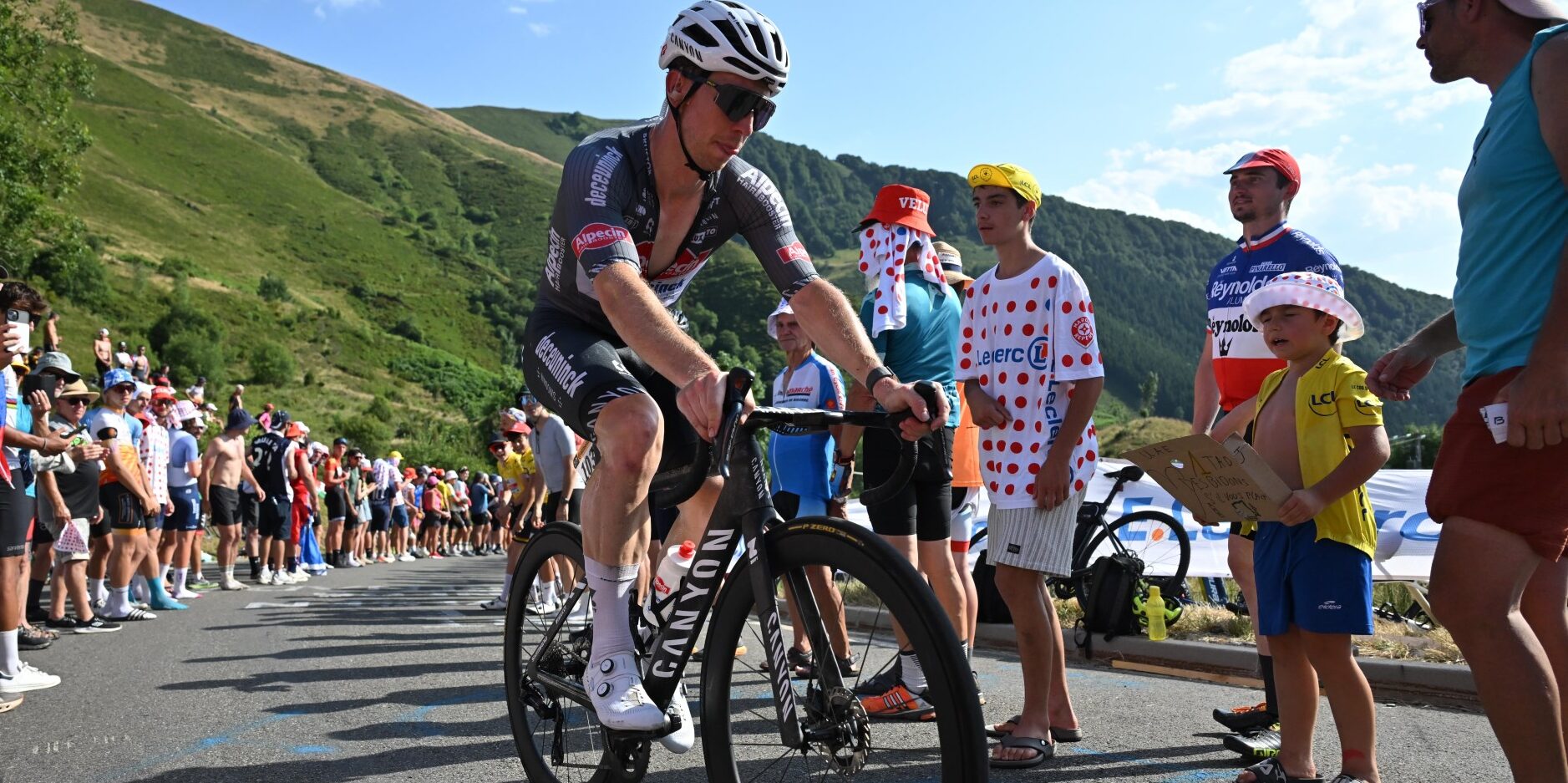 Kaden Groves climbs very strongly – photo: Cor Vos
His tactical plan could be bolstered by a scenario where his teammate Kaden Groves is also in the day’s break. The Australian sprinter already claimed a Giro stage this season, but his big dream is to win a Tour stage as well. For a fast man, his climbing ability is remarkable: Groves rarely gets dropped on climbs. Against the fastest sprinters, however, he falls short—but he won’t face them here.
Someone like Arnaud De Lie is in a similar situation to Groves. Let the Lotto squad leader sprint against Jonathan Milan and Tim Merlier, and you already know he has little chance. But if you give a strong De Lie a stage with a few climbs, sidelining the fastest men, his immense strength shines through. He already proved in Toulouse that his form has returned, and this looks like an ideal chance for him to capitalize on it.
While we’re at it: we also include Wout van Aert in this same group. Of course, the Visma | Lease a Bike rider is not having the Tour he hoped for, but that doesn’t mean he can’t pursue his tenth stage win. The finale might even suit him better than Van der Poel, as Van Aert’s sprint typically kicks up a notch.
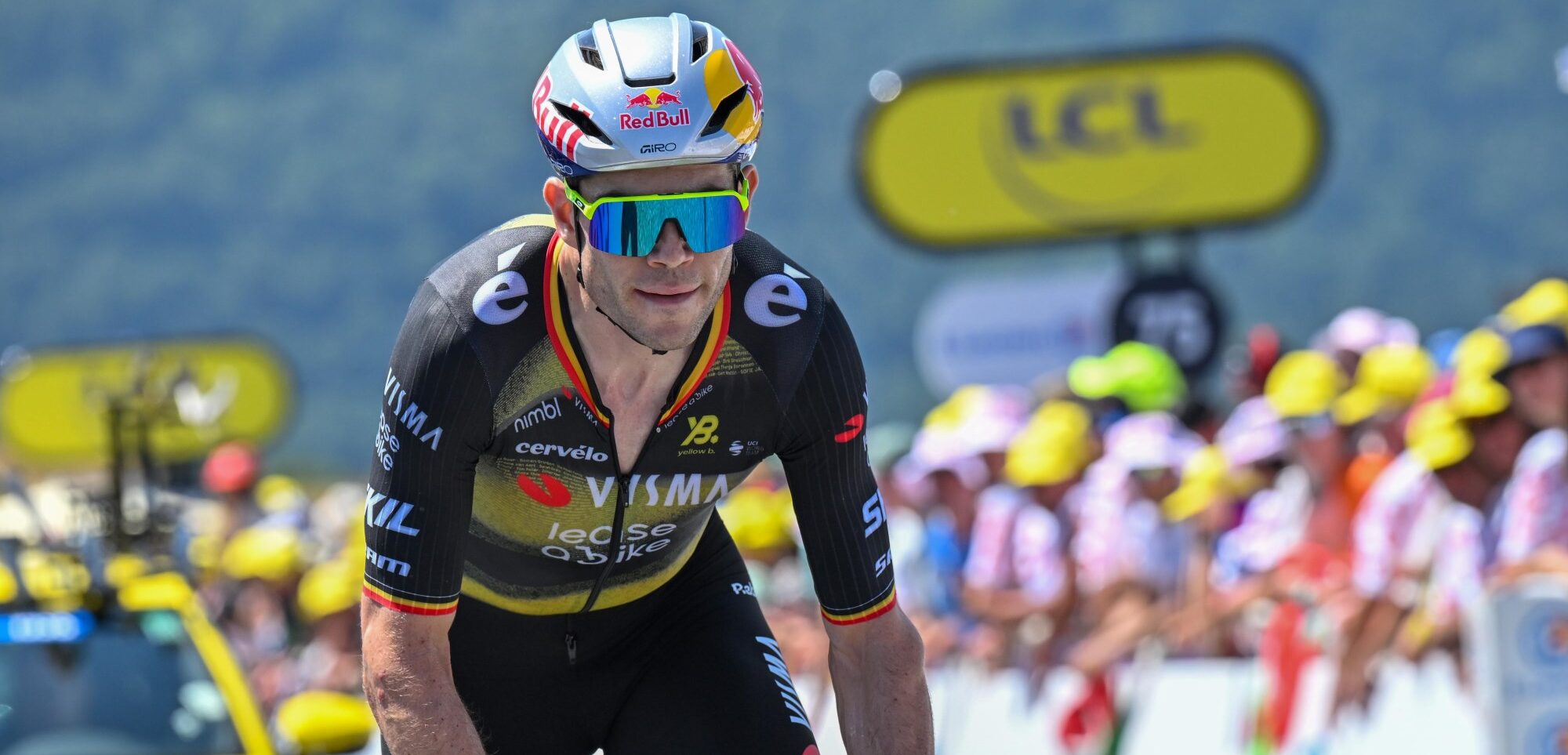 Wout van Aert en route to Peyragudes – photo: Cor Vos
Van Aert has had a few doubts about his sprint this season, but in the finish to Laval it was clear he still has plenty left. There he only had to concede to Jonathan Milan. It’s also quite possible the green jersey holder will try to get into the breakaway, just like the slightly better climber Biniam Girmay. But the entire stage may be a bit too tough for them. If they survive the climbs or have their teams dictate the pace, their chances rise quickly.
Furthermore, there are many attackers we mustn’t forget. The way Jonas Abrahamsen (Uno-X Mobility) won the transition stage to Toulouse makes it impossible to overlook him. And Mauro Schmid (Jayco AlUla) will likely seek redemption after his narrow defeat. Also, Quinn Simmons has been strong throughout the Tour: with Milan absent, he and Thibau Nys will be the ones to seize their chance for Lidl-Trek. And why couldn’t riders like Kasper Asgreen (EF Education-EasyPost), Mauro Schmid (Jayco AlUla), or Matej Mohoric (Bahrain Victorious) surprise with a solo break?
It might also be a good day for Danny van Poppel to join the move on behalf of Red Bull-BORA-hansgrohe. Other names to watch on this terrain include Fred Wright (Bahrain Victorious), Matteo Trentin (Tudor), Luke Plapp (Jayco AlUla), Bruno Armirail (Decathlon AG2R), Davide Ballerini and Mike Teunissen (XDS Astana), Alexey Lutsenko (Israel Premier Tech), Jenno Berckmoes (Lotto), Laurenz Rex (Intermarché-Wanty), Axel Laurance (INEOS Grenadiers), and Pascal Eenkhoorn (Soudal Quick-Step).
Weather and TV
Sunday will be 'simply' scorching again in and around Carcassonne. Riders have had to deal with such conditions throughout the Tour, and this time the maximum temperature will reach 31°C. The sun will shine all afternoon. The wind will blow fairly strongly from the northwest at 4 Beaufort.
Stage fifteen will be broadcast live from start to finish on Eurosport 1 and via HBO Max. NOS and Sporza also hold the broadcasting rights for the Tour de France and will be live. For exact airing times, you can always check our TV guide.


