After starting abroad, there is usually a rest day soon after for a transfer, but not in this Vuelta. On Tuesday, the riders will actually cross French territory. Whether it ends in a sprint depends on how the first part of the stage unfolds. WielerFlits looks ahead.
The fourth stage of the Vuelta goes from Susa in Italy to Voiron in France, covering a total of 206 kilometers. The first eighty kilometers of the ride are particularly challenging as the riders have to cross the Alps, but the last 120 kilometers are almost flat as the peloton heads toward Voiron near Grenoble.
After the start in Susa, the road immediately begins to climb. The Puerto Exiles is the first obstacle of the day. With an average gradient of 6.2% over 5.8 kilometers, this climb is easy compared to what’s coming next. Shortly after comes the Col de Montgenèvre (9 km at 5.6%), which has sections exceeding 10% gradients.
The steep finale of this tough opening phase begins in Briançon, where the riders face the foot of the Col du Lautaret (9.2 km at 5.2%). Once atop this climb, the riders reach an altitude of nearly 2,100 meters!
After the Lautaret, the stage becomes less demanding. A long descent of over 50 kilometers follows, and after Grenoble there is an intermediate sprint in Noyarey. The riders then have about 30 kilometers remaining. This section is almost flat, although the road rises by 2 to 3% in the final kilometers approaching Voiron.
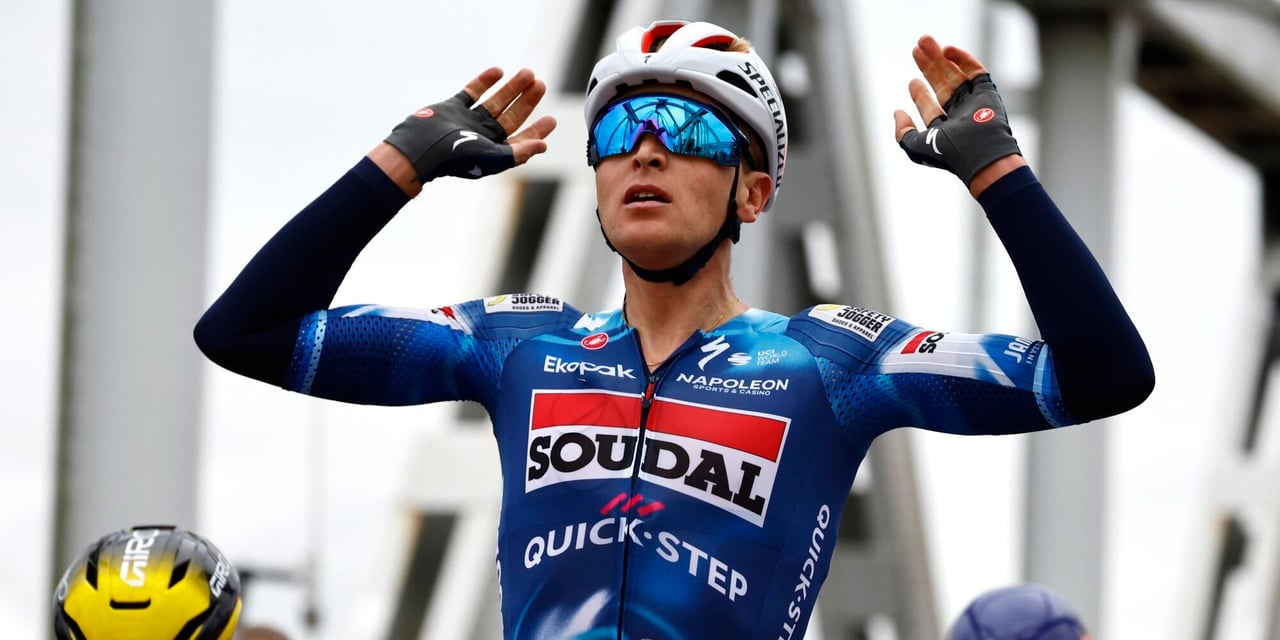
Stage winner and classification leaders after stage 3


The stage to Voiron is hard to predict, as the route clearly splits into two parts. Of the more than 2,900 meters of climbing, most come in the first 76 kilometers. Are there strong sprinters capable of surviving that opening phase with three climbs, two of which are second category? And will there be enough time and manpower to close down any gap?
If anyone can do it, it’s Mads Pedersen. The Lidl-Trek leader had a brilliant spring and proved to be among the best climbers too. He even placed tenth on a serious uphill finish at Paris-Nice. So far, the Vuelta hasn’t unfolded smoothly for him, and he just missed out on victory in stage three.
For him and his Lidl-Trek squad, it will be crucial to limit losses on Montgenèvre and Lautaret. Pedersen’s team includes enough climbing riders who should survive the mountains, allowing them to set a strong train in the chase. Especially once the pure sprinters are dropped, Pedersen should be regarded as the top favorite.
But will Lidl-Trek have to do all the chasing alone? There’s a chance Movistar will also be involved if Orluis Aular survives the first 80 kilometers in the peloton. The punchy Venezuelan drew confidence from his third place in the opening stage, finishing behind Jasper Philipsen and Ethan Vernon. With his sprint speed, he might fancy beating Pedersen head to head—but first Aular must make it through the first phase. In the recent Giro d’Italia, Movistar’s sprinter was always close when Pedersen won, so he’s definitely one to watch.
Two climbs of 9 kilometers at just over 5% average gradient. Is that too tough for sprinters? If the race ignites early on the climbs, riders like Jasper Philipsen, Ethan Vernon, Elia Viviani, Bryan Coquard, and Casper van Uden may be dropped quickly. Does that mean they should be written off immediately? No. After the summit of Lautaret, there are still 130 kilometers to ride. Making up time on a descent is tough but possible. Then an almost flat final 50 kilometers await. If these sprinters get into a solid group with several teams working together, they should definitely be considered potential stage winners.
Climbing sprinters clearly have an advantage. Pedersen and Aular were mentioned, but we also want to highlight Tom Pidcock. More a hill specialist with a fast finish, he was ninth in the first bunch sprint and will be eager to repay the trust of Q36.5. Other British hopefuls include Ben Turner (INEOS Grenadiers), who was flown in last minute from the Renewi Tour. If he can survive, Turner’s fast from a small group. Jake Stewart (Israel-Premier Tech) is also in this list. He’s already won a stage in the Dauphiné with significant climbing and can climb better than teammate Vernon. Their team can thus bet on two British cards.
Then there’s the Estonian champion, Madis Mihkels. He finished tenth in the opening stage for the EF Education-EasyPost sprinter. He could surprise should the sprint come from a reduced peloton. Speaking of surprises, watch out for Guillermo Thomas Silva of Caja Rural-Seguros RGA in a stage like this. The Uruguayan national champion was eighth in the first bunch sprint and has scored well in tough races such as the Ordiziako Klasika, GP Miguel Indurain, and various French one-day races.
For fast men like Jenthe Biermans (Arkéa-B&B Hotels) and Arne Marit (Intermarché-Wanty), everything needs to go right. Tim van Dijke (Red Bull-BORA-hansgrohe) was given a chance but crashed hard in stage two and will likely not take risks. Axel Zingle was also involved in that crash; he would otherwise have been noted, but the Visma | Lease a Bike rider has now abandoned. Therefore, our last trump card is Thibaud Gruel from Groupama-FDJ. The youngster boasts a sharp sprint and won a stage in the Route d’Occitanie with over 2,500 metres of climbing, from a small peloton of 45 riders. And last but not least: Anders Foldager of Jayco AlUla.
Should we also consider the chance that a breakaway group stays away? Certainly, but the likelihood that one of the named favorites survives and sets up teammates to chase is also high. Especially teams without fast men will want to attack, such as Red Bull-BORA-hansgrohe with Nico Denz or Matteo Sobrero. At Soudal Quick-Step, Maximilian Schachmann or Pepijn Reinderink might try something.
Will an Alpecin-Deceuninck attacker get the chance, or will Decathlon AG2R La Mondiale give someone like Léo Bisiaux freedom? Don’t give Stefan Küng (Groupama-FDJ) ten meters if he’s in the finale, nor Alex Molenaar (Caja Rural-Seguros RGA), Marco Frigo (Israel-Premier Tech), Dion Smith (Intermarché-Wanty), or Kevin Vermaerke (Picnic PostNL).
For the fourth stage of the Vuelta a España, the riders will enter France. In the starting town, the maximum temperature will be around 27 degrees Celsius, with temperatures near 31 degrees at the finish. Higher up in the mountains, it will be about 15 degrees. There is also a chance of isolated rain or thunderstorms, but mostly it will be dry, according to Weeronline.



 Susa)
Susa) Voiron)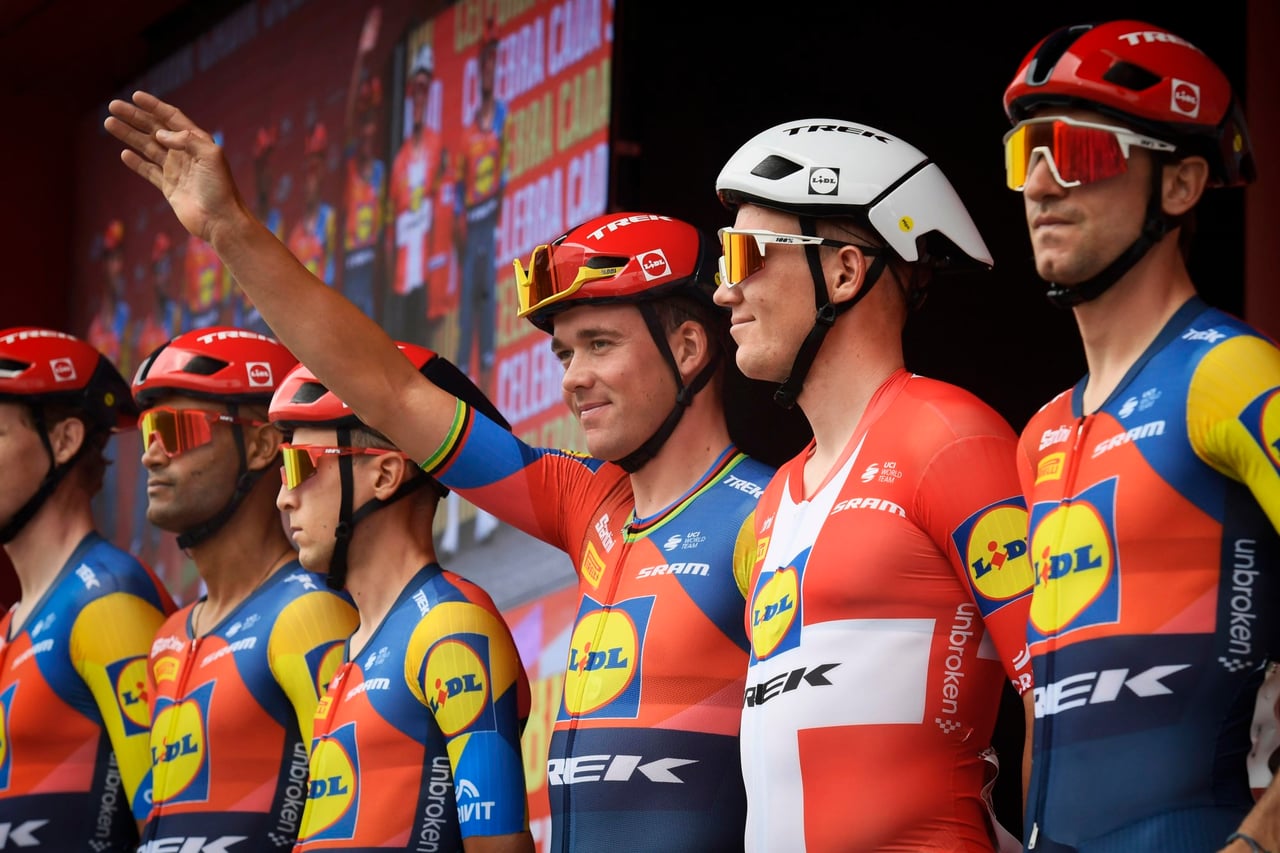
Mads Pedersen has a strong team with him - photo: Cor Vos
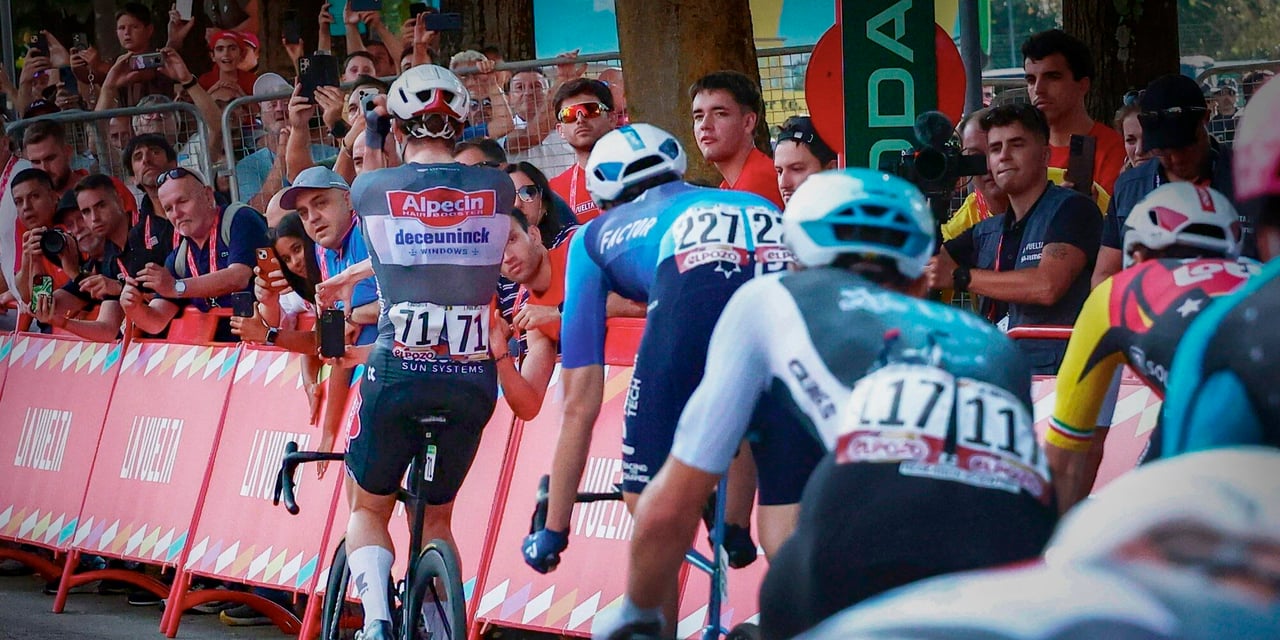
Jasper Philipsen kicked off with a victory - photo: Cor Vos
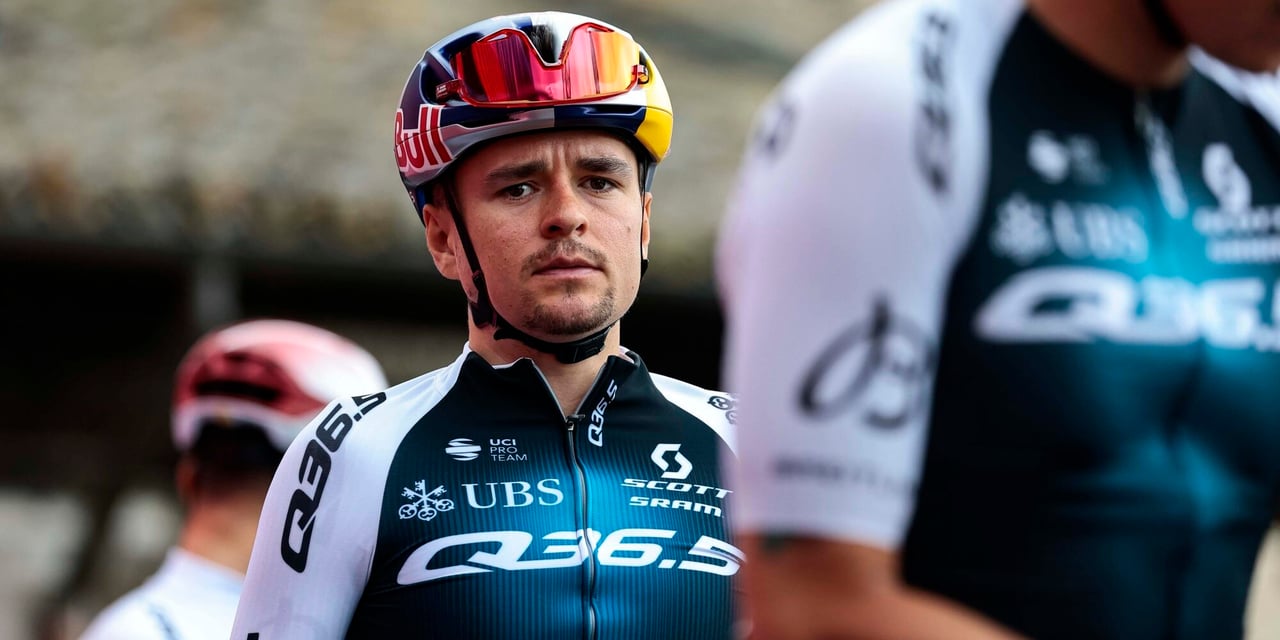
Tom Pidcock - photo: Cor Vos
 Vuelta a España