Tour Auvergne-Rhône-Alpes features three uphill finishes and a team time trial
The route for the upcoming Tour Auvergne-Rhône-Alpes (June 7-14), as the Critérium du Dauphiné is now called, has been announced. In this 'mini Tour de France', the riders will immediately face a semi-mountain stage. Later in the week, there will be a team time trial and three consecutive mountain stages.
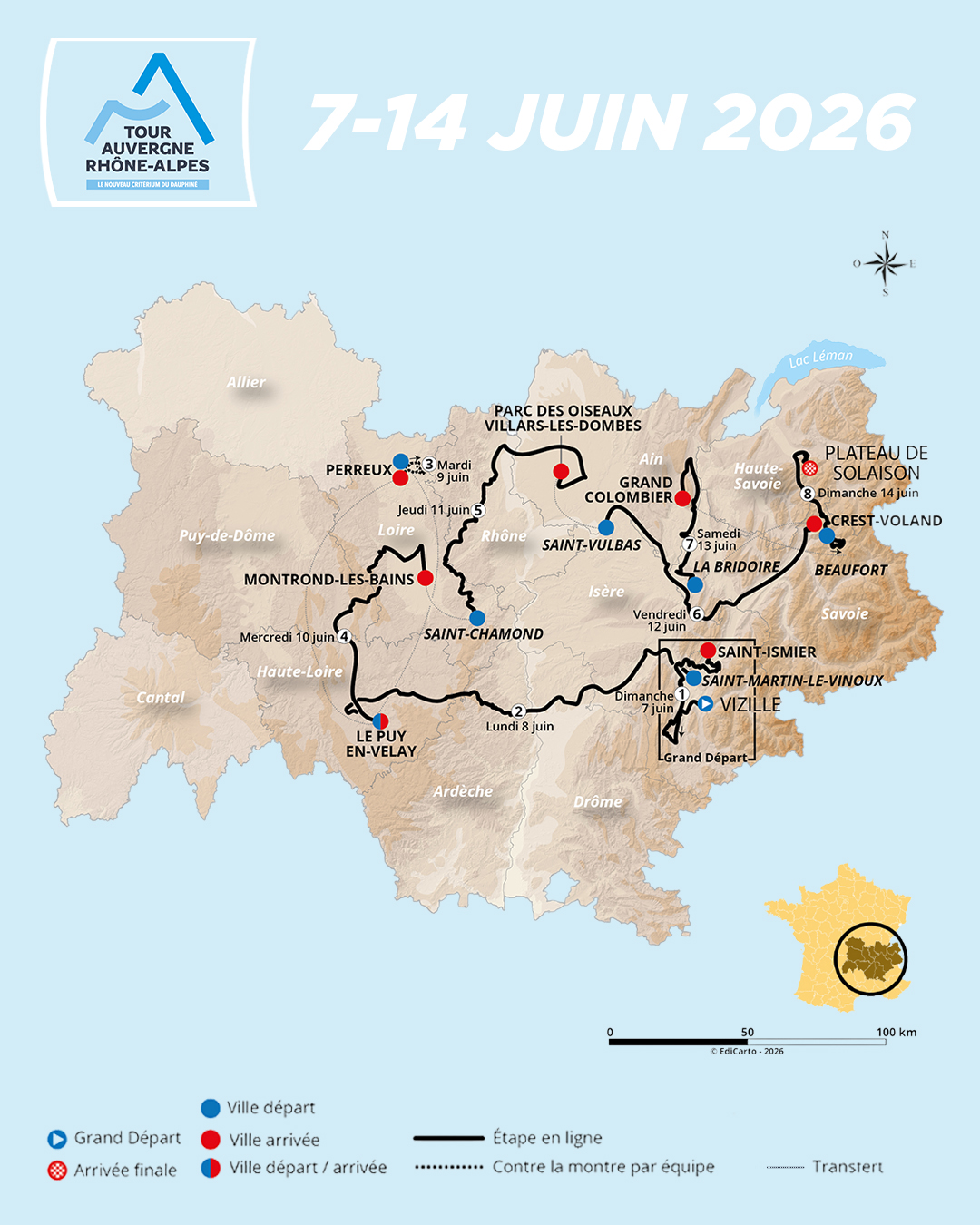
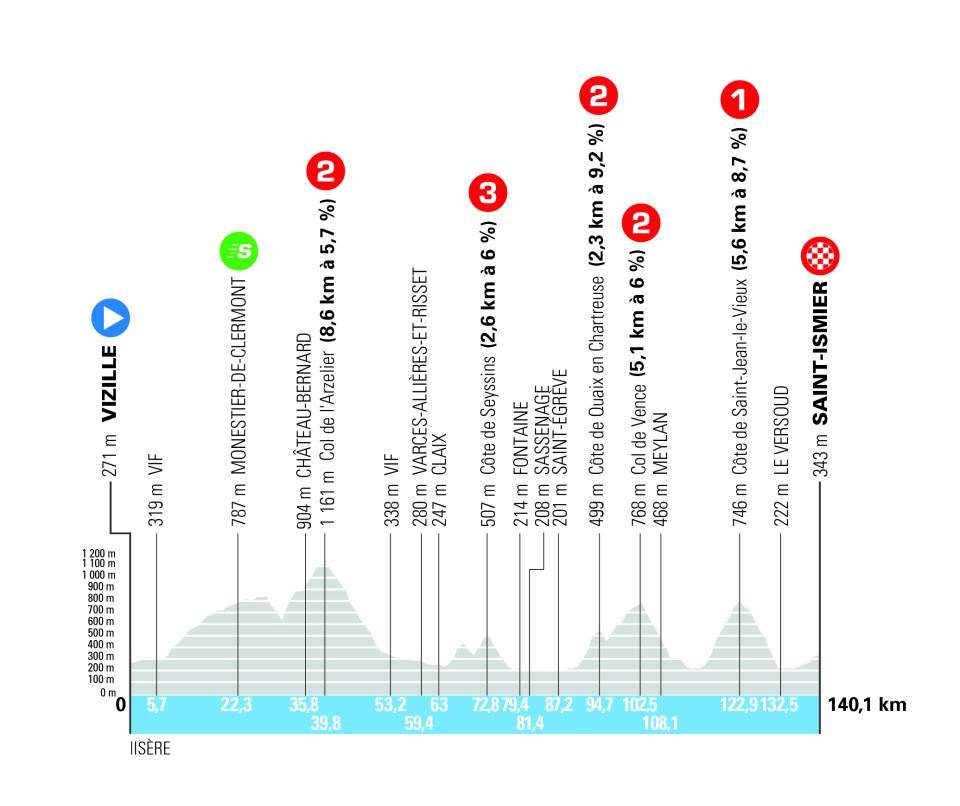
On Sunday, June 7, the riders will gather in Vizille for the start of the 78th edition of the Tour Auvergne-Rhône-Alpes. While a stage race usually starts with a prologue or a sprint-friendly stage, on French soil it’s climbing straight away. On the way to the finish in Saint-Ismier, no fewer than five categorized climbs are on the menu, with the toughest of them all – the Côte de Saint-Jean-le-Vieux (5.6 km at 8.7%) – just seventeen kilometers from the finish.
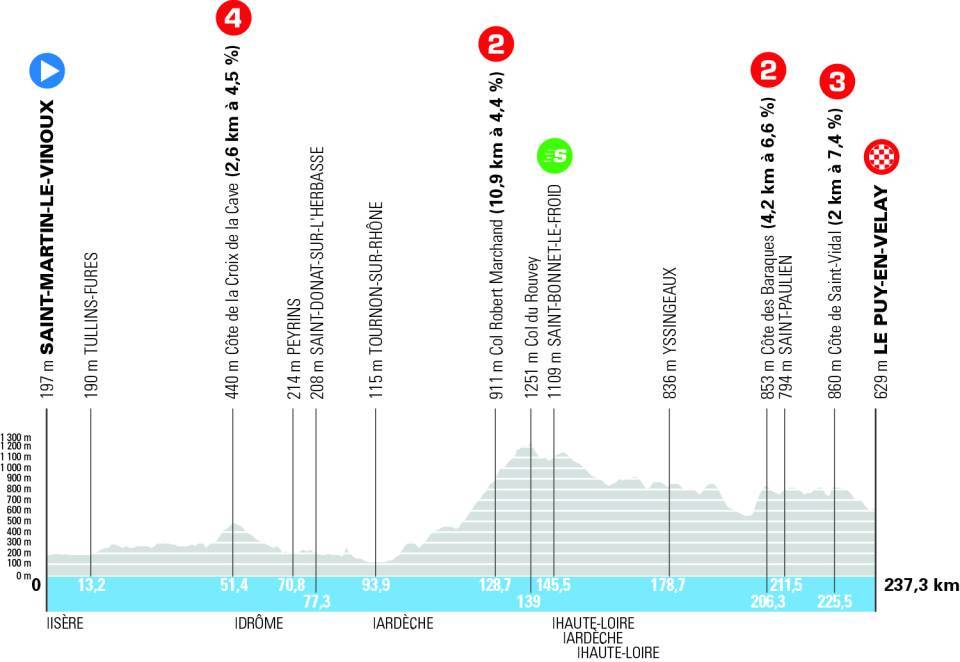
In the opening stage, we can already expect some fireworks between the GC contenders, and perhaps stage two will also bring excitement. Although there are far fewer meters of elevation gain and the climbs are less challenging, the final thirty kilometers towards Le Puy and Velay include the Côte des Baraques (4.2 km at 6.6%) and Côte de Saint-Vidal (2 km at 7.4%), two climbs not to be underestimated.
Testcase for the Tour de France
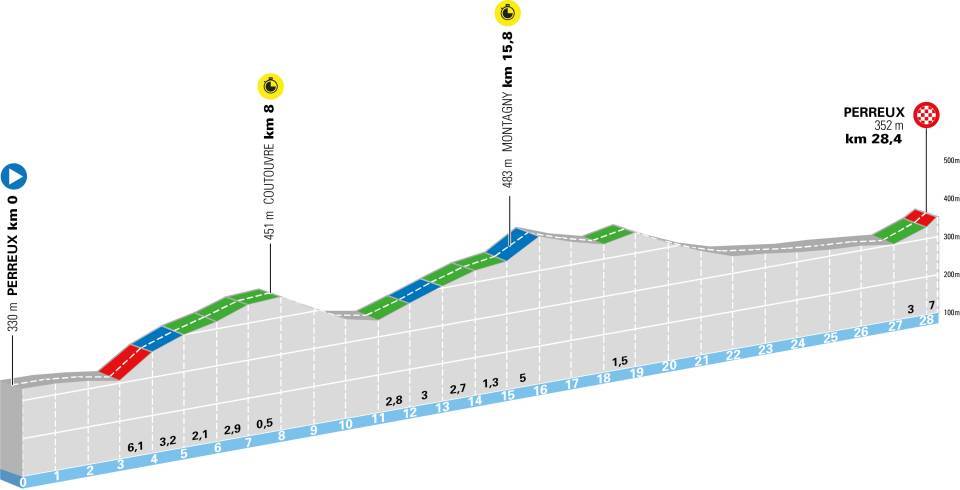
For riders with GC ambitions, this race offers few moments of rest, as on day three a very important stage is scheduled: a hilly team time trial of just over 28 kilometers to and from Le Perreux. This is not only a crucial day for the general classification but also a final test for the team time trial in the upcoming Tour de France.
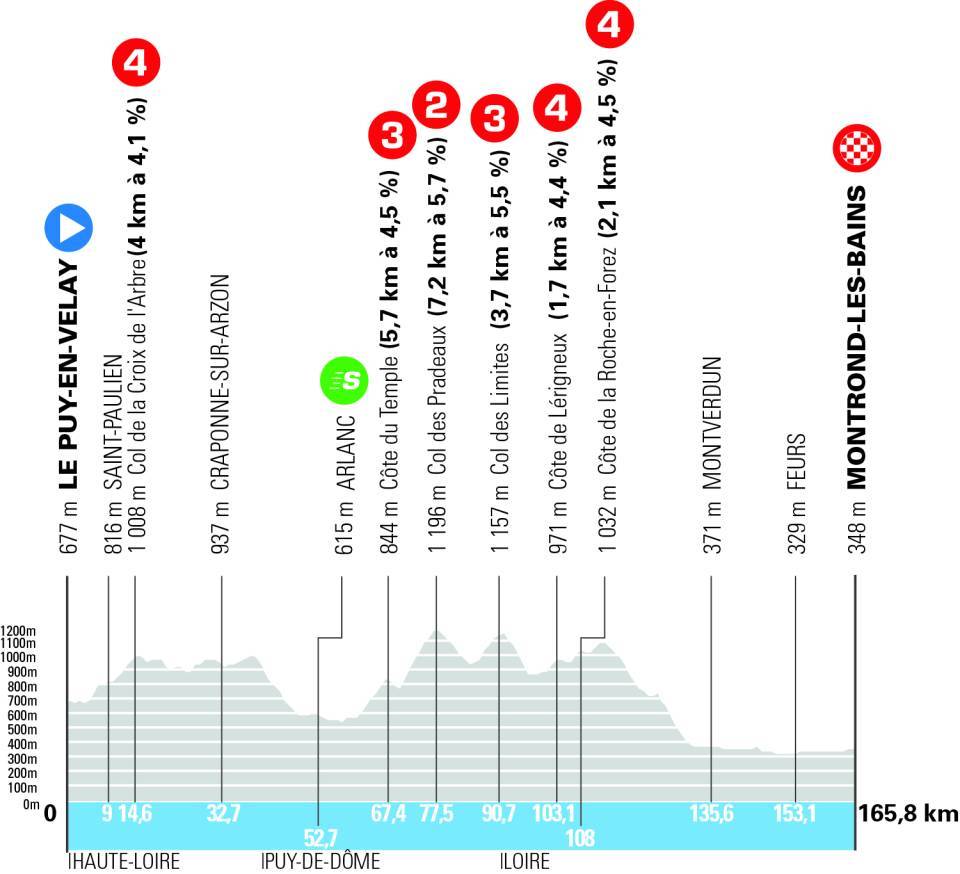
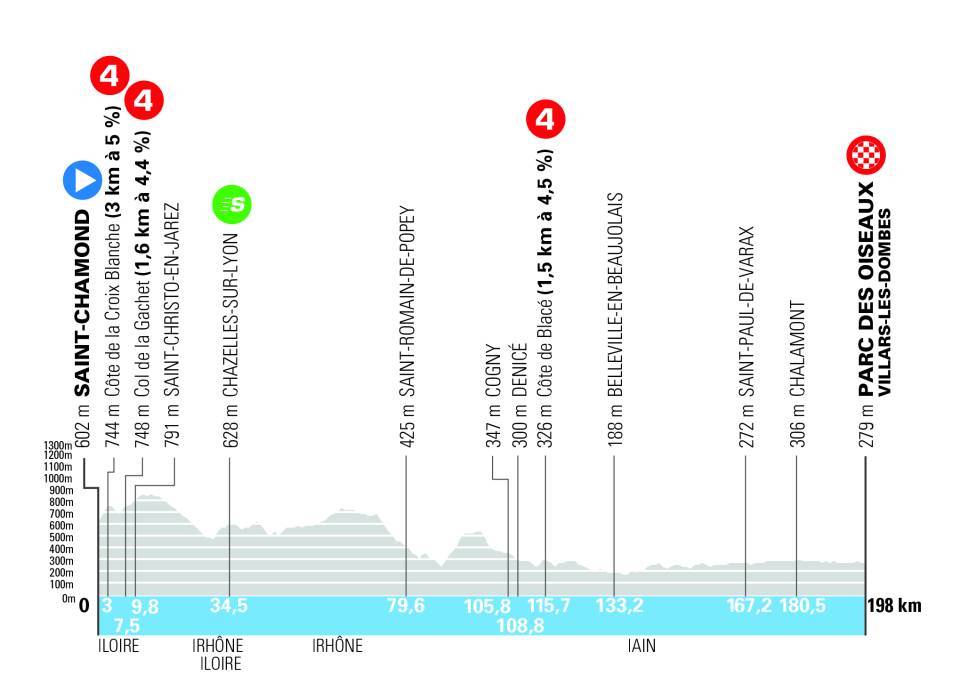
After three tough stages, the GC contenders will have some time to recover. Stage four is a two-faced day. The opening phase still contains a lot of elevation gain and six climbs in total, but the last fifty kilometers are almost entirely flat. It remains to be seen whether the fast men will get to sprint. If not, there is always the predominantly flat fifth stage to Villars-les-Dombes.
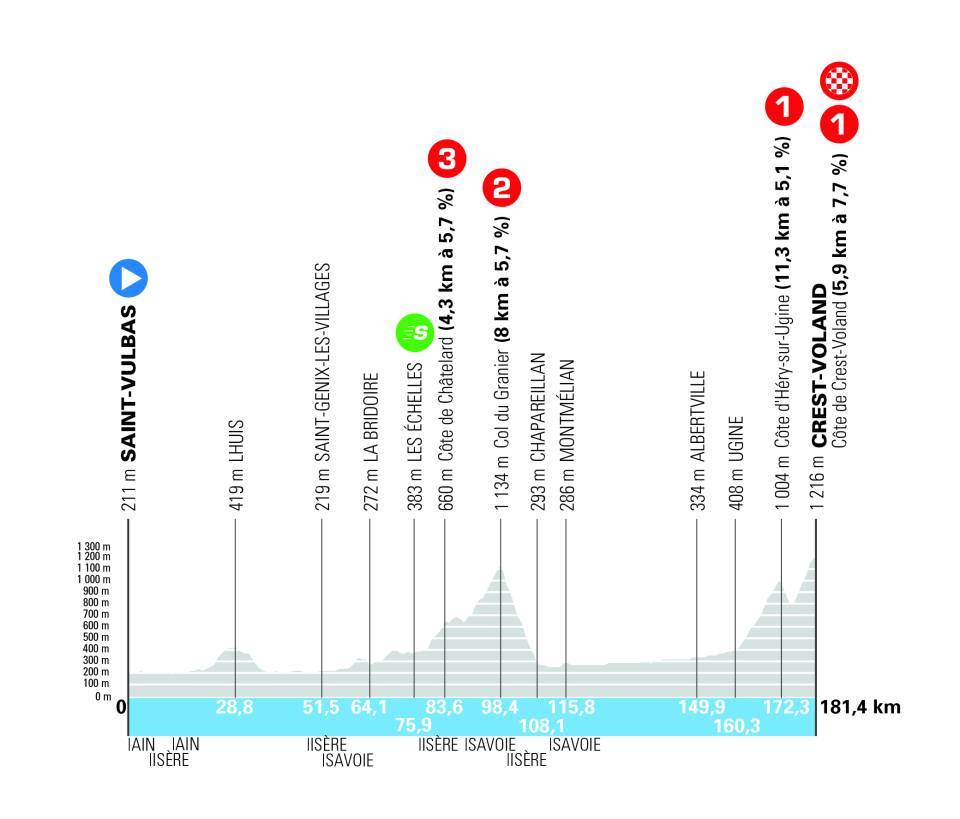
After these two 'transition stages', the riders head into the mountains. In the Alps, three consecutive mountain stages have been designed. Stage six is the 'easiest' of the three, though the challenge is still at the end, with the Côte d'Héry-sur-Ugine (11.3 km at 5.1%) and the final climb (5.9 km at 7.7%) to the Crest-Voland ski resort.
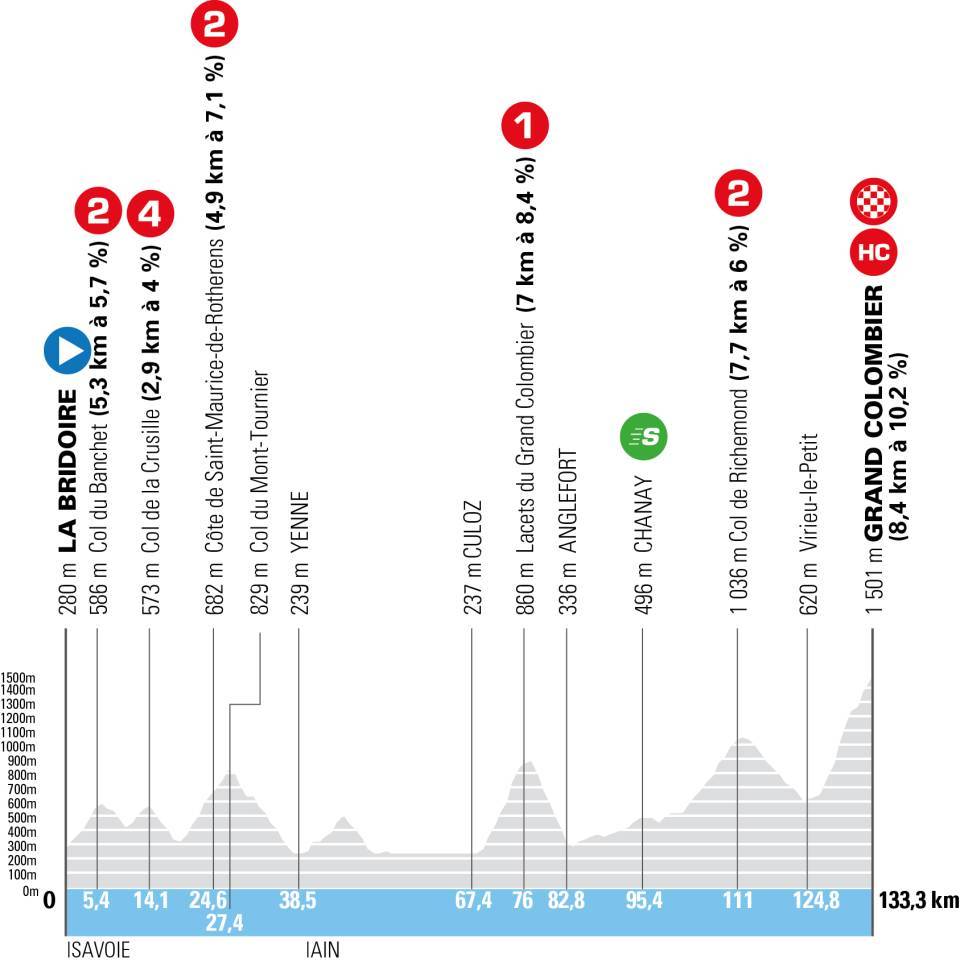
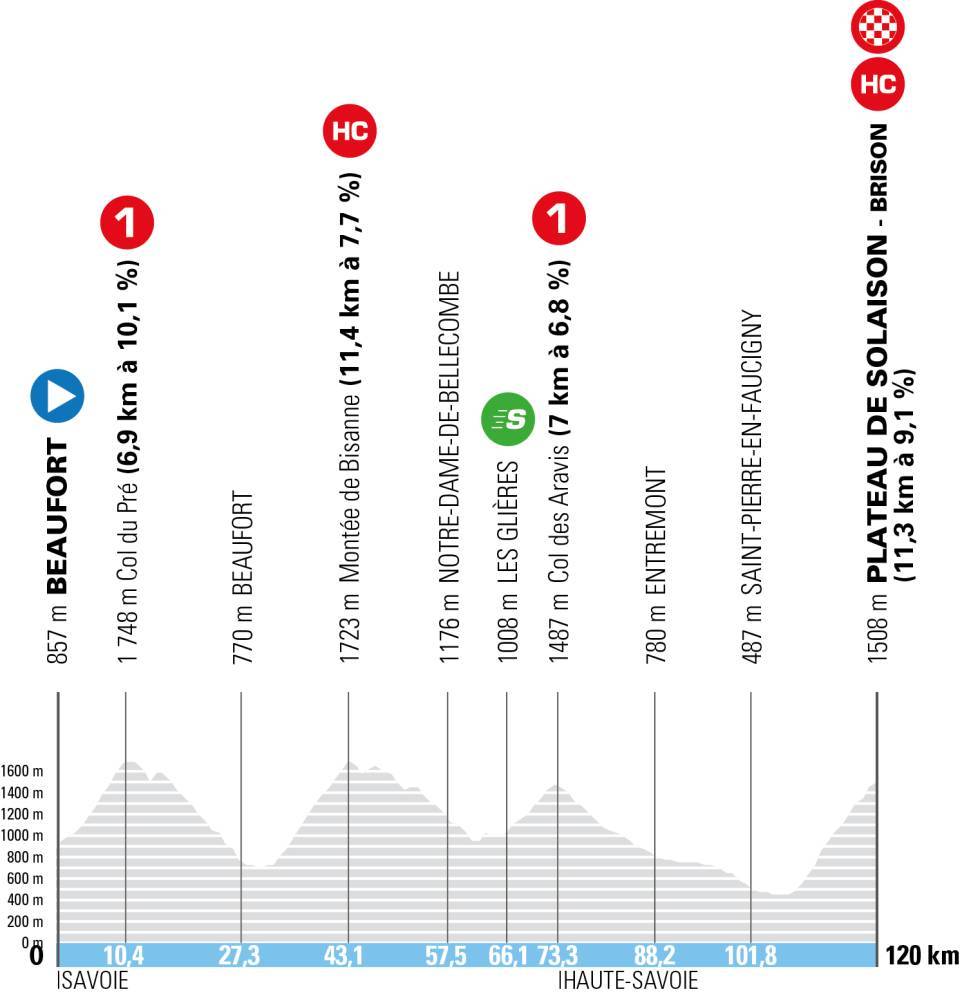
In the penultimate stage, the finish line is placed on the well-known and notorious Col du Grand Colombier (8.4 km at 10.2%). The riders will climb this pass from Virieu-le-Petit, a particularly tough variant of the Grand Colombier. The race will be decided in the grueling final stage, featuring the Col du Pré (6.9 km at 10.1%), Montée de Bisanne (11.4 km at 7.7%), Col des Aravis (7 km at 6.8%) and the final climb (11.3 km at 9.1%) to Brison.