Wednesday evening will see the route presentation of the Vuelta a España 2026 take place in Madrid. Traditionally, part of the route leaks ahead of this presentation. Based on information from various websites and newspapers, WielerFlits summarizes what we already seem to know. Insiders hint that it will be the toughest edition in years.
Starting in a principality
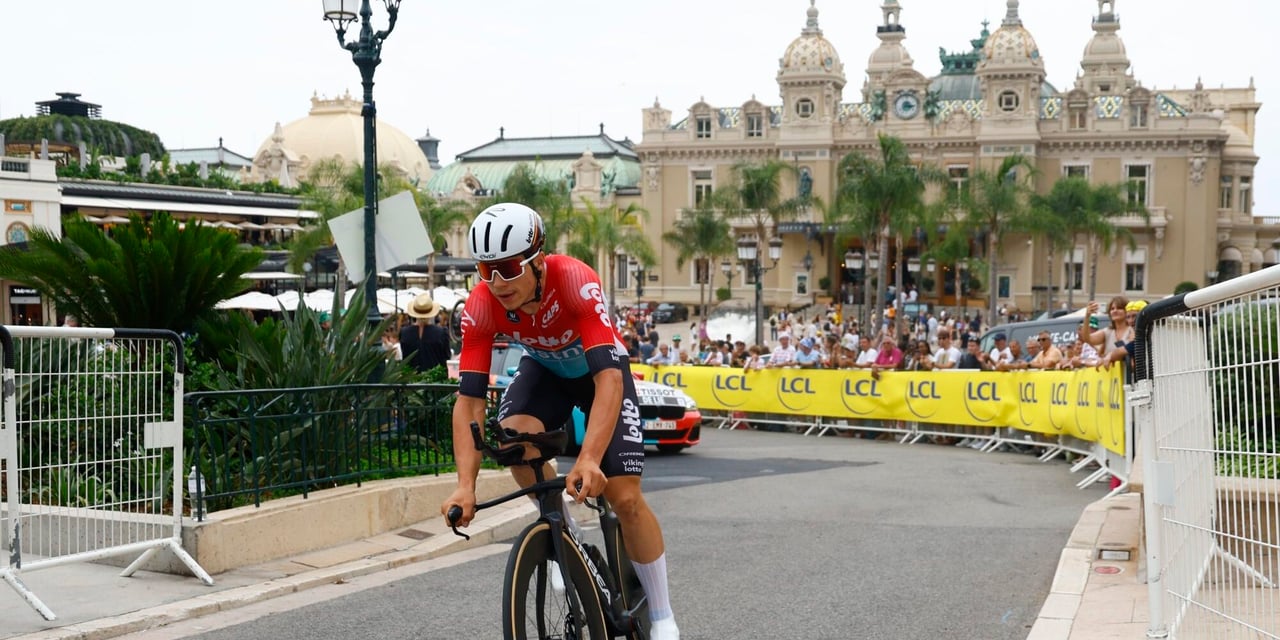
The Vuelta a España 2026 will kick off on August 22 with an opening time trial in Monaco. The riders will start their individual chrono at the square in front of the famous Monaco casino, finishing on the Albert I boulevard. This is also the annual finish line for the Formula 1 Grand Prix.
In a 9.6-kilometer loop, all the highlights of the wealthy microstate must be passed. Besides starting in front of the famous casino, they will race through the renowned tunnel, pass by the famous harbor (Port Hercule), and ride around the Stade Louis II football stadium. It almost seems like a plea addressed to Tadej Pogacar, who lives in Monaco.
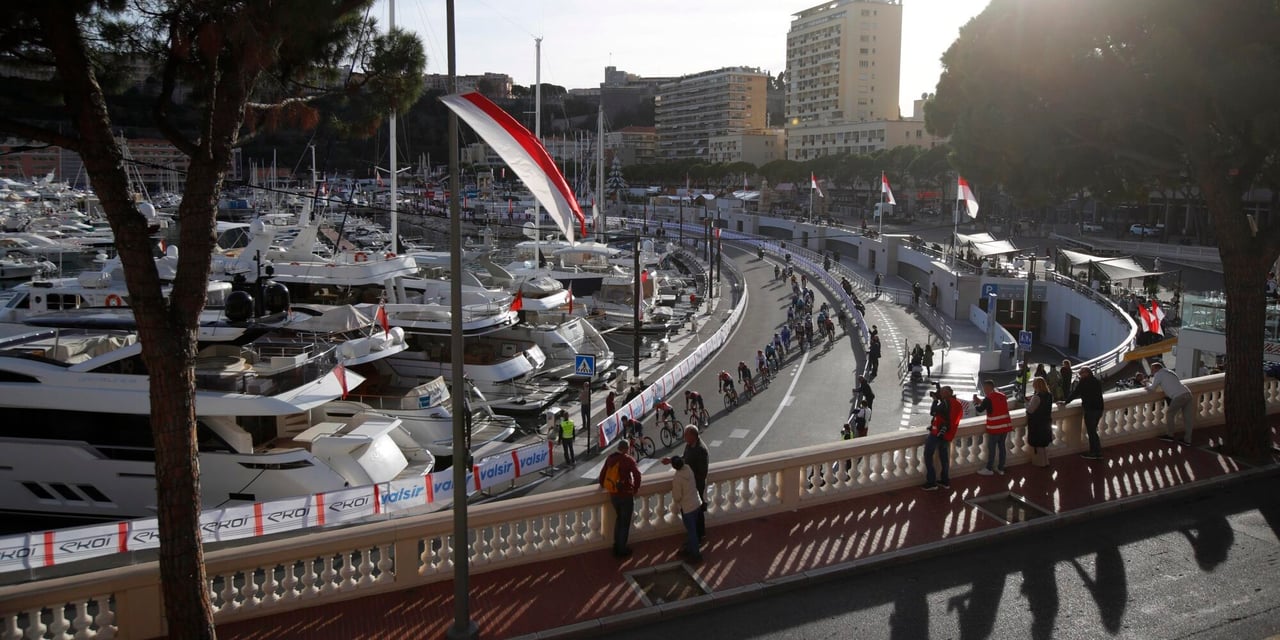
In Monaco, the riders begin the Vuelta - photo: Fotopersburo Cor Vos
After this opening time trial, the peloton will likely head via several stages in France towards Andorra, before turning south. This is reported by sports newspaper Marca. After a predominantly northern edition in 2025, the Vuelta aims to visit the southern provinces again next year. Allegedly, all eight Andalusian provinces will be included.
According to the Spanish paper AS, the Vuelta caravan will move through Valencia heading south. This means riders can expect high temperatures. In total, there would be seven to nine uphill finishes on the route. In the region around Alicante, the Alto de Aitana is set to make an appearance, last included in 2016.
Return to familiar Vuelta climbs?
The Vuelta is thus maintaining its mountainous character in 2026, so it comes as no surprise that Spanish-language media mention a finish atop the ski resort of Valdelinares, nearly 2,000 meters above sea level. The Vuelta has only finished twice before on the slopes of this climb, in 2005 (won by Roberto Heras) and 2014 (winner Anacona).
Furthermore, the Sierra de la Pandera, a known Vuelta climb, seems set to return to the route, and consideration is also being given to a finish on the challenging Alto de Javalambre. A second individual time trial is penciled in during the second week in Cádiz province. This is reportedly mapped out around the city of Jerez de la Frontera. In the second half of the Vuelta, there would also be a finish in Córdoba, among others.
The Vuelta a España would also return to Terres de l’Ebre for the first time since 1999. According to El Periódico, this will be a predominantly flat stage where the wind could be a decisive factor. Contrary to earlier reports, the partly unpaved Mont Caro does not seem to be included after all. Roquetas de Mar is reportedly in pole position to serve as a finish town, according to sources including Marca.
No finale in Madrid, but in Sierra Nevada
Now that a finale in the Canary Islands is off the table, the Vuelta a España organizers had to go back to the drawing board to plan an alternative closing act. The final stage to Madrid is now a staple in the Vuelta a España, but in 2026 the riders will not finish in the Spanish capital.
According to the usually well-informed journalist Borja Cuadrado, this is entirely due to another major sporting event: Formula 1. The closing weekend of the 2026 Vuelta coincides with the Spanish Grand Prix (September 11-13), so the organizers will have to find a different location for the race’s grand finale.
Race director Javier Guillén has already drawn up an alternative Vuelta finale, reports radio station Cadena SER. The last two stages will take place in the province of Granada, Andalusia. In the penultimate stage, the peloton is said to traverse the Sierra Nevada, a familiar training ground for many riders, for a decisive clash in the mountains. The final weekend is expected to feature uphill finishes at Peñas Blancas and La Pandera.
According to Ciclo21, the Vuelta could finish with a city circuit around the Alhambra, provided the authorities grant their approval. This is a medieval palace, fortress, and garden complex in Granada, famous for its dazzling Moorish architecture and rich history as the seat of the Nasrid dynasty. These were the last Islamic rulers on the Iberian Peninsula. The Alhambra is listed as a UNESCO World Heritage Site.

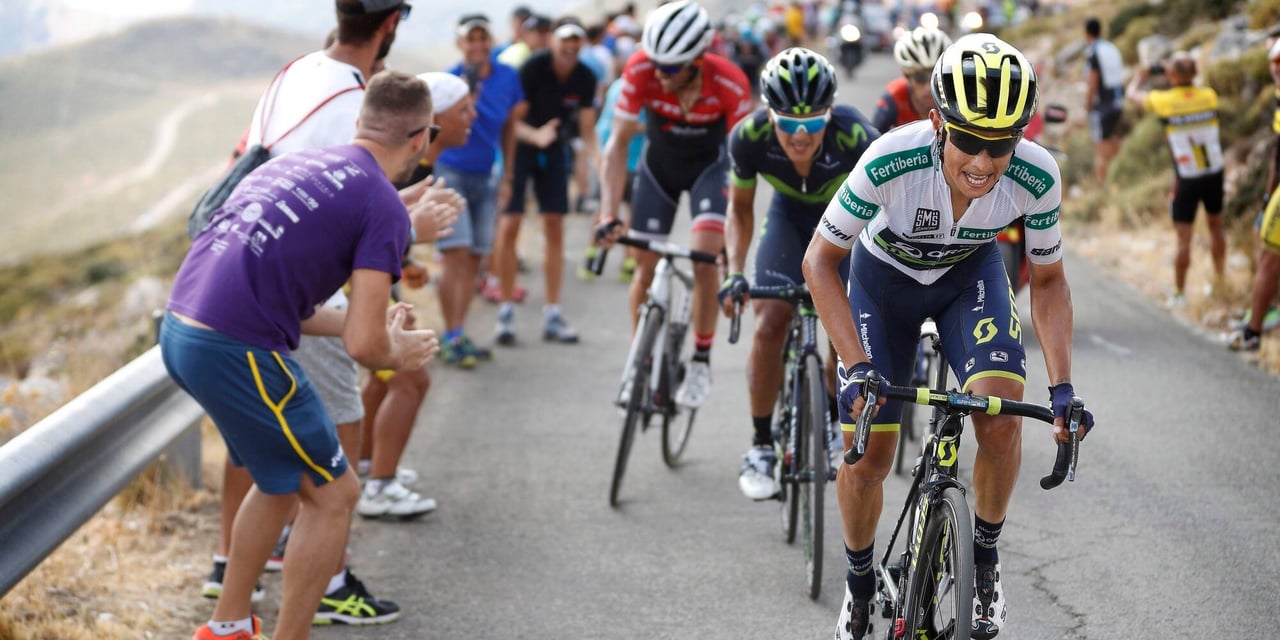
Esteban Chaves pushes on the slopes of La Pandera - photo: Fotopersburo Cor Vos
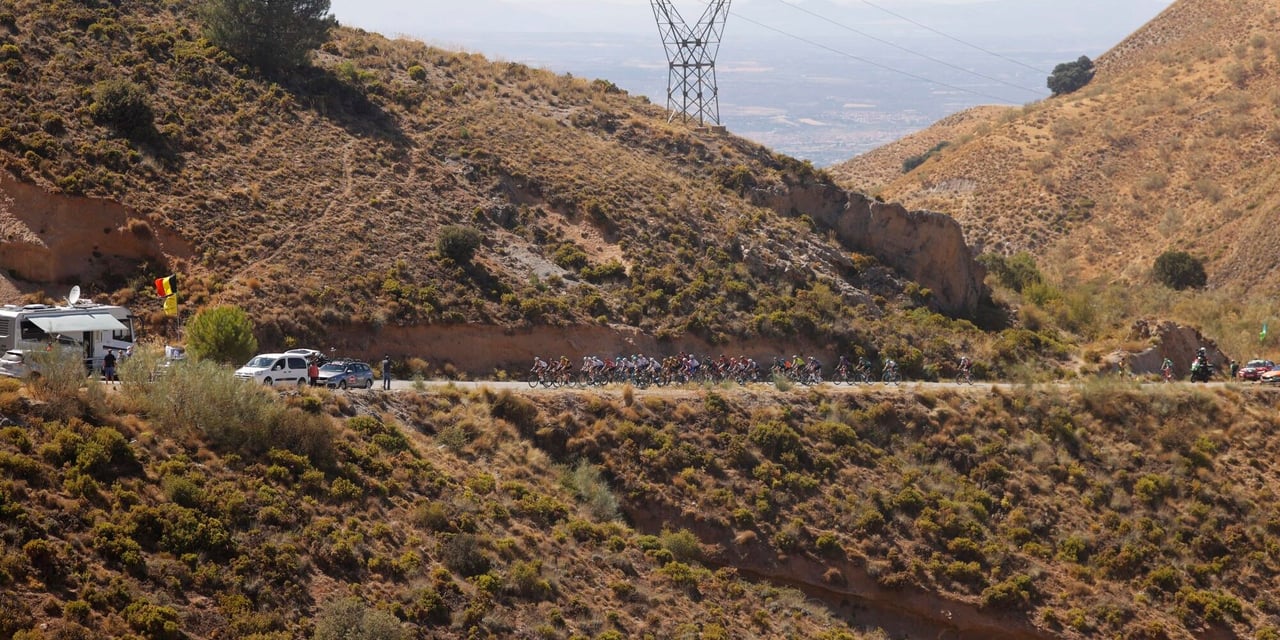
Racing through the rugged landscape of the Sierra Nevada - photo: Fotopersburo Cor Vos