Incidents in NIBC Tour of Holland Prove Police Cannot Abandon Dutch Cycling
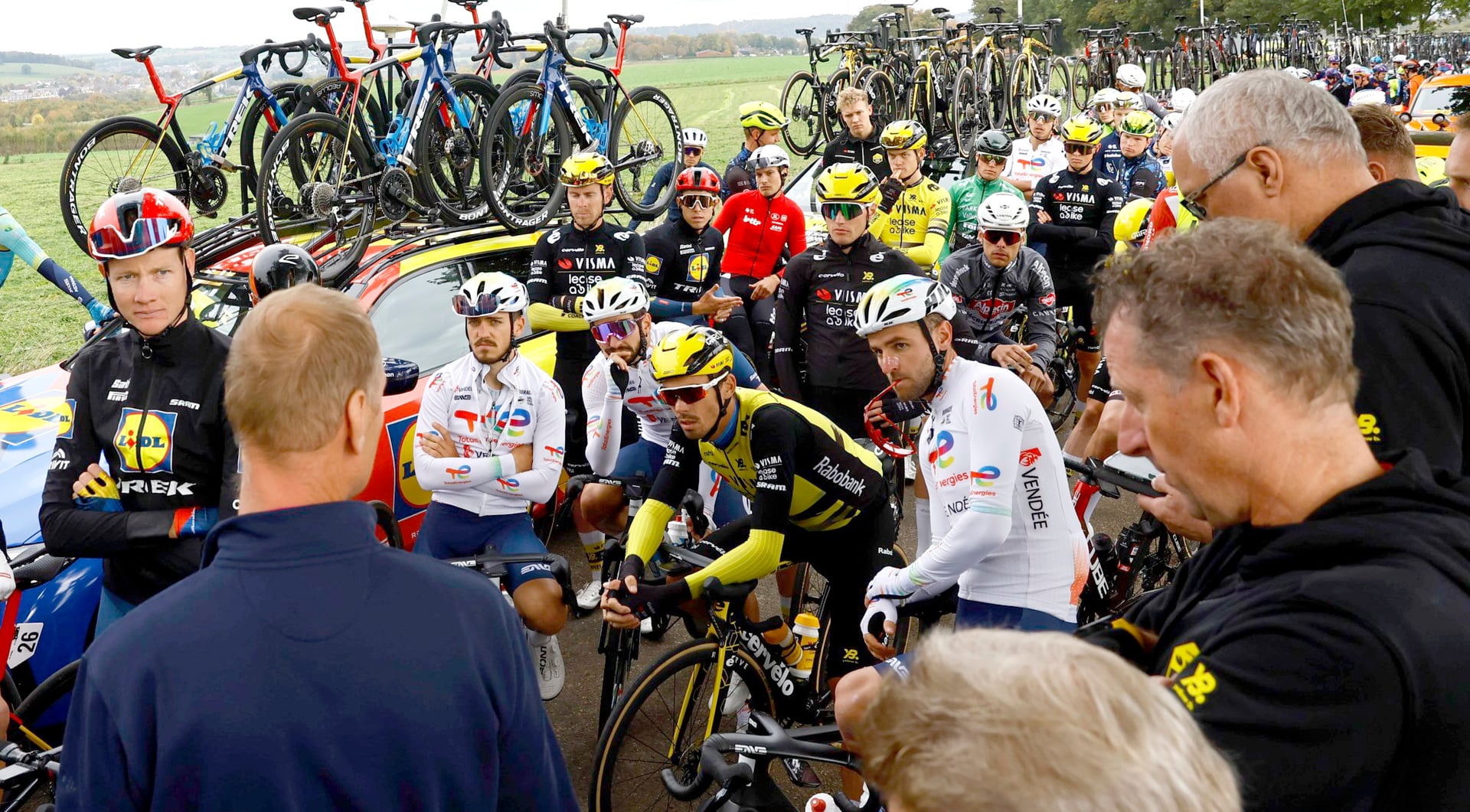
Beyond the descent of the King of Spain, it was enough for the riders. At sixty kilometers per hour, they dashed toward Gulpen, when a pick-up truck with a trailer approached in the opposite direction around a corner. It was the third incident of the day, making everyone realize that the safety of the peloton could no longer be guaranteed. Waiting until something serious happens is not an option. The riders and the organization immediately agreed on that.
Friday, October 17, will go down as a pitch-black day for Dutch cycling. Canceling the third stage of the NIBC Tour of Holland was the only correct decision, but everyone in Dutch cycling also understands that this is a decision with major consequences. The overarching question after this incident is: how can we still organize international cycling races in our densely populated Netherlands? And can this be done without police escort?
Thijs Rondhuis, technical race director on behalf of the organization, calls it a new starting point for discussions on how to organize cycling races in the Netherlands with and without police escort. The NIBC Tour of Holland must do without the police, and on a Friday afternoon during autumn break, it became clear that a 110-kilometer loop with all the well-known climbs in South Limburg is not feasible.
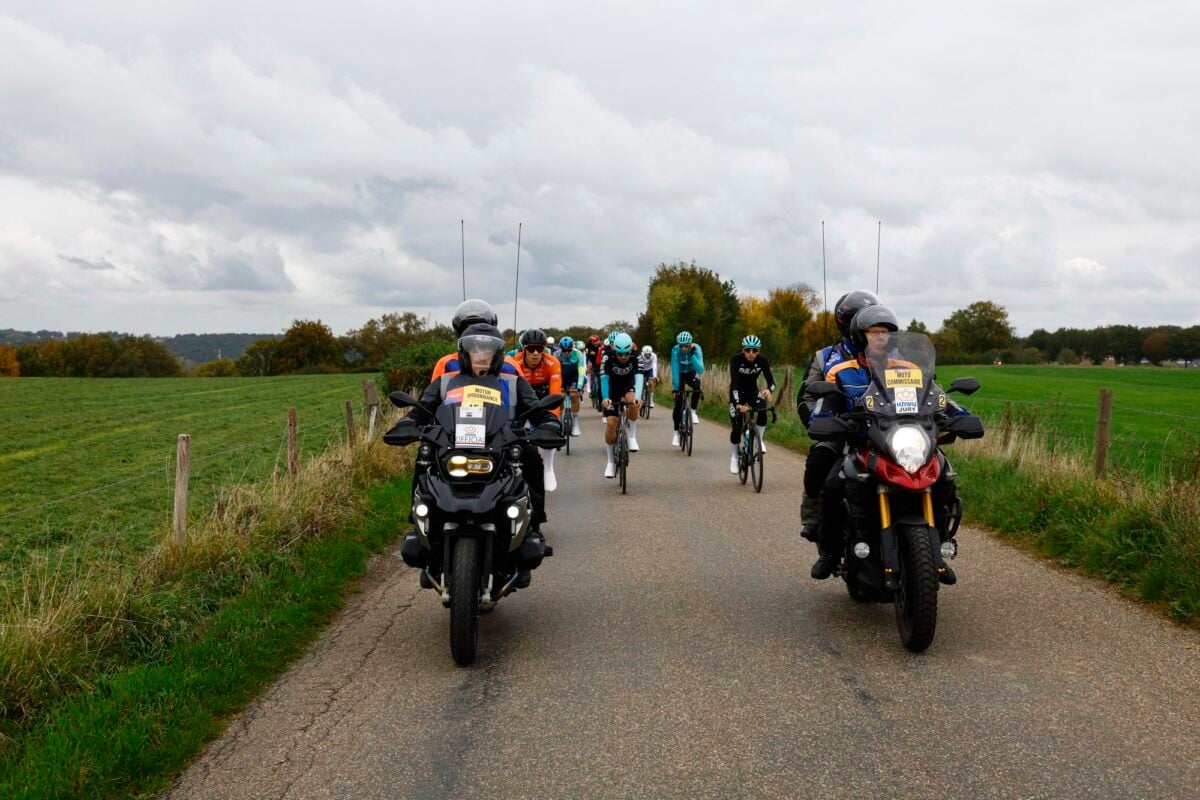
According to Rondhuis, at least 200 certified and professional traffic controllers were deployed to ensure this stage ran smoothly. No fewer than 135 on motorcycles, supplemented by around 70 to 80 traffic controllers at crucial points. Organizationally, everyone was where they needed to be, but when multiple motorists ignore the stop signs from these 'citizens,' the organization is left vulnerable.
On this day, it became clear that police are still needed in such situations because motorcycle officers and police at certain intersections apparently carry a very different authority. "Everything you do without the police is pushing the limits. We knew this would be a challenge," Rondhuis states.
The immediate question then is whether you should organize a 110-kilometer loop through South Limburg at all with this knowledge beforehand. Would it not have been much wiser to set out a 20-kilometer circuit around Sittard/Watersley?
This raises the question of whether you can still organize a cycling race from point A to B in the Netherlands. Shouldn't races be held on closed circuits of about twenty kilometers to better guarantee safety?
It’s a theme with no straightforward answers. History has shown that plenty of races have been safely organized without police escort. In Friesland, the Elfstedentocht of 200 kilometers, in Drenthe, Dwars door Drenthe of 180 kilometers, and in Limburg among others the Volta NXT Classic with a 40-kilometer lap. All races without notable incidents that prove it can be done.
NATO Summit
Especially this year, organizing races without police escort was a topic due to police capacity being unavailable for cycling events for months because of the NATO summit in The Hague. For some organizers, this was reason to cancel their races. Others understood that detours were the only way to keep their classic going.
Even in The Hague’s political circles, the use of police escort at cycling races is a topic. Last Thursday, MP Mohandis (GroenLinks-PvdA) submitted parliamentary questions regarding citizen motorcycle traffic controllers at cycling races.
Among these questions: do you share the opinion that the deployment of citizen motorcycle traffic controllers should be encouraged by the government so that cycling races on public roads can proceed and the police can be relieved? And what is the police stance on deploying citizen motorcycle traffic controllers at cycling races?
I am convinced that in the Netherlands, but also in other densely populated areas in Europe, we will increasingly see cycling races on closed circuits. Even then, you have to determine where the deployment of a police escort is desirable. This needs to be investigated region by region, but also per day of the week and based on all the measures an organization plans to take.
This weekend, we will probably also see in the NIBC Tour of Holland that you can safely organize a cycling race in Drenthe around the VAM-berg without police escort. And that on Sunday it can also run smoothly on larger, closed circuits around Arnhem.
That is very different from a Wednesday afternoon in the busy South Holland area around Dordrecht. And also different than a 110-kilometer loop in South Limburg.
The incidents during the NIBC Tour of Holland are a real shame, as nearly everyone in the peloton (from Dutch to foreign teams) was still enthusiastic about the initiative and organization of this new stage race in the Netherlands that Friday morning. With TIG Sports as organizer (known from, among others, Formula 1 in Zandvoort), there is a party setting cycling on a path of innovation, commerce, and exposure in a fresh way.
Political Lobby
After 21 years, the Tour of the Netherlands returned to the calendar. It should lead to celebration, but the return has not been smooth and painfully illustrates that it is becoming increasingly difficult to organize cycling races in the Netherlands.
There are still major challenges for the organization, but if a Dutch party can handle that, it’s TIG Sports. And perhaps TIG Sports is also the right party to now start a political lobby about the deployment of police escort at cycling races from which the entire Dutch cycling community can benefit.