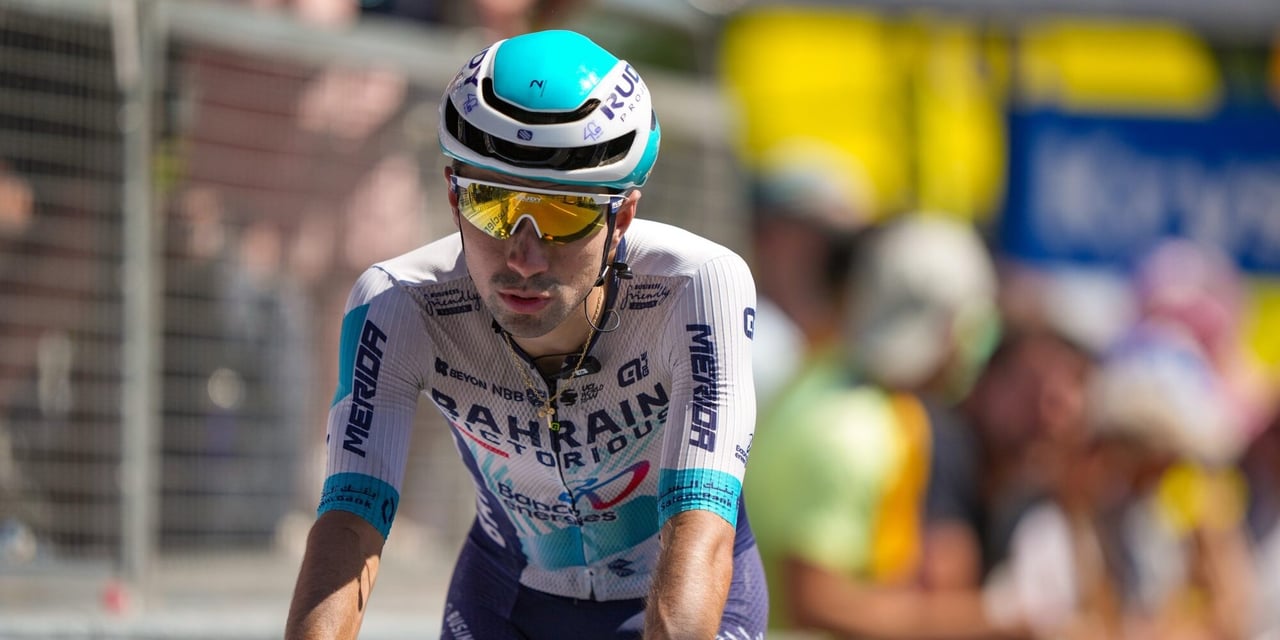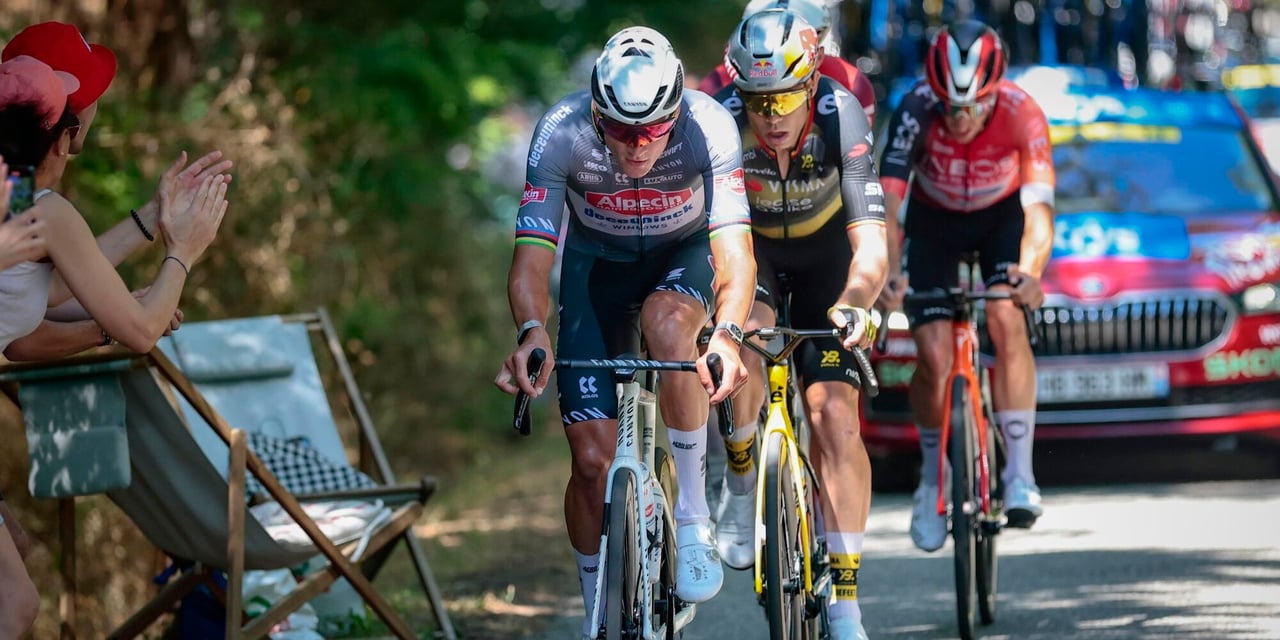
There is little glory to be gained for Mathieu van der Poel and Wout van Aert in the 2026 Tour de France. This cautious conclusion must be drawn after the route for next summer was presented. On paper, there seem to be few opportunities for riders like them at first glance.
Explosive types, punchers, and classics specialists will study the 2026 Tour route on Thursday afternoon with furrowed brows. There are hardly any opportunities for them. Although not all profiles have been revealed yet by Tour organizer ASO (this often happens only in the new year), it is customary that they release the most interesting stages in advance. ASO has done that again this time, but honesty demands to say that these are practically only mountain stages, a few transition stages, the team time trial, and the individual time trial.
Five small chances
Using external sources like La Flamme Rouge, it is somewhat possible to get an idea of the number of opportunities for riders such as the leaders at Alpecin-Deceuninck and Visma | Lease a Bike. We count only five stages where there might be something to gain from. These are stage two to Barcelona, stage nine to Ussel, stage twelve to Chalon-sur-Saône, stage seventeen to Voiron, and the final stage to Paris. With a bit of imagination, you could add the individual time trial to Thonon-les-Bains on the shores of Lake Geneva (stage sixteen), but that’s about it.
Still, all those chances come with a number of but’s and if’s, which were much less present in the previous edition. In the last four kilometers of stage two lie the Montjuïc (1.6 km at 9.3%) and the finish on the climb to the Olympic Stadium Lluís Companys (600 meters at 7%). Perhaps a bit too tough for Van der Poel and Van Aert compared to Tadej Pogačar and Jonas Vingegaard. The transition stage to Ussel also seems somewhat too difficult for classics riders, as does the early section of stage seventeen to Voiron. And that while ASO labels stage twelve as the last chance for sprinters.
Waiting and seeing
The final stage to Paris also looks a little different than in the previous edition. Then it became a spectacle in pouring rain. Butte Montmartre is included three times again next year, just like last time, but the summit of the last passage is at fifteen kilometers from the finish. Last summer, it was still six kilometers from the finish. Back then, it was impossible for strong sprinters to catch back up, while ASO keeps that hope alive for next summer. The final profiles are still awaited, but there really aren’t many chances for them.
It is a regrettable observation, especially because the first week of last year’s Tour actually showed how beautiful cycling can be when all the top riders compete against each other. "The grand tours can much better cater to the characteristics of these champions. In the first week of the Tour, Giro, and Vuelta, you should have four to five typical classics stages as standard. As far as I’m concerned, a gravel or cobblestone stage should certainly be included as well. That way, the typical classics riders also have enough challenges in the grand tours," wrote our opinion maker Raymond Kerckhoffs about this last summer.
| Date | Stage | From | To |
|---|---|---|---|
| 04-07 | 1 |  Barcelona | Barcelona |
| 05-07 | 2 | Tarragona | Barcelona |
| 06-07 | 3 | Granollers |  Les Angles |
| 07-07 | 4 | Carcassonne | Foix |
| 08-07 | 5 | Lannemezan | Pau |
| 09-07 | 6 | Pau | Gavarnie-Gèdre |
| 10-07 | 7 | Hagetmau | Bordeaux |
| 11-07 | 8 | Périgueux | Bergerac |
| 12-07 | 9 | Malemort | Ussel |
| 13-07 | 10 | Aurillac | Le Lioran |
| 15-07 | 11 | Vichy | Nevers |
| 16-07 | 12 | Circuit Nevers Magny-Cours | Châlon-sur-Saône |
| 17-07 | 13 | Dole | Belfort |
| 18-07 | 14 | Mulhouse | Le Markstein |
| 19-07 | 15 | Champagnole | Plateau de Solaison |
| 21-07 | 16 | Évian-les-Bains | Thonon-les-Bains |
| 22-07 | 17 | Chambéry | Voiron |
| 23-07 | 18 | Voiron | Orcières-Merlette |
| 24-07 | 19 | Gap | L'Alpe-d'Huez |
| 25-07 | 20 | Bourg-d'Oisans | L'Alpe-d'Huez |
| 26-07 | 21 | Thorny | Paris |