Stage 10 Orléans - Saint-Amand-Montrond (187.3km)
Only the wind can prevent the sprinters from victory
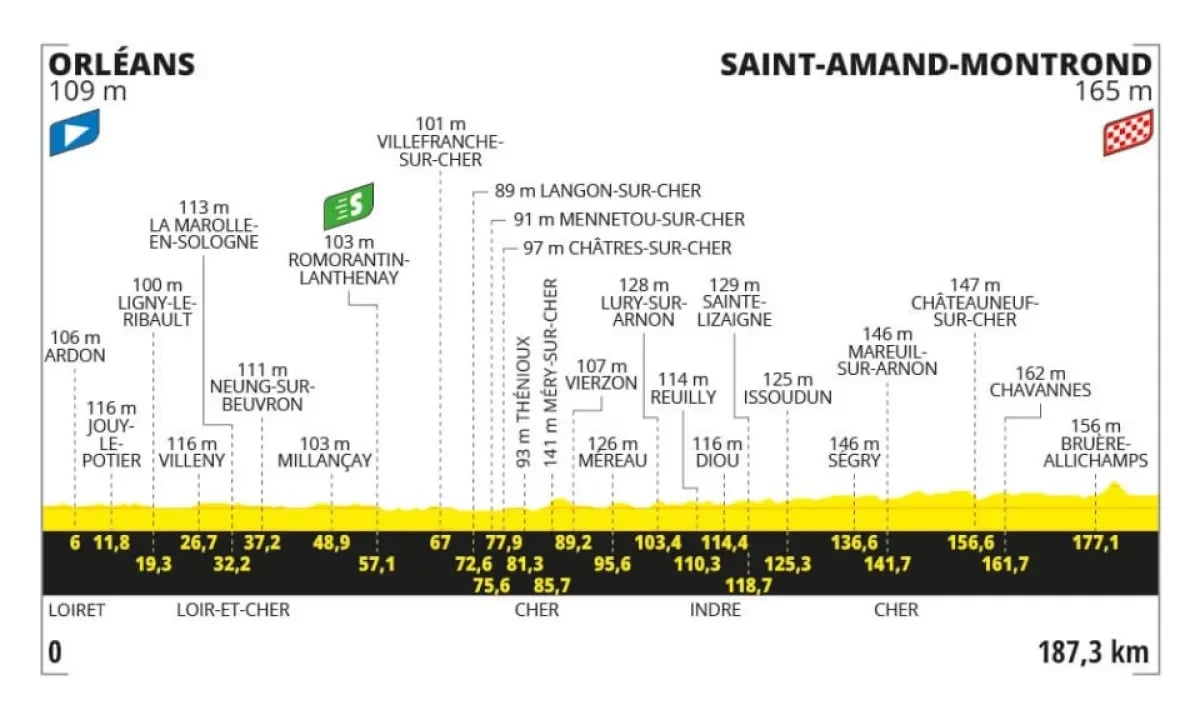
Anyone looking solely at the profile of the tenth stage of this Tour de France might think that the organizers have scheduled a second disguised rest day right after the first. The stage from Orléans to Saint-Amand-Montrond covers 187 kilometers and includes no categorized climbs. Yet, this stage should not be underestimated. If you listen closely, you can faintly hear the warning sound of a crosswind alarm.
The starting point of day ten holds a rich history. It's the city where Joan of Arc became a national heroine. The 17-year-old girl, guided by visions, managed to liberate Orléans from English occupation in 1429, marking a crucial victory in the Hundred Years' War between the English and the French.
Initially leading the French to several successes, the Maid of Orléans saw fortunes change over time. She was captured by the enemy and condemned to the stake in Rouen. A quarter-century later, Pope Callixtus III declared her innocence. In 1920, Joan of Arc was canonized. Today, Orléans commemorates this national heroine with statues, monuments, and festivities.
The Tour de France has visited the starting location of the tenth stage seven times before, while the finishing city has served as a start or finish point only three times. Saint-Amand-Montrond, with its 9,500 inhabitants, lacks such a storied history but did produce one of the most successful cyclists in recent history in 1992. Julian Alaphilippe was born 31 years ago in the commune in the southern part of the Cher department.
The most memorable stage to Saint-Amand-Montrond was in 2013. During the thirteenth stage of that edition, the riders faced a course very similar to the planned route for this upcoming edition. A mass sprint seemed imminent until the wind intervened. Chris Froome, in the yellow jersey, was gapped, allowing a group to break away. Contenders like Bauke Mollema and Alberto Contador seized the opportunity and gained a minute. Mark Cavendish also slipped away and sprinted to victory that day.
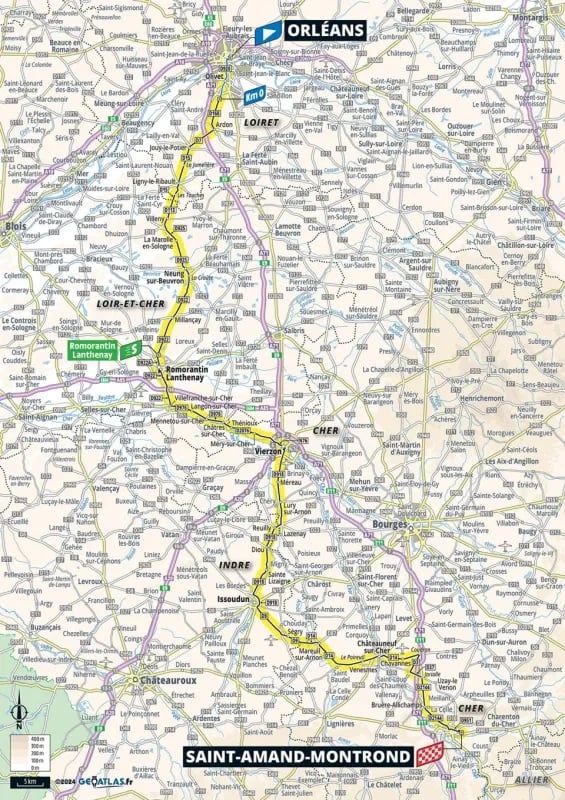
On July 9, only the wind appears capable of thwarting the sprinters' plans. The 187-kilometer stage is almost entirely flat. It also marks a turning point in the Tour as we head south for the first time. Paris gradually fades from view, with the Tour concluding on Day 21 from Monaco to Nice. About 60 kilometers from the finish, the route turns southeast, exposing the riders to open terrain where crosswinds can be a factor. If the sprint teams manage to control the race, we can expect a 'normal' sprint finish in Saint-Amand-Montrond.
| Date | Tuesday 09 July |
| Start |  Orléans Orléans |
| Finish | Saint-Amand-Montrond |
| Distance | 187.3 km |
| Start time | 13:05 |
| Expected finish | 17:24 |
Stage 10 Orléans - Saint-Amand-Montrond (187.3km)
Only the wind can prevent the sprinters from victory
Anyone looking solely at the profile of the tenth stage of this Tour de France might think that the organizers have scheduled a second disguised rest day right after the first. The stage from Orléans to Saint-Amand-Montrond covers 187 kilometers and includes no categorized climbs. Yet, this stage should not be underestimated. If you listen closely, you can faintly hear the warning sound of a crosswind alarm.
The starting point of day ten holds a rich history. It's the city where Joan of Arc became a national heroine. The 17-year-old girl, guided by visions, managed to liberate Orléans from English occupation in 1429, marking a crucial victory in the Hundred Years' War between the English and the French.
Initially leading the French to several successes, the Maid of Orléans saw fortunes change over time. She was captured by the enemy and condemned to the stake in Rouen. A quarter-century later, Pope Callixtus III declared her innocence. In 1920, Joan of Arc was canonized. Today, Orléans commemorates this national heroine with statues, monuments, and festivities.
The Tour de France has visited the starting location of the tenth stage seven times before, while the finishing city has served as a start or finish point only three times. Saint-Amand-Montrond, with its 9,500 inhabitants, lacks such a storied history but did produce one of the most successful cyclists in recent history in 1992. Julian Alaphilippe was born 31 years ago in the commune in the southern part of the Cher department.
The most memorable stage to Saint-Amand-Montrond was in 2013. During the thirteenth stage of that edition, the riders faced a course very similar to the planned route for this upcoming edition. A mass sprint seemed imminent until the wind intervened. Chris Froome, in the yellow jersey, was gapped, allowing a group to break away. Contenders like Bauke Mollema and Alberto Contador seized the opportunity and gained a minute. Mark Cavendish also slipped away and sprinted to victory that day.
On July 9, only the wind appears capable of thwarting the sprinters' plans. The 187-kilometer stage is almost entirely flat. It also marks a turning point in the Tour as we head south for the first time. Paris gradually fades from view, with the Tour concluding on Day 21 from Monaco to Nice. About 60 kilometers from the finish, the route turns southeast, exposing the riders to open terrain where crosswinds can be a factor. If the sprint teams manage to control the race, we can expect a 'normal' sprint finish in Saint-Amand-Montrond.