Stage 19 Embrun - Isola 2000 (144.6km)
The giants of the Alps explode the battle for the overall classification
The final weekend of the Tour de France has finally arrived. In the nineteenth stage, riders depart from Embrun to tackle two Alpine giants, concluding with the climb towards Isola 2000. Covering 'only' 145 kilometers, the riders face approximately 4,500 meters of climbing. It's clear: the final showdown has begun.
Embrun, the starting point of the day, is no stranger to extreme sporting challenges. Besides hosting six Tour starts, the town is renowned for the Embrunman. This race is an Ironman triathlon where participants endure 234 kilometers in the tough Alpine conditions. While the Tour riders skip swimming and running, they encounter a more challenging course in return.
This course leads them towards Isola 2000. The town, which officially returned to France after the Peace of Paris in 1947, features in the Tour de France for only the second time. In 1993, riders faced a similar route. Swiss rider Tony Rominger triumphed over the wearer of the yellow jersey. Miguel Indurain had to concede at the finish but ultimately won the Tour, with Rominger taking second place.
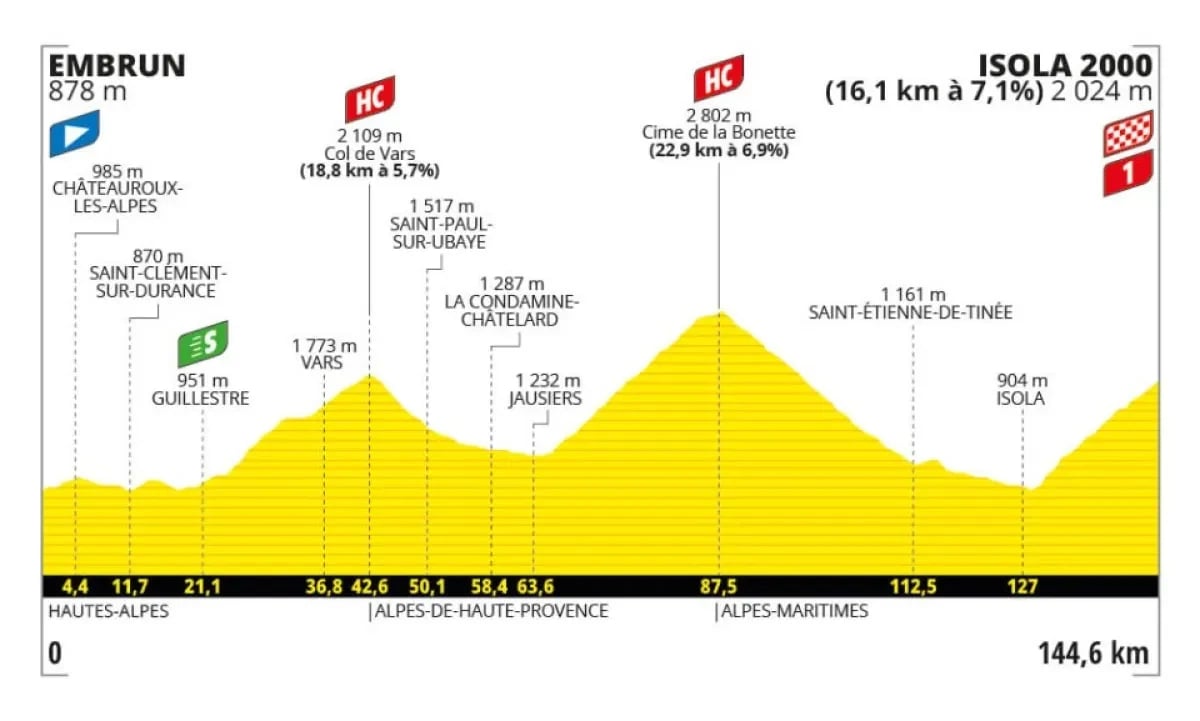
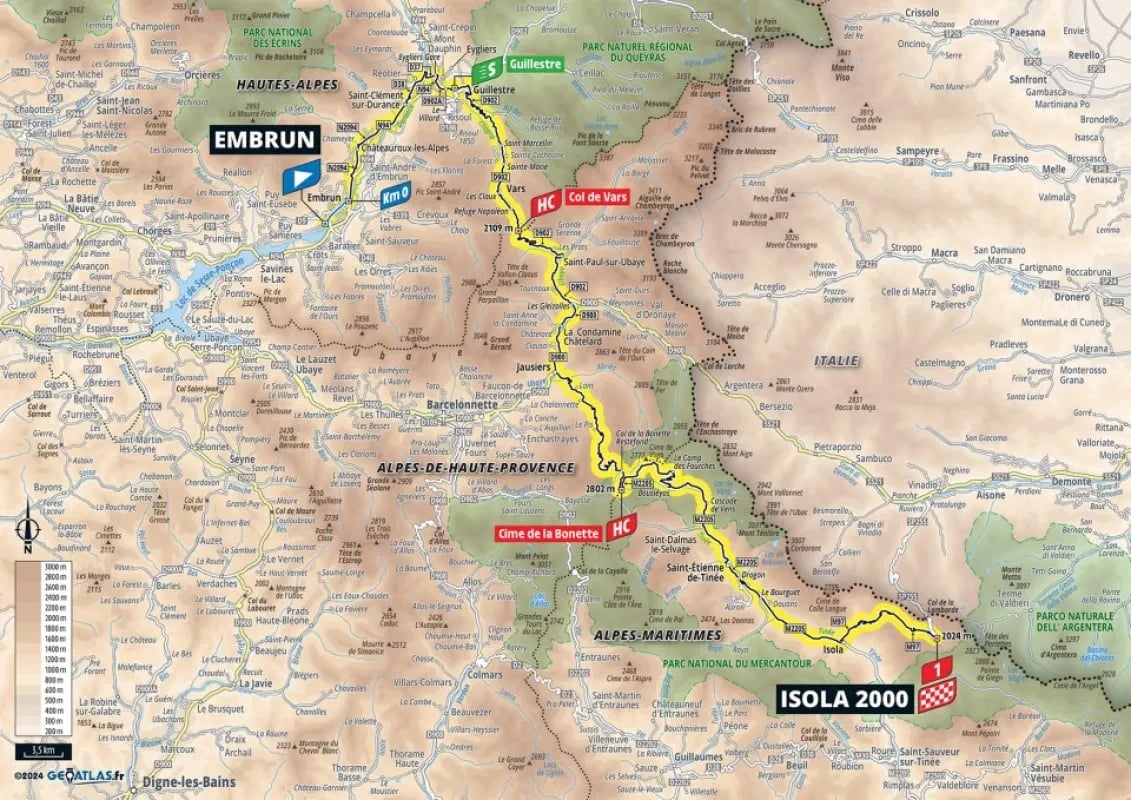
In 2024, Isola 2000 could once again witness the battle among the best riders in the race. It marks the culmination of a grueling day in the Alps. From Embrun, riders traverse rolling roads towards the base of the Col de Vars (18.8 km at 5.7%). After nearly three weeks of racing, legs will resist here, but the toughest challenge is yet to come. A descent leads riders to the Cime de la Bonette (22.9 km at 6.9%), the Tour's rooftop.
The Cime de la Bonette extends from the Col de la Bonette, a circular route that reaches the dizzying height of 2,802 meters. Nowhere else in Europe can one ascend higher via paved roads. The ascent features 24 hairpin bends to the summit. Resting isn't an option yet. Isola 2000 awaits.
From the top of the Cime de la Bonette, riders descend for forty kilometers towards the foot of this final climb. Isola 2000 stretches 16.1 kilometers, averaging 7.1% gradient. In the first eight kilometers, gradients above 8% are frequent. Then, the climb levels slightly, with riders tackling around 6%. Towards the end, the road ramps up again, reaching gradients of approximately 8.5% near the finish. Spectacle guaranteed!
| Date | Friday 19 July |
| Start |  Embrun Embrun |
| Finish | Isola 2000 |
| Distance | 144.6 km |
| Start time | 12:20 |
| Expected finish | 16:28 |
Stage 19 Embrun - Isola 2000 (144.6km)
The giants of the Alps explode the battle for the overall classification
The final weekend of the Tour de France has finally arrived. In the nineteenth stage, riders depart from Embrun to tackle two Alpine giants, concluding with the climb towards Isola 2000. Covering 'only' 145 kilometers, the riders face approximately 4,500 meters of climbing. It's clear: the final showdown has begun.
Embrun, the starting point of the day, is no stranger to extreme sporting challenges. Besides hosting six Tour starts, the town is renowned for the Embrunman. This race is an Ironman triathlon where participants endure 234 kilometers in the tough Alpine conditions. While the Tour riders skip swimming and running, they encounter a more challenging course in return.
This course leads them towards Isola 2000. The town, which officially returned to France after the Peace of Paris in 1947, features in the Tour de France for only the second time. In 1993, riders faced a similar route. Swiss rider Tony Rominger triumphed over the wearer of the yellow jersey. Miguel Indurain had to concede at the finish but ultimately won the Tour, with Rominger taking second place.
In 2024, Isola 2000 could once again witness the battle among the best riders in the race. It marks the culmination of a grueling day in the Alps. From Embrun, riders traverse rolling roads towards the base of the Col de Vars (18.8 km at 5.7%). After nearly three weeks of racing, legs will resist here, but the toughest challenge is yet to come. A descent leads riders to the Cime de la Bonette (22.9 km at 6.9%), the Tour's rooftop.
The Cime de la Bonette extends from the Col de la Bonette, a circular route that reaches the dizzying height of 2,802 meters. Nowhere else in Europe can one ascend higher via paved roads. The ascent features 24 hairpin bends to the summit. Resting isn't an option yet. Isola 2000 awaits.
From the top of the Cime de la Bonette, riders descend for forty kilometers towards the foot of this final climb. Isola 2000 stretches 16.1 kilometers, averaging 7.1% gradient. In the first eight kilometers, gradients above 8% are frequent. Then, the climb levels slightly, with riders tackling around 6%. Towards the end, the road ramps up again, reaching gradients of approximately 8.5% near the finish. Spectacle guaranteed!