Stage 6 Olot - Pal Andorra (170.3km)
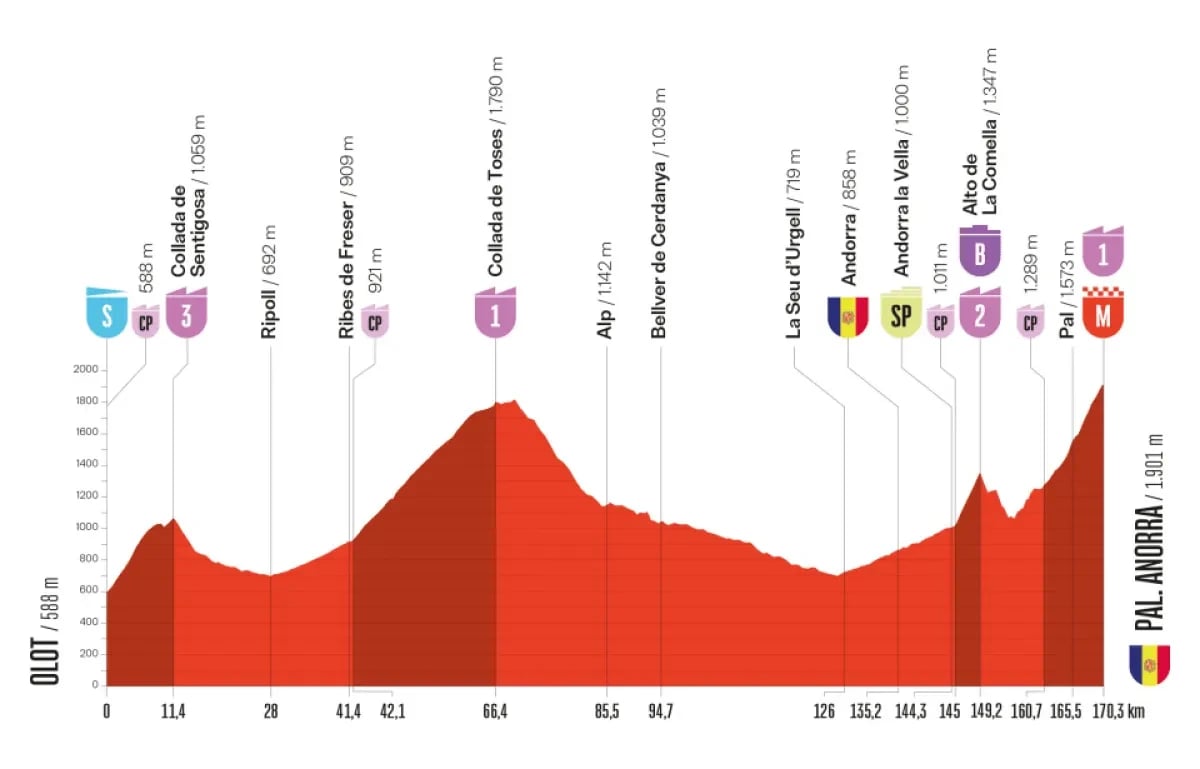
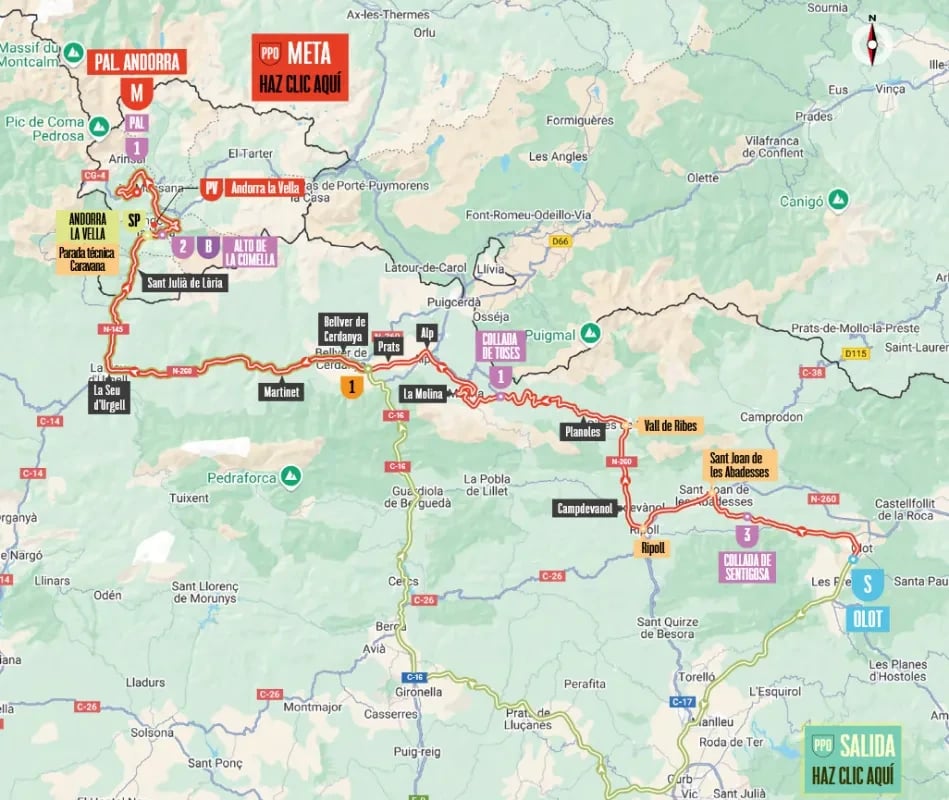
On Thursday, the riders tackle a 170-kilometer stage through the rugged heart of the Pyrenees, racing from Olot to Pal in Andorra. Immediately after leaving Olot, the peloton faces a climb to exit Catalonia. It starts with the Collada de Sentigosa, an 11.3-kilometer ascent at an average of 4.1%. Not a monster climb, but a perfect launchpad for an early breakaway.
After a fast descent to Ripoll comes the very long climb to the Collada de Toses (24.8 km at 3.5%). This climb, only featured once before in the Vuelta, is classified as a first-category ascent — not because of the gradient, but due to its sheer length. Even with the moderate slope, the riders still gain nearly 1,000 meters in these kilometers.
Following a long descent, the riders enter Andorra, where two more climbs await. First, the Alto de la Comella (4.3 km at 7.5%), a second-category climb where the riders will likely hold back and watch each other. Just a few kilometers later begins the stage’s final climb: Pal (9.7 km at 6.4%). While not the hardest climb of this Vuelta, accumulated fatigue will already be significant. Midway through Pal, the gradient steepens to 9–10%. The stage winner will join illustrious predecessors like Igor Antón and José María Jiménez.
| Date | Thursday 28 August |
| Start |  Olot Olot |
| Finish |  Pal Andorra Pal Andorra |
| Distance | 170.3 km |
| Elevation gain | 3475 m |
| Start time | 12:35 |
| Expected finish | 17:16-17:45 |


Stage 6 Olot - Pal Andorra (170.3km)
On Thursday, the riders tackle a 170-kilometer stage through the rugged heart of the Pyrenees, racing from Olot to Pal in Andorra. Immediately after leaving Olot, the peloton faces a climb to exit Catalonia. It starts with the Collada de Sentigosa, an 11.3-kilometer ascent at an average of 4.1%. Not a monster climb, but a perfect launchpad for an early breakaway.
After a fast descent to Ripoll comes the very long climb to the Collada de Toses (24.8 km at 3.5%). This climb, only featured once before in the Vuelta, is classified as a first-category ascent — not because of the gradient, but due to its sheer length. Even with the moderate slope, the riders still gain nearly 1,000 meters in these kilometers.
Following a long descent, the riders enter Andorra, where two more climbs await. First, the Alto de la Comella (4.3 km at 7.5%), a second-category climb where the riders will likely hold back and watch each other. Just a few kilometers later begins the stage’s final climb: Pal (9.7 km at 6.4%). While not the hardest climb of this Vuelta, accumulated fatigue will already be significant. Midway through Pal, the gradient steepens to 9–10%. The stage winner will join illustrious predecessors like Igor Antón and José María Jiménez.